
News
Park Güell hosts a free popular dinner to celebrate its 100 years as a public park
26 April 1926 is a key date for Park Güell, Barcelona and its residents. It was when the City Council inaugurated it as a public park. Since then it has enjoyed significant success thanks to its innumerable visits. To celebrate this, it is organising a popular dinner on 26 April 2026.
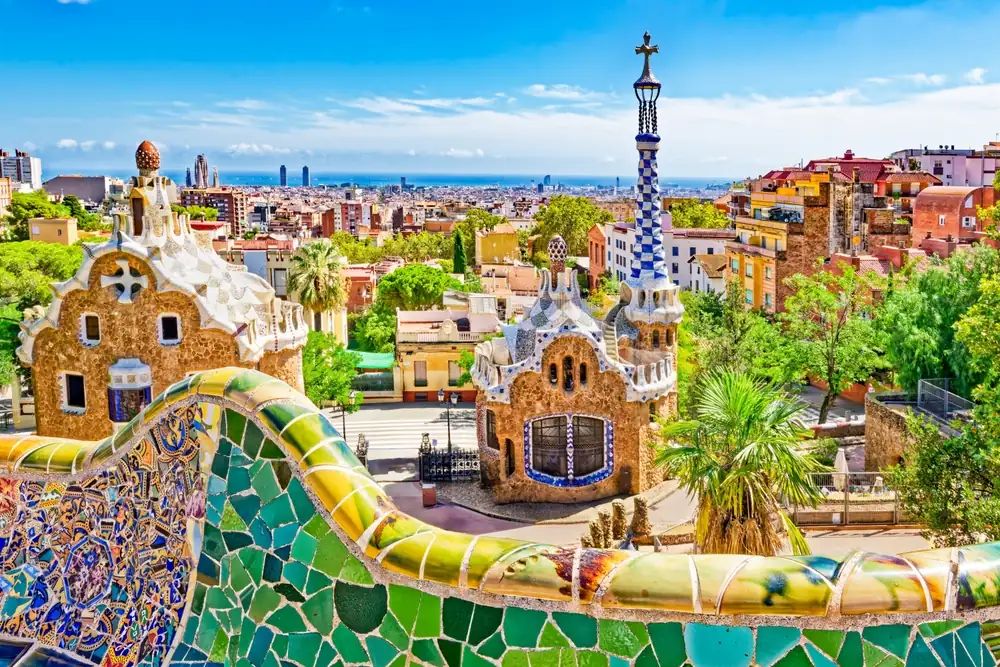
Park Güell is one of those places that seem to form part of Barcelona's DNA. Beyond its architectural or tourist value, Antoni Gaudí's open-air work has for decades been a space for civic gathering, a living setting where the city recognises itself. In 2026, a century will have passed since it officially became a public park, and the anniversary is being celebrated with a range of activities that seek to recover that collective spirit of old.
Among them are symbolically charged proposals: a communal dinner open to residents and visitors that will make it possible to see the park in another way.
Communal dinner: 100 years of Park Güell as a public space
The event will take place on the afternoon of 26 April, coinciding with the date on which Ayuntamiento de Barcelona formalised the opening of the park as a public space in 1926, that is, 100 years ago.
For this purpose, a social gathering like those held in its early days will be recreated, when the venue hosted cultural events, meetings and open-air celebrations. The idea is not to hold a massive or especially formal event, but to highlight Park Güell’s community dimension, recalling that before it became a global icon it was, and still is, a place shared by the public.
The Park Güell event
The communal dinner is envisaged as an accessible event, intended to bring together people of different backgrounds in a unique setting. Although there are not really many confirmed details about the exact format, this event is inspired by traditional collective meals that form part of Mediterranean culture. The idea is to share a table, converse and be in a place with as much history as this great park, which Antoni Gaudí designed.
These kinds of initiatives seek to recover a way of living in the city that is sometimes pushed aside by the pace of daily life. According to various studies by Council of Europe on cultural heritage, participatory activities in historic spaces reinforce the sense of belonging and social cohesion. In this case, the dinner not only commemorates a date, but invites people to reinterpret the park as a living space, beyond its tourist function.
The public origin of Park Güell
To understand the meaning of this celebration, it is useful to look back. Park Güell was initially conceived as a residential project promoted by Eusebi Güell and designed by Antoni Gaudí. However, the initiative did not succeed as a private development and, after several years, the City Council decided to acquire the land at the beginning of the 1920s.
Its official opening as a public park in 1926, 100 years ago, marked a turning point. Since then, the space became part of Barcelona's network of parks and began to consolidate as a place used daily by local residents. UNESCO, which included the complex on the World Heritage list, highlights precisely that combination of artistic value and social function as one of the most singular features of Gaudí's work.
An icon between tourism and everyday life
Today, Park Güell is one of the city's most visited sites, and there is a complex balance between its tourist dimension and its use by residents. The centenary celebration, and the communal dinner in particular, can be interpreted as an attempt to reinforce the latter aspect.
Beyond the famous stairways or the undulating bench in the central square, the park remains a space for walking, rest and meeting for many Barcelonans. Recovering community activities within it makes it possible to remember that its value lies not only in its aesthetics, but also in the shared experience it offers.
The centenary of Park Güell is not only an opportunity to look at the past, but also to reflect on its future. Initiatives such as this communal dinner invite us to reconsider how landmark places are managed and experienced.