
News
The hidden past of Campus Mundet: from concentration camp to university space
Universitat de Barcelona not only trains thousands of students: it also looks after one of the city’s most historic sites. Campus Mundet, in the Horta-Guinardó district, brings together in one place episodes that have shaped the course of Barcelona and several generations.
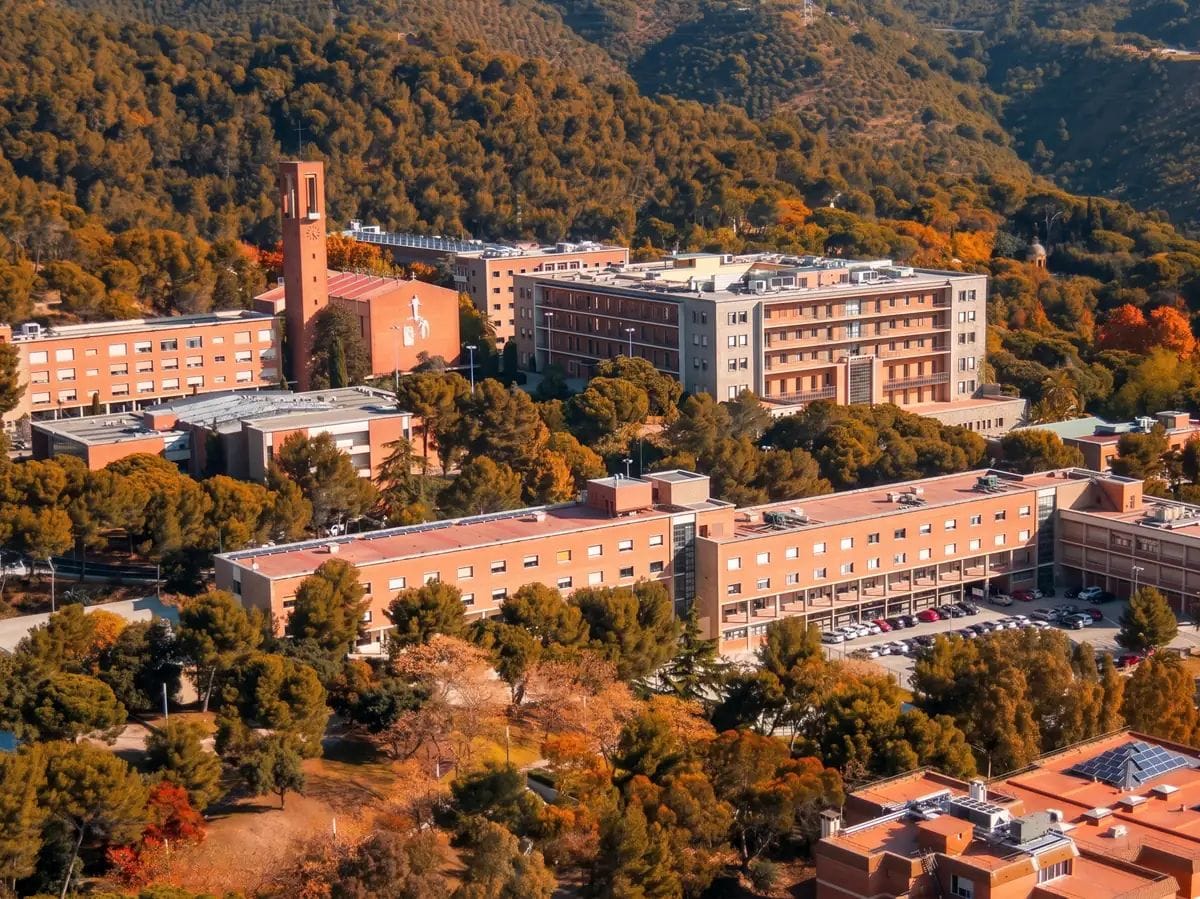
The origins of the site lie in the Les Heures palace, built at the end of the 19th century by the Gallart family, in a Horta still far from the bustle of the city. During the Civil War, the building changed function: it was requisitioned by the Generalitat and even housed President Lluís Companys after he lost his home in a bombing raid. An air-raid shelter was excavated beneath its gardens and remains hidden there today.
The harshest chapter came after the war. Between 1939 and 1940, the site housed a concentration camp in the area where the Llevant building now stands. Thousands of Republican prisoners passed through this space, surrounded by barbed wire and watchtowers. Many were sent to forced labour or transferred to other prisons, in an episode that left a deep mark on collective memory.
In the 1950s, the place was transformed again. Thanks to the donation of Artur Mundet and Anna Gironella, the Llars Mundet were created, a large care complex that came to house hundreds of children in vulnerable situations. The site became a reference point for social care in the city for decades.
The definitive change came in 1995, when the university moved its education- and psychology-related faculties to the site. Today, more than 10,000 people pass through a campus every day that combines nature, architecture and memory. In 2014, the installation of a commemorative monolith strengthened recognition of its past.
Walking around Campus Mundet means moving through layers of history that coexist in silence. Among classrooms and gardens, the space recalls how the city has been able to transform places marked by conflict into places of knowledge and everyday life, integrating the past into the present without erasing it.