
News
The Planetario de Madrid celebrates 40 years with a journey through eclipses
The Planetario de Madrid is marking its 40th anniversary with a special programme designed for sky-gazing from the city. This summer, the space in Tierno Galván park is offering screenings, workshops, talks, and activities to help understand the eclipses that will shape the coming years in Spain.
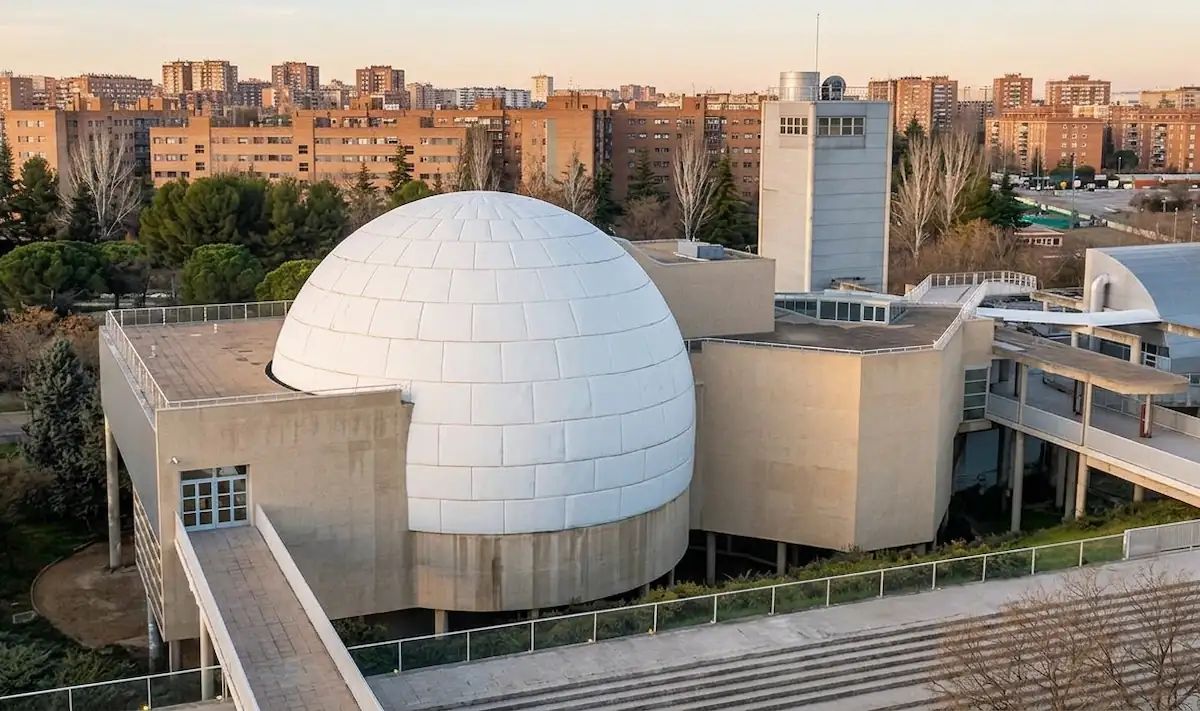
The great new feature is Trío de eclipses, an immersive fulldome film shown in the Planetario dome. The production visually explains how the Earth, Moon and Sun interact, why eclipses occur and what makes some of them visible from a particular territory.
The programme connects directly with three major astronomical dates: the eclipses that can be observed from Spain in 2026, 2027 and 2028. The aim is for the public to arrive prepared, know what to expect and also understand how to view the phenomenon safely.
Trío de eclipses screenings will be available from 17 July to 12 August, with general showings at 13:00 from Tuesday to Sunday. At weekends there will also be an extra performance at 19:00, a useful option for those looking for a cultural plan late in the afternoon.
From Tuesday to Friday, at 18:00, some screenings will include live contributions from astronomy specialists. That format will make it possible to expand the explanations, answer questions and make the visit something closer than a simple science film.
Children will also have their own place in the programme. Between 23 July and 7 August, children's workshops devoted to the Sun and Moon will be held, with educators, adapted activities and a dome screening to bring astronomy closer in a playful way.
The anniversary will also include a high-level outreach event: on 6 August, astrophysicist Alex Filippenko will give the conference in English From the 2026 Total Solar Eclipse to the Dark Universe. It will be an opportunity for those who want to connect the coming eclipses with a broader view of the universe.
The Planetario will also distribute free special glasses for safely observing eclipses. They can be collected from 17 July to 12 August at the Planetario itself and at several municipal venues, such as museums, libraries and cultural centres.
The event offers a clear picture of how Madrid can turn science into a summer plan. In a city marked these days by heat, football and neighbourhood festivities, the Planetario offers another way to leave the house: sit beneath a dome, look up and discover that the sky is also part of the cultural agenda.