
News
Thousands march from Atocha to Sevilla against the housing crisis
Madrid again brought one of its hardest-to-avoid problems onto the streets this Sunday: housing prices. Thousands of people marched from Atocha to the Sevilla area under the slogan Housing costs us our lives. Let’s lower prices, in a protest called by the Tenants’ Union and supported by trade unions, social groups and left-wing political representatives.
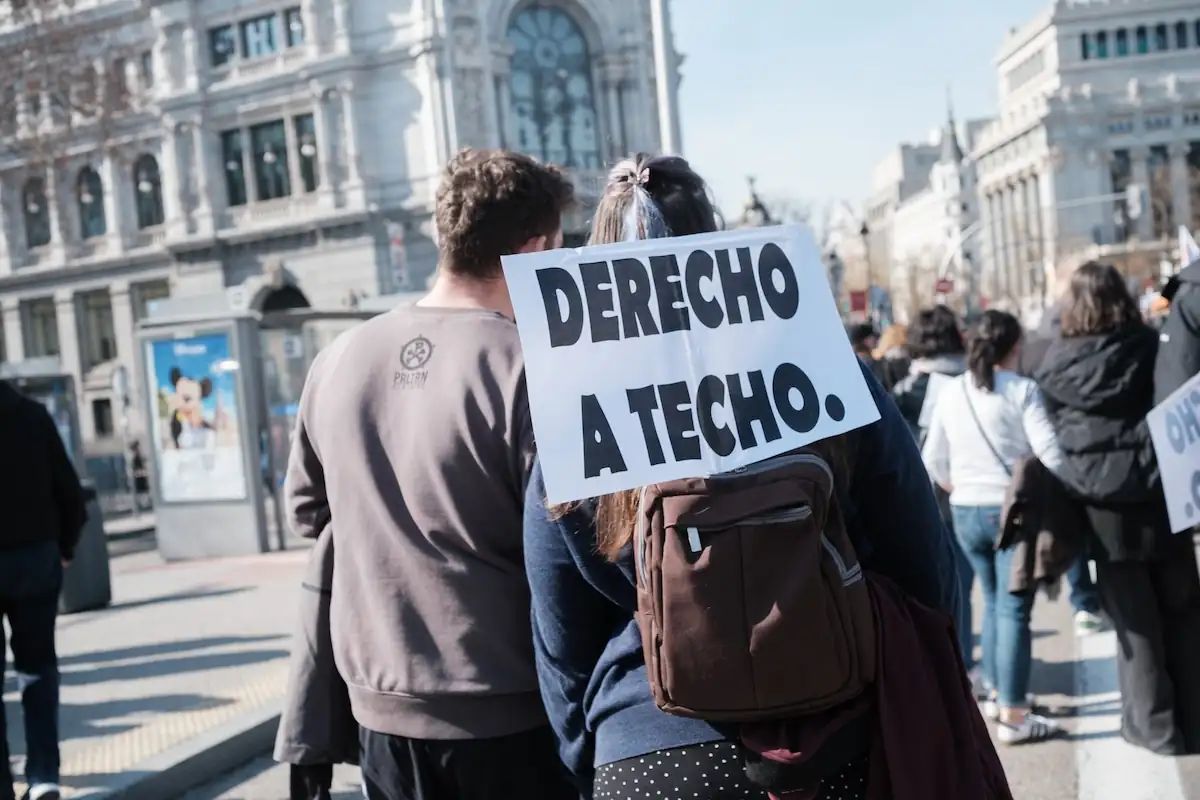
The number of attendees varies according to the source: the Government Delegation spoke of around 23,000 people, while the organisers put participation at 100,000. Beyond the discrepancy in the figures, the image was clear: placards against unaffordable rents, criticism of funds and large landlords, and a shared feeling that living in Madrid is becoming an increasingly expensive race.
The main demands are to restore open-ended rental contracts, lower prices and raise minimum wages and pensions to 1,500 euros. There were also calls for more housing outside the market, measures against seasonal lets and room rentals, and stronger public intervention to halt the displacement of residents from their neighbourhoods.
During the march, the spokesperson for the Sindicato de Inquilinas, Alicia del Río, argued that disobedience must grow if institutions do not act. The message was not merely a protest slogan: the movement wants to press for housing discontent not to remain individual complaints, but to become a sustained political conflict.
The demonstration was also attended by trade-union leaders such as Unai Sordo and Pepe Álvarez, as well as political representatives such as Reyes Maroto and Irene Montero. The support of CCOO and UGT reinforces an idea that is appearing increasingly in public debate: rent no longer affects only young people or students, but also employed workers, families and pensioners.
The Madrid protest opens a new round of mobilisations that will extend to 24 Spanish cities until the end of June. Barcelona, Málaga, Valencia, Las Palmas, Zaragoza and Badajoz are part of a calendar intended to keep housing at the centre of the political conversation in the coming weeks.
In Madrid, the debate carries particular weight because rising costs are felt in almost every layer of urban life: rents that force people to share flats for more years, neighbourhoods where long-standing residents disappear, shops that lose local customers and families who do the sums before they even consider moving. The march solves nothing by itself, but it sends a signal that is difficult to ignore: for many people, the housing problem is no longer a concern for the future, but a daily urgency.