
News
Madrid launches an A-1 speed camera that changes location in seconds and issues fines in real time
The DGT has deployed on Madrid’s A-1 a new trailer-mounted speed camera capable of moving quickly between different points, monitoring roadwork sections and sending penalties instantly to traffic-management centres.
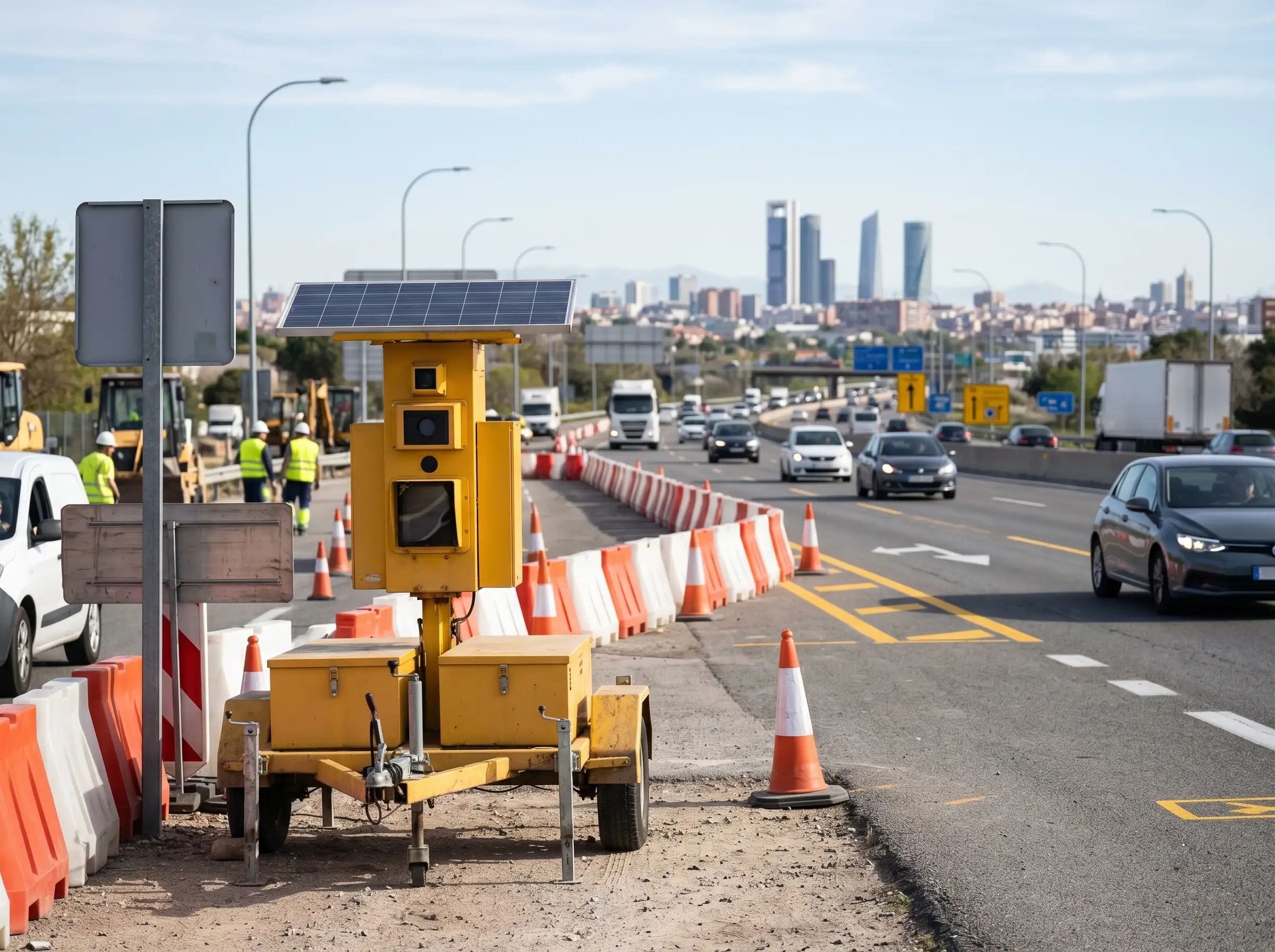
The DGT introduces a trailer-mounted speed camera in Madrid that can change location in seconds. It detects speeding in roadwork sections and sends penalties in real time. Thousands of drivers will notice the change on their daily journeys.
Mobility in northern Madrid has a new element to take into account: the DGT has deployed a trailer-mounted speed camera on the A-1 that transforms speed monitoring on the approaches to and exits from the capital. This visible but unpredictable device can change location in a matter of seconds, forcing drivers to take extra care on every journey.
Initially installed at kilometre 45 in a roadwork section, the camera stands out for its striking colour and compact format. Unlike fixed cameras or traditional mobile ones, this speed-measuring device combines the ability to impose penalties permanently with the flexibility of being moved by the Guardia Civil or Traffic workers at any time. Thus, you never know exactly where it will be next time.
Its technology can send penalties directly to traffic-management centres, with a capacity of up to 20 fines per minute if the rate of infringements permits. The objective is clear: to reduce speeding in particularly sensitive areas, such as roadwork sections where the maximum speed is limited to 100 km/h and the presence of workers requires the utmost caution.
This camera format, which had already been tested in Catalonia, responds to a common reality on the roads: many drivers only respect limits at points where they know there are checks. Now, uncertainty over the location of the trailer-mounted speed camera seeks to change that habit and reinforce safety on the approaches to Madrid.
The A-1 motorway, which connects the capital with northern Spain, is one of the busiest arteries for people entering and leaving Madrid every day. The introduction of this mobile camera adds a new variable to usual journeys, especially at weekends and during rush hours, when traffic intensifies and any penalty can alter plans.
The DGT has spent years adapting its strategies to respond to changes in urban and metropolitan mobility. The deployment of mobile and fixed cameras, and now trailers, forms part of a policy that seeks to balance road safety with traffic flow. Madrid is already beginning to move in that direction, adjusting its pace to new technologies and the need to protect both drivers and those who work on the road.
First unit Madrid (testing phase, several points in the province). Exit 45 El Molar/Pedrezuela. 7 cars fined, 25 sec example. 2024: 15k roadwork fines Spain. Next: conventional roads/motorways. Autonomous battery/internet.