
News
Reina Sofía opens a rest room inspired by Mediterranean kitchens
Walking around a large museum is tiring too. Corridors, rooms, labels, stairs and works demanding attention can turn a cultural visit into an intense experience. Museo Reina Sofía now responds to that reality by opening a new room designed for pausing without leaving the museum.
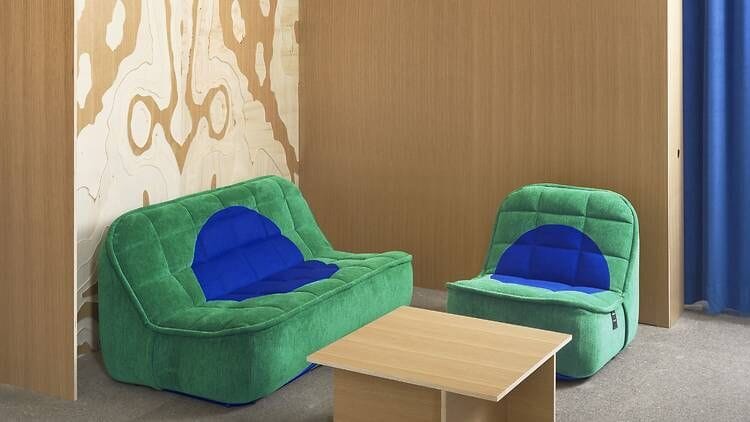
The space is called ‘Alhacena’ and is located on the fourth floor of the Sabatini Building. Designed by Jorge Penadés, it offers a different pause within the visit: a place to sit, read, talk or simply slow down before continuing to look at art.
The inspiration comes from Mediterranean kitchens, understood not only as spaces for preparing food, but as places for meeting, conversation and shared life. That domestic idea is brought into the museum through a room intended to feel welcoming, flexible and close.
The central element is a large cupboard almost 30 metres long, a piece reminiscent of household furniture that organises the space. Around it are sofas, chairs, shelves and seating designed for different uses, ages and ways of being.
The proposal introduces a more everyday dimension to the Reina Sofía. It is not simply about adding benches to rest on, but about creating an environment where visitors can make the place their own for a few minutes: read something, discuss an exhibition, wait for someone or rest without feeling outside the visit.
That pause can change the way the museum is visited. Instead of going from room to room until exhausted, ‘Alhacena’ makes it possible to divide up the visit, stop and return to the works in a different frame of mind. Culture also needs downtime, silences and conversations.
The room is designed to support both learning and coexistence. It can serve families, school groups, older visitors, tourists who have spent hours walking around Madrid or people who simply want to enjoy the museum at a less hurried pace.
The opening comes at a time of intense cultural activity in the city, with exhibitions spread across museums, foundations and art centres. In this context, the Reina Sofía adds a discreet but important incentive: improving not only what is seen, but how the visit is experienced.
The Sabatini Building, where the new space is located, is already part of Madrid's cultural memory. Its historic architecture, transformed into a museum, coexists with extensions, contemporary routes and new ways of understanding the relationship between art and the public.
The creation of rest areas responds to an increasingly visible trend in major museums. It is no longer enough to display collections: it also matters that visitors can find their bearings, breathe, talk and stay longer without the experience becoming exhausting.
‘Alhacena’ does not compete with the works or seek to become an attraction in itself. Its value lies in something simpler: reminding us that a museum can also be an inhabitable place, not only a space for contemplation.
In a city where the cultural agenda forces people to choose and hurry from one exhibition to another, the Reina Sofía proposes precisely the opposite: stopping for a moment. Sitting, talking, reading or looking around can also be part of the visit.