
News
Madrid asks people to work from home from 3 to 9 June to avoid the chaos of the papal visit
Those able to work from home between 3 and 9 June have a clear reason to do so: Madrid will not move as usual. The visit of Pope Leo XIV, planned for 6 to 9 June, will bring closures, diversions and secured areas in locations as sensitive as Cibeles, Plaza de Lima and the Recoletos-Castellana axis. The City Council has already warned that they will be difficult days for residents, workers and businesses.
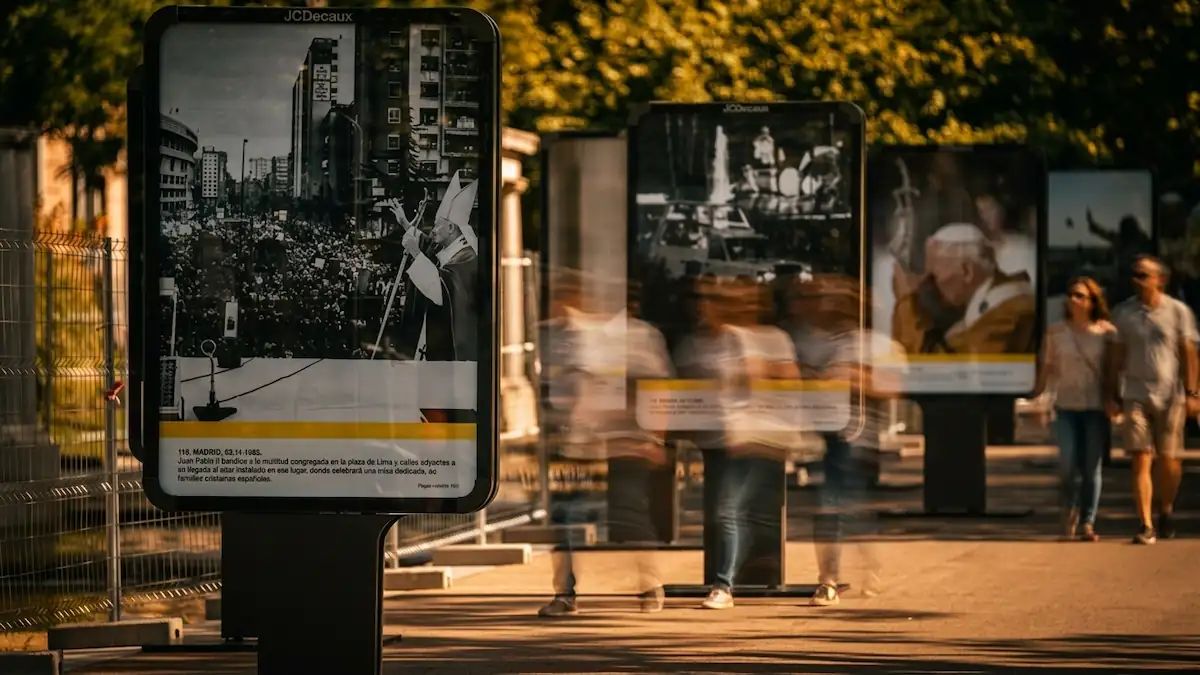
The recommendation to work remotely does not come only from Cibeles. Madrid’s employers’ association CEIM has also asked companies to facilitate remote work during those days to reduce journeys and prevent traffic from collapsing at peak times. Its president, Miguel Garrido, has defended cooperation between public authorities and the private sector in the face of an event that will mobilise hundreds of thousands of people.
The toughest road closures will begin before the Pope arrives. Plaza de Lima will be closed to traffic on 3 June, and Cibeles on 4 June, after several days of partial occupation for the installations. From that point onwards, crossing the city centre by car will be much slower and, on some stretches, simply impossible.
The City Council recommends avoiding private vehicles and using the M-30 or alternative routes to go around the city. There will also be bus diversions, cancelled stops and changes around the major events. EMT and Bicimad will be free from 3 to 9 June, although free travel will not prevent some lines from running on altered routes.
The metro will be the most reliable option for many journeys, but it will not operate as on an ordinary day either. Trains and frequencies will be increased on the key lines, although during the main events some central stations may close or stop admitting passengers for safety reasons. The practical recommendation is to check the transport status before leaving and not rely on the usual route.
The impact will be particularly noticeable in offices near Castellana, Recoletos, Cibeles, Plaza de Lima and the Bernabéu. For those who work in these areas, changing hours, arriving earlier, leaving later or connecting from home may make the difference between a manageable working day and a morning trapped among barriers, diversions and checks.
The papal visit will test the city’s patience. Madrid will not come to a standstill, but for one week it will have a different map: closed squares, diverted buses, more people on public transport and companies required to adjust their routines. Remote work will not merely be a convenience; it will be a fairly practical way of taking pressure off a city that, for a few days, will have to move carefully.