
News
The A-5 tunnel enters its key phase to remove 80,000 cars from the surface
The burial of the A-5 is entering a decisive phase for south-west Madrid. Excavation of the tunnel entering the capital has already been completed and the outbound tunnel is moving towards completion, after months of works that have completely changed the routines of Lucero, Aluche, Las Águilas and Campamento. The municipal aim is for the new tunnel to be ready before the end of 2026.
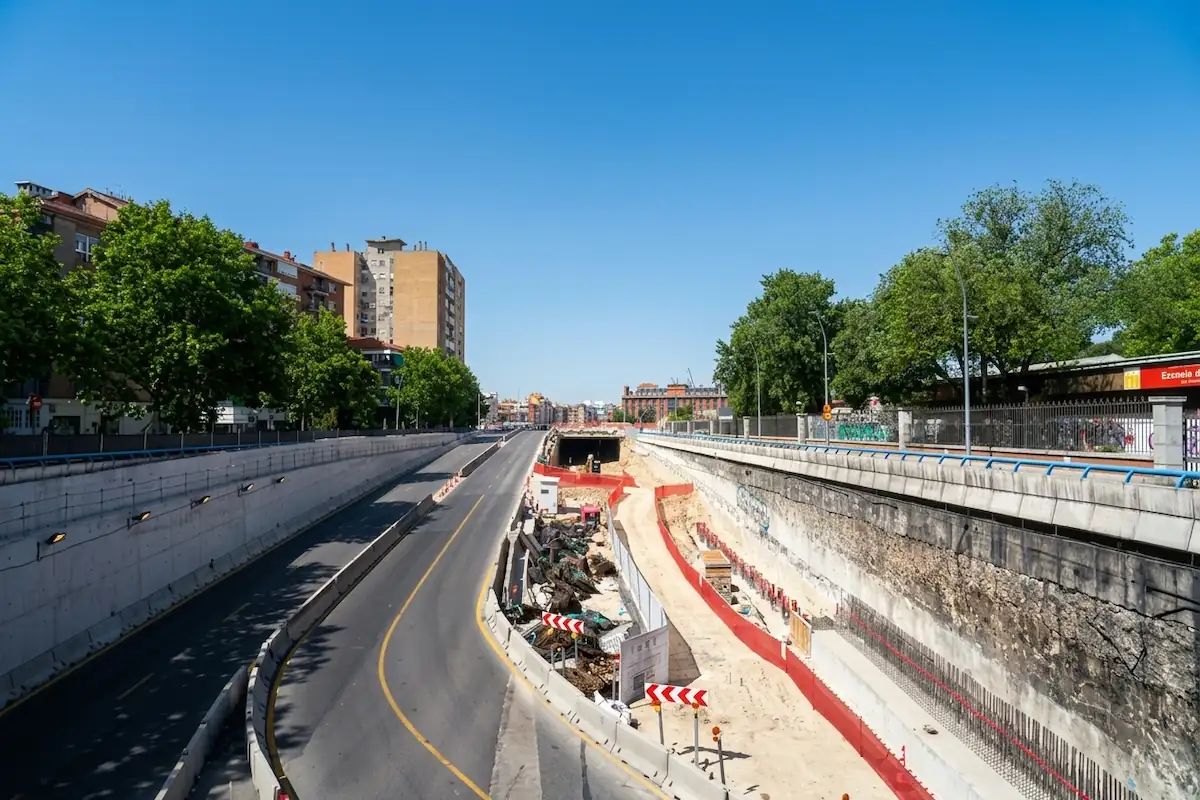
This is no minor project: it seeks to put the traffic from one of Madrid’s great historic access routes underground and free up the surface to create the future Paseo Verde del Suroeste. When the tunnel enters service, the City Council estimates that up to 90% of motor traffic will disappear from the surface, equivalent to some 80,000 vehicles a day.
The coming months will be devoted to the least visible but most important part of making the tunnel work: the lower slab, linings, lighting, variable signage, ventilation, emergency exits, cameras and safety systems. A connection with the M-30 tunnel on Avenida de Portugal is also planned, a key element in integrating the new underground route into the city’s road network.
In June and July, the beams for the Batán and Boadilla structures will be installed, making it possible to cover new sections and reduce some of the construction noise borne by residents. The City Council expects to begin the surface-level landscaping of the Paseo Verde del Suroeste in September, the major project that will replace part of the asphalt with pedestrian areas, a cycle lane, trees and places to linger.
The work will affect around 3.2 kilometres between Avenida de Portugal and Padre Piquer. The idea is to stitch together neighbourhoods that have been separated for decades by a harsh, noisy urban motorway that is difficult to cross. For many residents, the change is not measured only in cars underground: it is measured in being able to walk to Campamento, reach Casa de Campo more easily or stop living with a traffic barrier in front of their homes.
The promise is clear, but the process has not been comfortable. The works have brought closures, diversions, dust, noise, occasional gridlock and residents’ complaints in Campamento and Lucero. In some places, the feeling for months has been of living inside permanent construction works, with altered pedestrian crossings and longer everyday journeys.
The transformation of the A-5 has something of urban repair about it. For more than half a century, the Extremadura motorway has served as a boundary between south-western neighbourhoods, useful for entering and leaving Madrid but uncomfortable to live alongside. If the project fulfils its promise, the change will be very visible: less surface traffic, more green space and a friendlier connection between areas that have always been close on the map but too far apart because of noise, fumes and lanes.