
News
Catalonia reactivates the Orbital Train to connect the metropolitan area without passing through Barcelona
Travelling between cities in Barcelona’s metropolitan area without passing through the capital could cease to be an odyssey. The Generalitat has reactivated the Orbital Train project, a major rail line designed to connect municipalities such as Mataró, Granollers, Sabadell, Terrassa, Martorell, Vilafranca and Vilanova i la Geltrú through cross-city routes that avoid central Barcelona.
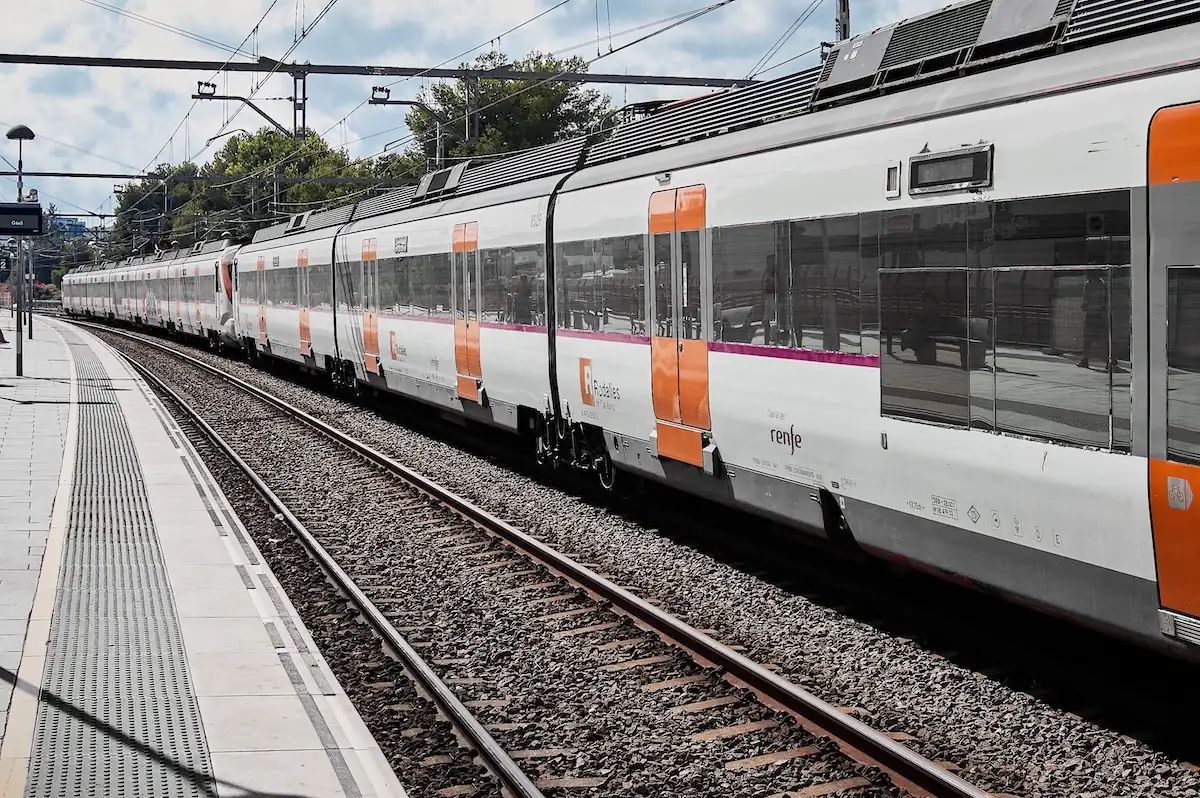
The proposal seeks to respond to an increasingly visible reality: thousands of people no longer travel only towards Barcelona, but also between peripheral cities where population, economic activity and everyday life are increasingly concentrated. Today, many of those journeys require passing through the centre or depend entirely on the car.
The project proposes a network of 119 kilometres and 39 stations, combining new railway sections with existing infrastructure such as the R3, R4 and R8 lines. It would also include interchanges with Rodalies and Ferrocarrils de la Generalitat to facilitate faster connections and reduce travel times between counties.
The immediate priority will be to reinforce the connection between Vallès Oriental and Vallès Occidental, especially between Sabadell and Granollers. That section is considered key to easing some of the pressure on railway access to Barcelona and offering real alternatives to thousands of daily travellers currently suffering overcrowding, delays and inefficient journeys.
The idea of the Tren Orbital also changes the traditional logic of metropolitan transport. For decades, almost the entire Catalan rail network was designed radially, with Barcelona as the absolute centre. The new model commits to more horizontal mobility, connecting peripheral cities that already function as major urban hubs in their own right.
The debate over the route and timescale remains open. Some more complex phases, such as links towards Mataró or Vilanova i la Geltrú, continue to raise technical and urban-planning questions. There are also voices calling for improvements to Rodalies and existing infrastructure, which have suffered badly in recent years, to be prioritised first.
Beyond engineering, the Tren Orbital represents a profound transformation in the way metropolitan mobility is understood. Reducing dependence on cars, relieving congestion in Barcelona and directly connecting cities such as Terrassa, Sabadell or Granollers could change the daily routine of hundreds of thousands of people and redefine the territorial balance around the Catalan capital.