
News
The Vallcarca viaduct faces five months of works to extend its lifespan
Work has already begun on the Vallcarca viaduct. The intervention will last five months and will repair damaged areas without disrupting vehicle traffic or pedestrian routes for most of the works.
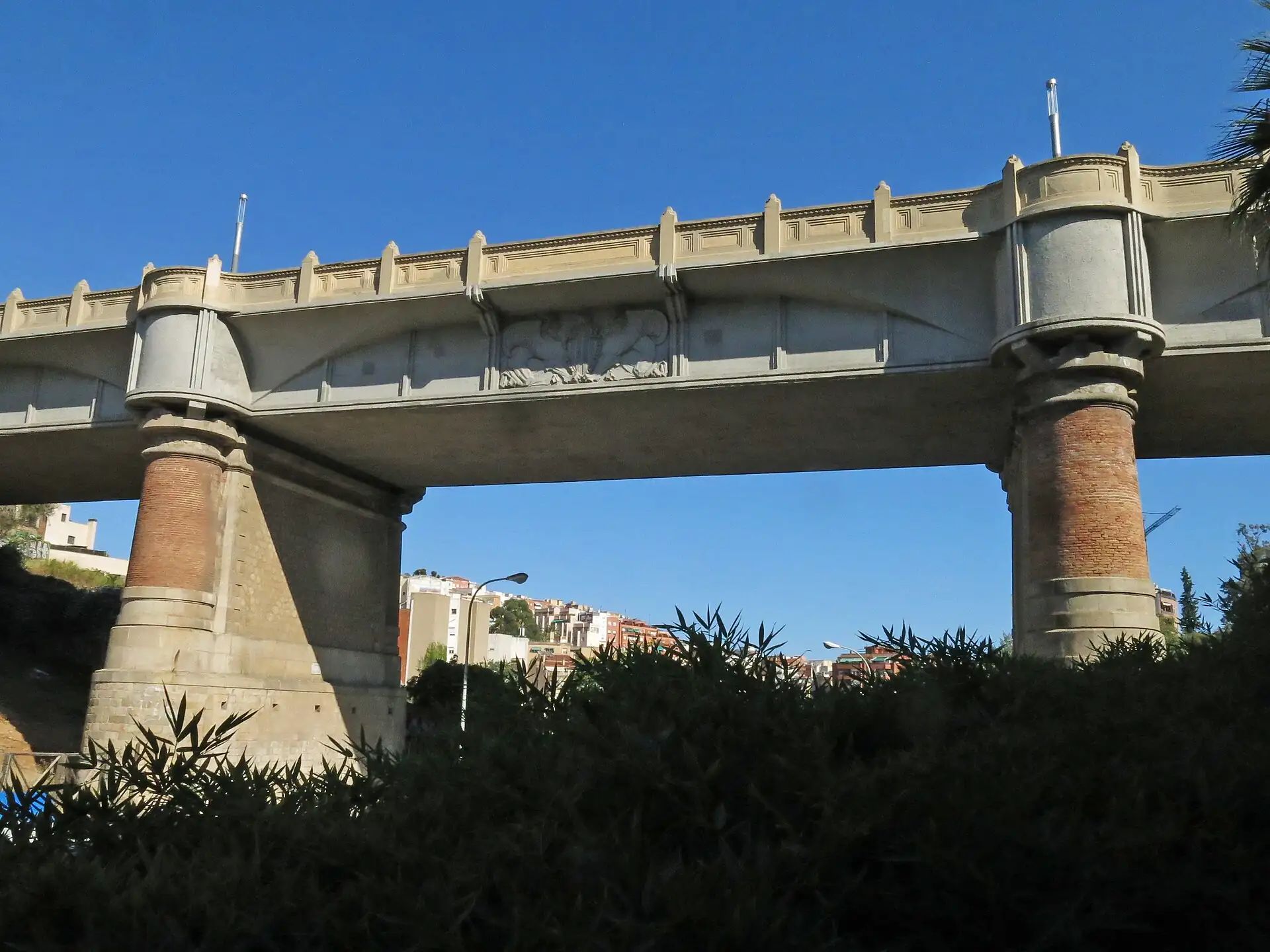
The intervention costs 1.3 million euros and aims to preserve the structure without altering its function.
The Vallcarca viaduct was officially inaugurated in March 1923, after works that began in 1908. More than a century later, a new intervention seeks to extend the useful life of this infrastructure that connects Vallcarca and el Coll.
Repairs to slow down wear and tear
Work is already underway and forms part of the Pla de Manteniment Integral (PMI) for the district of Gràcia for 2026. The project has a budget of 1.3 million euros and will last for five months.
Technical inspections identified various issues in the structure. Damaged concrete will be repaired and exposed reinforcements treated. Cracks will also be sealed and masonry elements repaired where needed.
The intervention includes cleaning the surfaces and removing spontaneous vegetation. Graffiti will also be removed. To protect the structure in the future, water-repellent treatments and anti-carbonation protection will be applied, as well as anti-graffiti coatings.
Access will be maintained for most of the works
Vehicle traffic over the viaduct and pedestrian routes will be maintained for most of the works. Traffic restrictions will be occasional and limited to certain phases, mainly at night or during periods of lower traffic.
The action is preventive and for conservation: it will not alter the configuration or function of the viaduct. On another scale, Barcelona has also promoted everyday repair initiatives, such as free repair workshops for clothes and objects in six school playgrounds.
An engineering work with heritage protection
The bridge has heritage protection level C, corresponding to assets with elements of interest. It is the work of architect Miquel Pasqual Tintorer and was notable for the first use of reinforced concrete with iron to lay foundations on the banks of a stream. In 2023, the centenary of its inauguration was celebrated.