
News
Through a female lens: Mostra Internacional de Films de Dones de Barcelona
Since 1993, this festival has offered a female perspective on cinema from every era and the most contemporary cinema, always through women’s vision. The Mostra Internacional de Films de Dones de Barcelona arrives, encompassing works and women authors that invite us to rethink cinema through female perspectives.
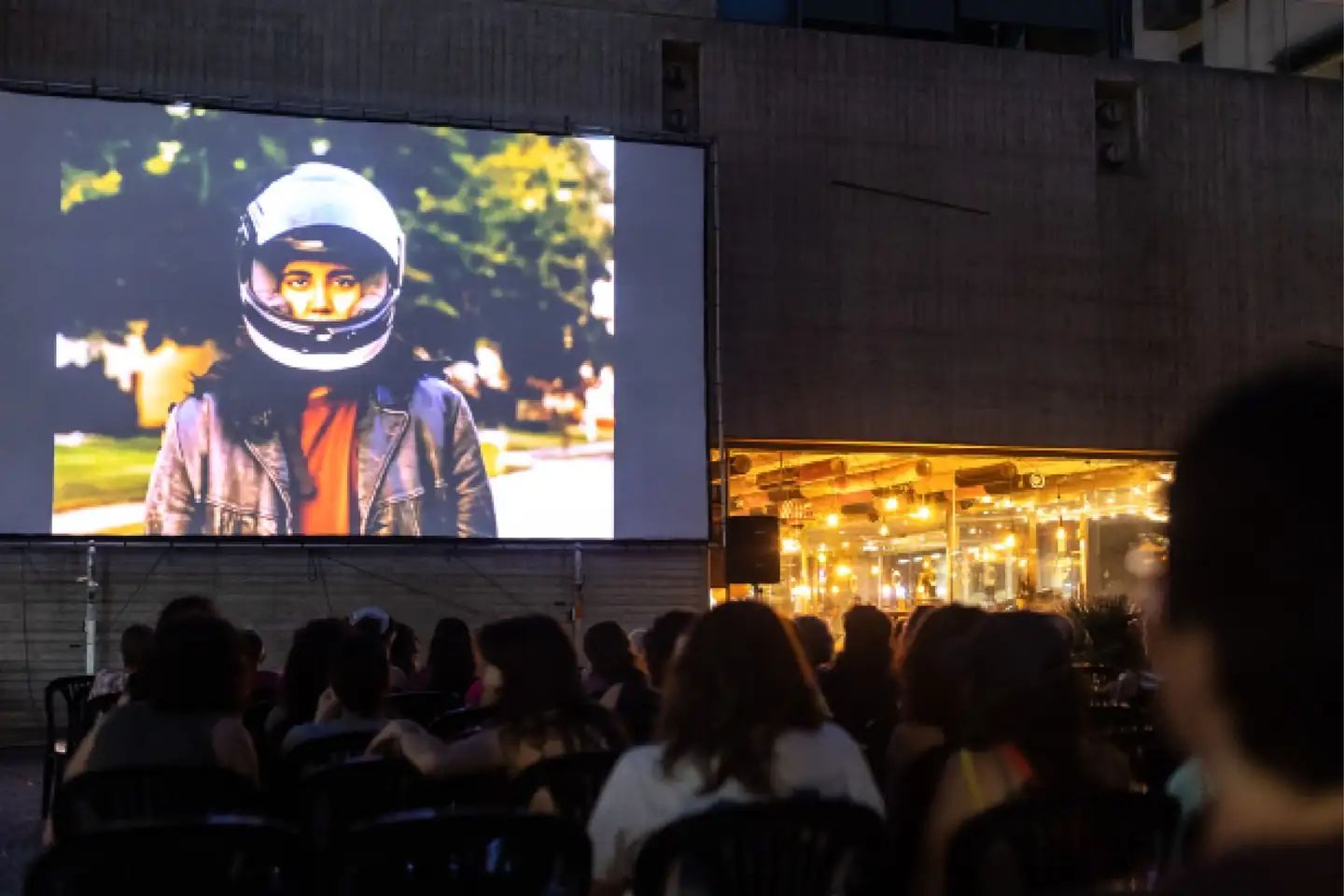
Barcelona is a reference point on the European cultural scene with the celebration of a new edition of the Mostra Internacional de Films de Dones de Barcelona. This festival, which was born in 1993, has established itself as an essential space for making films by women visible and questioning traditional narratives of film history. Far from being limited to a simple film programme, the Mostra offers a critical, open perspective deeply committed to contemporary creation and to revisiting feminist genealogies in cinema.
In its 34th edition, which will run from 21 May to 1 July 2026 in its first volume, the festival once again unfolds an ambitious and diverse proposal. Under the slogan ‘Ruminating Heritages’, the programme invites reflection on the legacy of feminism in the audiovisual sphere and on how new generations of filmmakers engage with that past. Through screenings, educational activities and meeting spaces, the Mostra becomes a cultural laboratory where different ways of understanding cinema, memory and collective creation intersect.
Mostra de Fils de Dines: a festival with its own identity
From its beginnings, the Mostra Internacional de Films de Dones de Barcelona has committed to a curatorial line that combines historical recovery and contemporary exploration. This approach has made it a distinctive event within the festival circuit by prioritising discourses that have often been excluded from dominant narratives.
The event not only screens films, but also builds context. In this sense, its work aligns with recommendations from bodies such as UNESCO, which stresses the importance of promoting cultural diversity and gender equality in the creative industries. The Mostra thus acts as a space of resistance and knowledge production.
Ruminating heritages as the central axis
The festival concept that structures this edition, ‘Ruminating Heritages’, puts forward a suggestive idea: the need to look again at the past in order to reinterpret it from the present. It is a critical exercise that questions, transforms and gives new meaning to inherited discourses.
The participating filmmakers work precisely along these lines, exploring hybrid formats that blur the boundaries between fiction and documentary. This trend responds to an evolution in contemporary audiovisual language, as studies by the British Film Institute note, highlighting the rise of experimental proposals in current auteur cinema.
A diverse and expanded programme
The first volume of this edition is structured in seven sections covering different ways of approaching feminist cinema. These include retrospectives, such as the one dedicated to Barbara Hammer, a key figure in experimental cinema, as well as family sessions at the Filmoteca de Catalunya, which seek to bring these proposals to wider audiences.
In addition, the festival expands beyond traditional venues. Spaces such as public squares, cultural centres and universities host screenings and activities, generating a direct dialogue with the city. This decentralisation allows cinema to meet audiences, breaking with the idea of cultural consumption limited to enclosed spaces.
Education, mediation and community
One of the fundamental pillars of the Mostra is its commitment to education and cultural mediation. Through workshops, meetings and educational projects, the festival encourages an active relationship with cinema, inviting reflection on the images and discourses that construct our reality.
This approach is particularly relevant in a context where access to audiovisual content is increasingly broad, but is not always accompanied by critical tools. The Mostra proposes precisely that space for collective learning, where cinema is understood as a tool for social transformation.