
News
Madrid moves more than 1,300 vulnerable people because of the fire
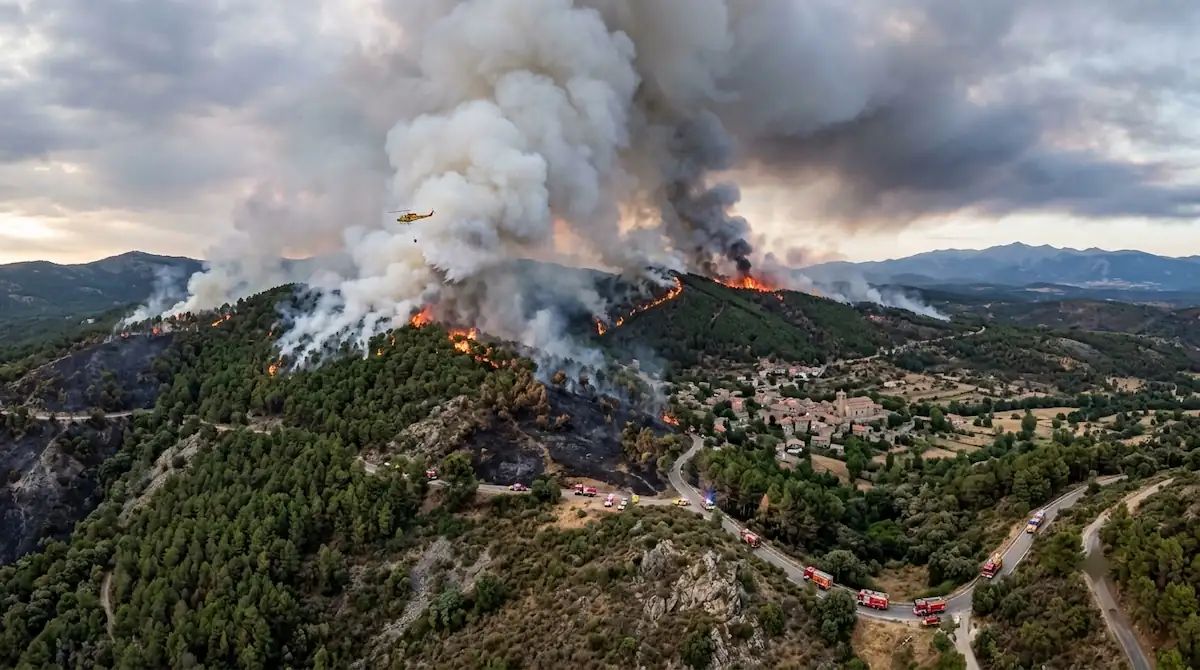
The fire affecting the south-west mountains of the Community of Madrid has made it necessary to activate one of the largest social evacuation operations of recent years. More than 1,300 residents of care homes and other centres have been moved to safe facilities, while the advancing flames disrupted life in several municipalities.
One of the most delicate moments was experienced in Cadalso de los Vidrios, where the 117 residents of the Alena centre had to leave the building quickly. Many are dependent people or have health problems and were evacuated in ambulances and buses, protected with masks and, in some cases, supported with oxygen or wheelchairs due to the presence of smoke.
The Community of Madrid coordinated the transfer of 1,308 people from different social care centres. A large number of the evacuees were received at the Casablanca de Vicálvaro residence, where they found temporary accommodation while emergency teams continued working in the affected area.
Families also went through hours of uncertainty. Some relatives followed the progress of the fire on their mobile phones until communications began to fail, while others unsuccessfully tried to approach the residences because roads were closed. Relief came when they were able to confirm that all the older people had been evacuated without personal injury.
Coordination between the centres was key to completing the transfer within a few hours. Medical records, treatments, medication and IT equipment needed to guarantee continuity of healthcare from the outset travelled alongside the residents.
The Department of Family, Youth and Social Affairs set up an assessment centre to organise the distribution of the most vulnerable people. In addition to Vicálvaro, other centres in the region took in residents from facilities evacuated in municipalities such as Chapinería and Villamantilla.
While firefighters continue working to bring the fire under control, the social care operation remains active to assist those who have had to leave their homes or residences. The emergency has tested the response capacity of care services and coordination between administrations, professionals and specialist centres.
The scene leaves an unusual image: residences reorganised within hours, professionals redoubling their efforts and families awaiting a call confirming that their older relatives were safe. In the midst of the fire, that speed of response has become one of the operation's most important elements.