
News
Francesc Macià transforms: trees, wide pavements and a new cycle lane with the tram’s arrival
Francesc Macià square will change radically with the arrival of the tram. Trees will be planted, pavements will be wider and there will be a segregated cycle lane. Traffic and mobility in the area will be completely reorganised.
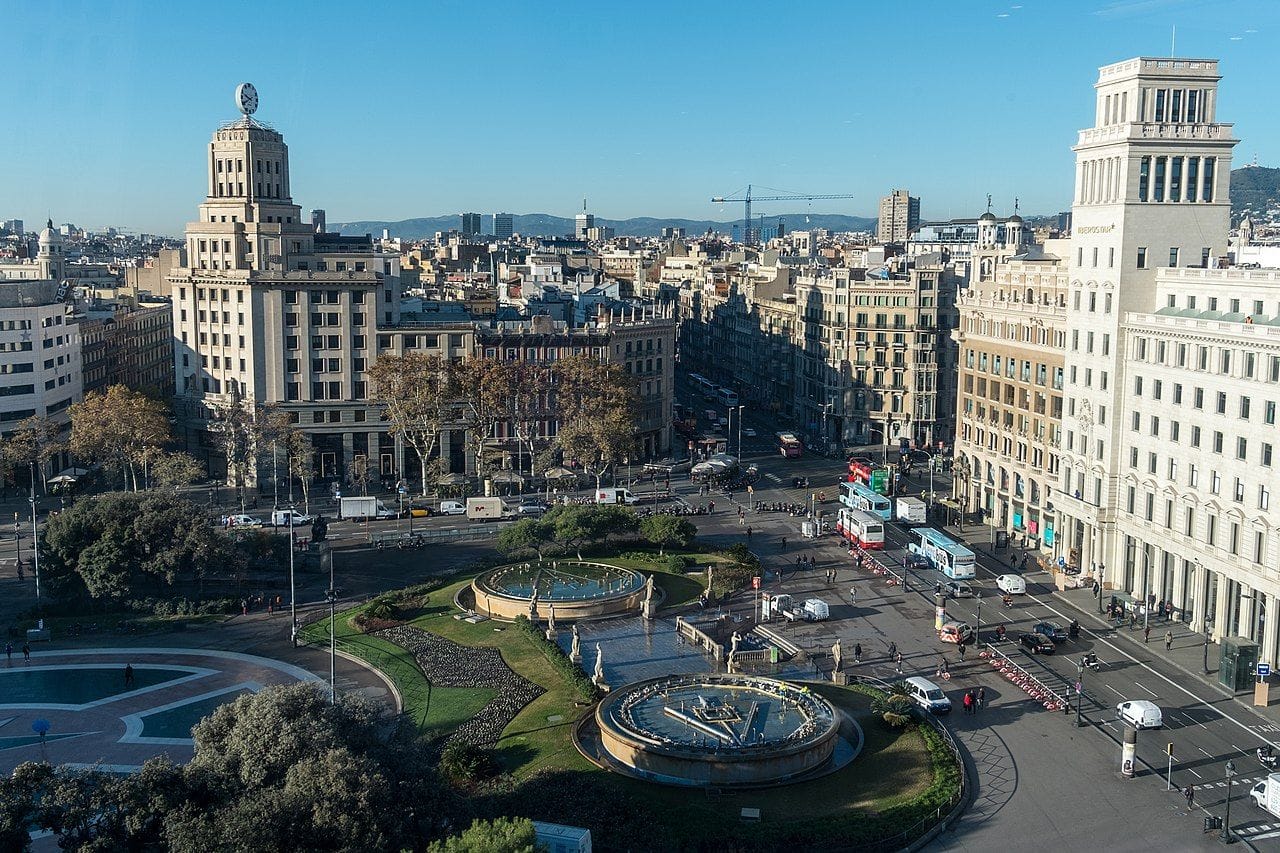
Plaça de Francesc Macià will change radically with the arrival of the tram. Trees will be planted, pavements will be wider and there will be a segregated cycle lane. Traffic and mobility in the area will be completely reorganised.
Plaça de Francesc Macià is about to undergo one of its greatest transformations in decades, news that will affect thousands of people who pass through this nerve centre of Barcelona every day. The arrival of the tram on Diagonal will not only bring a new means of transport, but will completely reconfigure the urban space, mobility and daily experience of those who live, work or pass through the area.
The project provides for the planting of around 20 trees on the pavements, which until now have lacked shade and vegetation. The pavements on the mountain side will be widened from 6 to 8 metres, gaining space for pedestrians and making it easier to pass through one of the busiest areas of the Eixample. In addition, a two-way cycle lane, segregated from traffic, will be built, connecting with the rest of the city’s cycle network and allowing safer travel.
Traffic will be deeply reorganised. The tram will run on the sea side of the square and will have priority at traffic lights, speeding up public-transport journeys. Urban and interurban buses will run through the centre of the roundabout, while private cars will be diverted to the sides, with three lanes intended to facilitate departures towards Josep Tarradellas, Urgell or Diagonal. On the way out of the city, the tram will occupy the centre, the cycle lane will run alongside it and cars will have two lanes on each side. Two traffic islands will be created to regulate traffic and facilitate vehicle movements.
The emblematic garden and central pond, designed in 1930 by Nicolau Rubió i Tudurí, will remain intact thanks to their heritage protection. However, the redevelopment works and the construction of new water collectors will require partial closures of Diagonal, lengthening the works and affecting mobility for more than three years. The works section, running from Passeig de Sant Joan to Carrer de Calvet, totals almost two kilometres and will involve a major intervention in the heart of the Eixample.
For now, the start of the works still has no specific date, although approval of the detailed projects is expected in the coming months. Once awarded, execution will last 40 months, a period in which daily life in the area will be marked by changes and works.
Plaça de Francesc Macià is much more than a busy roundabout: it is a meeting point, a symbol of the Eixample and a landmark for those entering or leaving Barcelona via Diagonal. Its current design, with the central garden and pond, reflects the urban-planning vision of the early 20th century, when the aim was to provide the city with green and monumental spaces. The transformation now approaching seeks to adapt this historic space to the needs of a more sustainable, accessible, people-centred city, without losing its emblematic character.