
News
Madrid dismantles a warehouse with thousands of counterfeit World Cup shirts
Madrid Municipal Police have dismantled a large storage site for counterfeit World Cup shirts in Arganzuela. The operation ended with two arrests, thirteen people under investigation and almost 6,700 items seized, with an estimated value of €670,000.
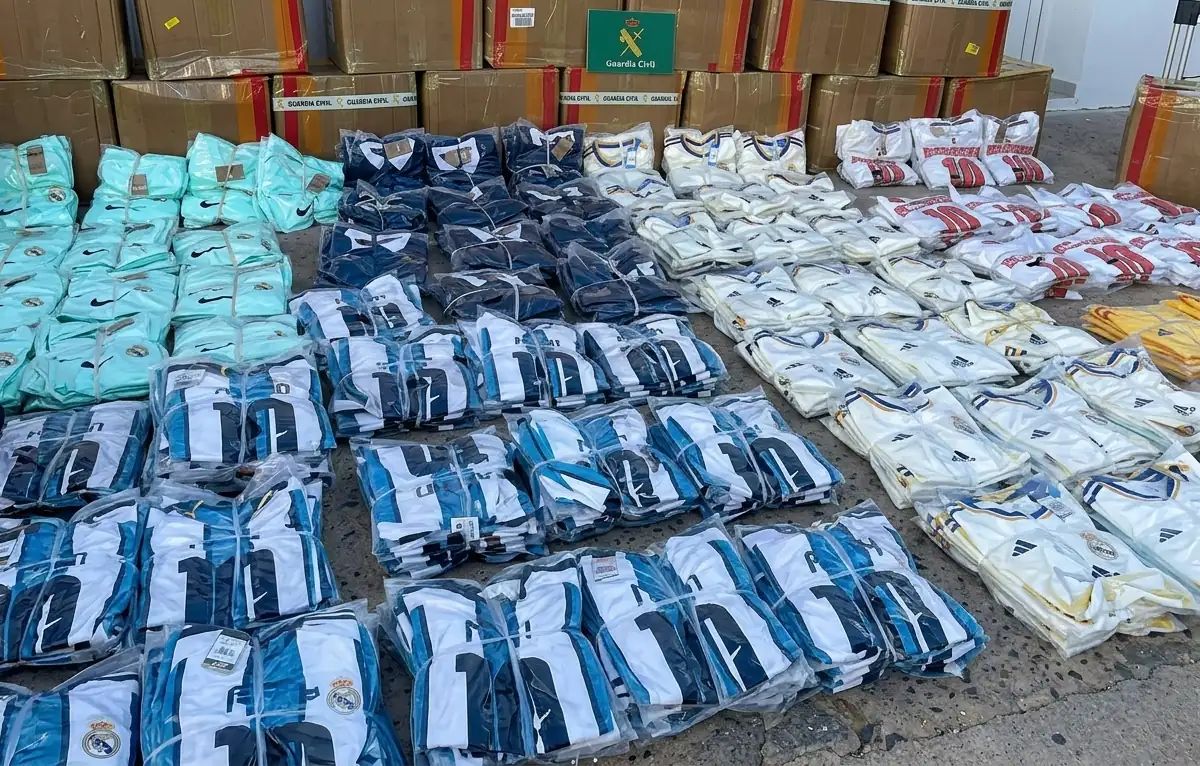
The goods consisted mostly of shirts of national teams taking part in the Football World Cup. The seizure comes at a time of high demand, when many fans are looking for kits to watch matches, celebrate victories or wear their team’s colours during the tournament.
The investigation began after suspicious movements were detected in several storage units in the district. Officers observed constant entries and exits by people carrying bags and backpacks over several weeks, a pattern pointing to a possible distribution network for counterfeit clothing.
The operation made it possible to seize thirteen storage units linked to the activity. The garments were stored there before being distributed to different points of sale, making the police action more than a simple removal of products: it affects the chain that supplied part of the city’s illegal market.
The case remains open. Police are now working to identify the tenants of some of the spaces and determine what role each person under investigation had. The operation could also help trace where the shirts were destined and which businesses or sales channels received them.
For buyers, the intervention acts as a warning. Fake shirts may seem like a cheap option, but they are part of a circuit with no guarantees, which harms lawful trade and exploits the pull of major sporting events to move a great deal of money in a short time.
Arganzuela appears in this operation as a key logistical point. Its location, connections and the presence of storage units and small warehouses facilitate fast movements of goods, both for lawful activities and for networks operating outside the rules.
The raid leaves a very specific image of the World Cup in Madrid: not everything is played out in bars, on giant screens or in official shops. Every major event also activates a parallel market that moves through neighbourhoods, warehouses and discreet businesses, forcing the city to strengthen controls just as demand soars.