
News
Barcelona prepares traffic closures for the Tour Grand Départ
Barcelona will have to get around differently during the Tour de France Grand Départ. On 2, 4 and 5 July, the city will experience traffic closures, parking restrictions and changes to public transport because of the team presentation, the opening time trial and the finish of the second stage.
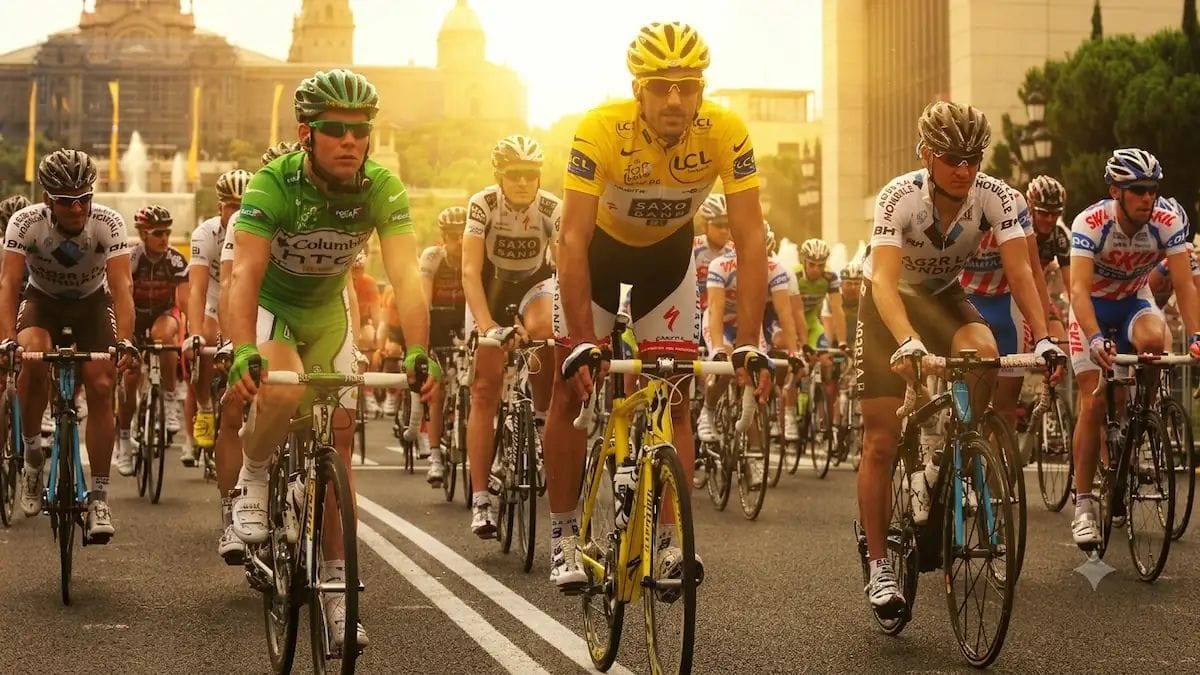
The disruptions will affect six districts, with a particular impact on Eixample, Sant Martí and Sants-Montjuïc. The City Council recommends planning journeys in advance and giving priority to the metro, which will be the most reliable option for crossing the city during the most difficult days.
The first notice will come on Thursday 2 July with the presentation of the teams. The route will link the Recinte Modernista de Sant Pau and the Sagrada Família, on a day also connected with Barcelona’s status as World Capital of Architecture in 2026.
Avinguda de Gaudí and its surroundings will be closed from the previous night. Restrictions will remain in place until 20:00 and reopening will be gradual from 21:30. The affected perimeter will include streets such as Ronda del Guinardó, Sant Quintí, Còrsega, Dos de Maig, Aragó, Avinguda Diagonal, Nàpols, Sant Antoni Maria Claret and Los Castillejos.
Parking will be prohibited in that area and access to car parks will be limited. For residents, businesses and people who need to enter or leave the area around Sant Pau and Sagrada Família, the recommendation will be to check the closures before travelling and avoid private vehicles whenever possible.
Saturday 4 July will be the most complex day. The team time trial will set off from the Fòrum and cross key points in Sant Martí, Eixample and Sants-Montjuïc before finishing in Montjuïc, after a 19.6-kilometre route.
The first closures will start at 12:00, although the full closure of the circuit will be applied at 13:30. Between 16:00 and 19:30, traffic will be completely restricted along the route, and reopening will begin from 20:30. There will also be specific closures at exits 23 and 24 of the Ronda del Litoral.
To make it easier to get around on foot, special pedestrian crossings will be provided at certain points along the circuit. Even so, crossing some streets may take longer than usual, especially in the hours before and during the passage of cyclists, the technical caravan and organisation vehicles.
On Sunday 5 July, the second stage will arrive in Barcelona after setting off from Tarragona and covering 168 kilometres. Cyclists will enter via Collblanc, Travessera de les Corts and Sants, before facing three laps of a circuit in Montjuïc with the climb to the Castell as one of the most demanding points.
Sants-Montjuïc will be the district most affected that day. Restrictions will begin at 12:00 and the full closure will apply between 13:30 and 17:45. Traffic is scheduled to reopen from 18:00, while parking will be prohibited throughout the affected area.
TMB will reinforce metro services by 40%, with special attention to lines 1 and 5. On 2 July, the L2 will not stop at Sagrada Família from 13:00, although the L5 will continue operating normally. On the surface, many bus lines will alter their routes or have no service depending on the day and the affected section.
Bicing will also see changes, with around twenty stations suspended near the circuits. For people using their own bicycles, six free supervised spaces with capacity for 150 vehicles will be provided at points such as the Fan Park, Parc del Fòrum, Plaça Pablo Neruda, Parc de Joan Miró, the MNAC and Hotel Miramar.
The arrival of the Tour does not only involve cyclists passing through. Team, organisation, security and advertising-caravan vehicles must also circulate, so closures will begin before the competition and remain in place until each area can return to normal.
Barcelona will experience three days in the international spotlight, but also of delicate mobility. For people who work, live or travel through the affected neighbourhoods, the key will be to plan ahead: check routes, leave the car parked if possible and accept that, during the Tour, the most direct route may not be the quickest.