
News
History of Semana Santa de Madrid
Every spring, Madrid celebrates the traditional festivities of Semana Santa. The streets fill with tamborradas and saetas, organ concerts are held in churches, and bakeries serve torrijas and other typical Easter sweets. In this article, we’ll tell the story of Semana Santa madrileña, its processions, music, and sweet traditions.
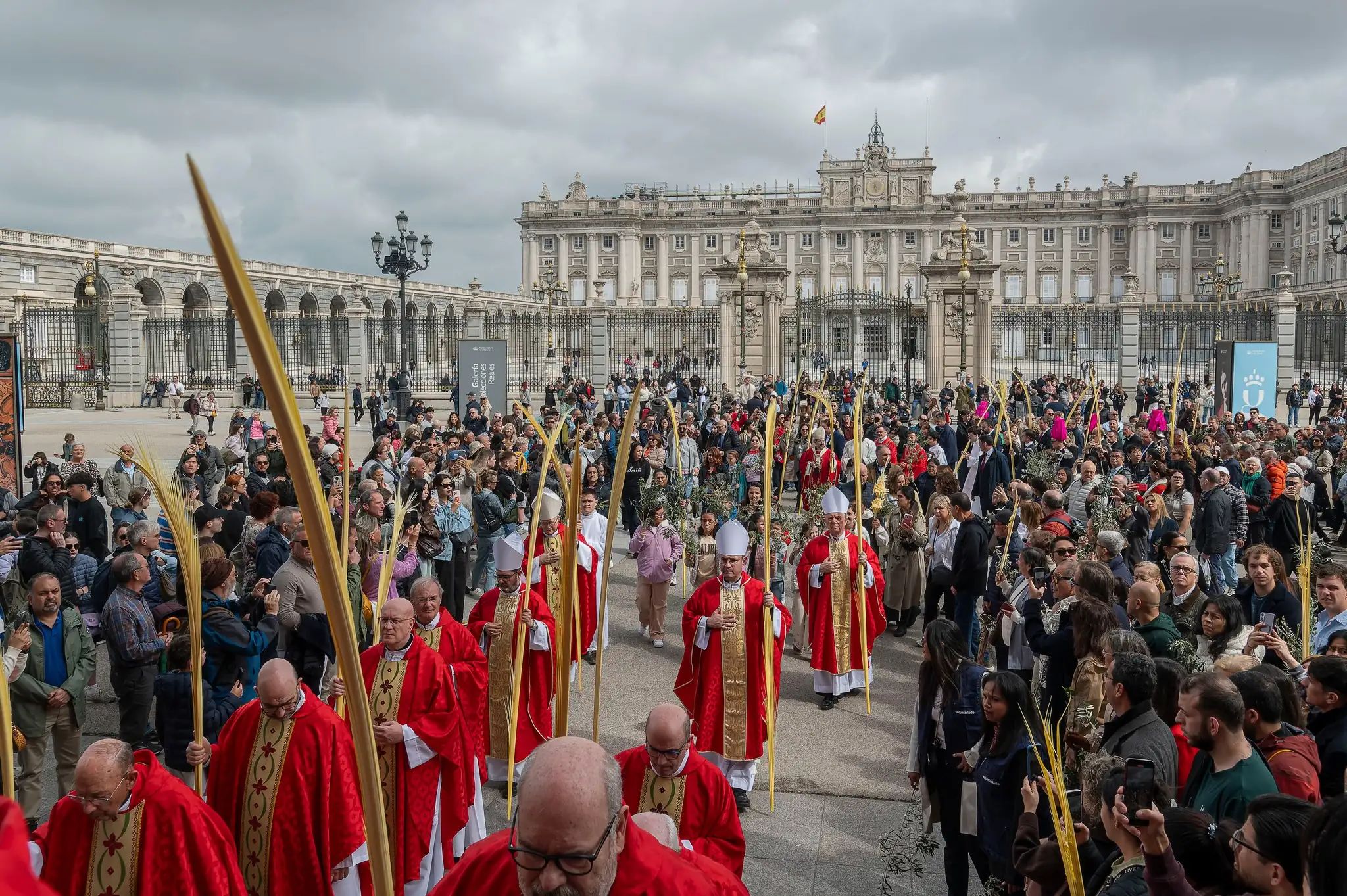
Every spring, as Holy Week approaches, Madrid seems to be immersed in one of the city’s most important events. The streets are filled with the sweet aroma of torrijas, Madrileños prepare for the night-time processions, and the city itself becomes a great living stage, where history, faith and popular traditions are intertwined especially closely.
Photo by Archidiócesis de Madrid
History of Holy Week in Madrid
The origins of Holy Week in Madrid date back to the 16th century. At that time, in a city with barely 20,000 inhabitants, the first brotherhoods already existed and processions were held. One of the oldest was the Cofradía de la Vera Cruz, which laid the foundations for penitential processions. With the transfer of the royal court to Madrid, new brotherhoods emerged, among them Nuestra Señora de la Soledad and the Cofradía de los Siete Dolores de María. Their members included representatives of the nobility and even members of the royal family.
Photo by semanasanta.archimadrid.com
The tradition truly flourished after 1561, when Felipe II moved the court to Madrid. The processions took on a new scale and solemnity. The brotherhoods enjoyed royal patronage and their parades passed close to the royal Alcázar, while residents watched them from balconies and windows. Faith remained deeply personal, but was now expressed in a majestic and public way: rich vestments, the ringing of bells, flickering candles and heavy sculptures moving slowly through the streets.
In the 17th century, the tradition reached its height. Guilds of craftsmen actively supported the brotherhoods and created impressive pasos, complex sculptural compositions depicting scenes from the Passion of Christ and the sufferings of the Virgin. These majestic groups moved slowly through squares and narrow streets, stopping before ancient churches.
In the 18th century, processions began gradually to decline. Rising costs, Enlightenment ideas and changing attitudes towards public penance caused the tradition to lose some of its splendour. By the 19th century, Madrid had virtually only one major Good Friday procession left. The confiscation of ecclesiastical property and subsequent wars dealt a severe blow: many ancient images were lost and the city seemed, for a time, to have lost part of its spiritual soul.
The revival began in the 20th century. The old brotherhoods resumed their activity, new groups emerged and processions once again filled Madrid’s streets. Today they carefully preserve the memory of every era: one can sense the austerity of the first pasos of the 15th and 16th centuries, the solemnity of the courtly period and that quiet, restrained grandeur which managed to survive centuries of trials.
Processions: the rhythm of drums and the celebration of faith
Photo by semanasanta.archimadrid.com
The heart of Holy Week is the processions. Members of the brotherhoods move slowly through the narrow historic streets, carrying heavy sculptural compositions: the pasos. They are accompanied by music and the famous tamborrada: a rhythmic, powerful roll of drums. Every beat resonates in the chest, creating a tense and sublime atmosphere that makes the events of the Passion of Christ felt almost physically.
Dozens of ancient images take part in the processions. Jesús Nazareno de Medinaceli is especially venerated: his statue, which passes through the city centre, inspires profound and reverent emotion among the faithful.
The Nazareno’s attire: tunic and hood
The most recognisable image of Madrid’s processions is the figures in long tunics and tall conical hoods that completely conceal the face. Today, this attire often surprises those seeing it for the first time. Yet its meaning is deeply religious and dates back to the Middle Ages.
Photo by Tomas Calle Boyero / Shutterstock / FOTODOM
In former times, these garments were worn by repentant sinners who wished to remain anonymous. The conical hood symbolised the soul’s aspiration towards heaven, while the concealed face underscored humility: the person repents without concern for the gaze of others. Initially, this attire was part of the practice of the disciplinados, brotherhoods that practised self-flagellation. Today, the tunic and hood remain symbols of devotion and inner humility, turning Madrid’s night-time streets into a scene of genuine religious mystery.
The music of Holy Week
Saetas have become an essential part of Holy Week in Madrid: they are passionate, deeply moving songs sung without any instrumental accompaniment. Traditionally they are performed as the procession passes, sometimes directly from the balconies of old houses. At such moments, any street is transformed into a living stage, and the singer’s voice becomes both prayer and artistic experience.
Saetas are especially memorable in the heart of the city: Plaza Mayor, Puerta del Sol, Calle Mayor and adjoining central streets. Both professional singers and local residents raise their voices above the procession, and for a few seconds everything around them comes to a halt.
Photo by semanasanta.archimadrid.com
Besides saetas, Holy Week in Madrid offers another kind of music. Churches, cathedrals and ancient monasteries host organ concerts and performances by classical ensembles. These sounds, resonating beneath the vaults of places of worship, create a unique and sublime atmosphere, allowing listeners to hear the music that has accompanied Holy Week in Madrid for centuries.
Torrijas and the sweet trace of Easter
Photo by esthermm / Shutterstock / FOTODOM
No Holy Week in Madrid is complete without torrijas: slices of bread soaked in milk, egg and an aromatic syrup. This dessert has become a symbol of the festival. Along the Ruta Dulces Pasiones, visitors can taste not only classic torrijas but also other traditional Easter sweets, whose recipes are passed down from generation to generation. During these days, the city is filled with a cosy, homely aroma that gives the festival a special warmth and family intimacy.
Holy Week in Madrid intertwines deep faith, elevated art and living popular culture. It preserves traditions dating back more than five centuries, brings together different generations and gives the Spanish capital a unique atmosphere during the Easter days.