
News
i2CAT opens its headquarters at Tech Barcelona to speed up research into 6G, AI and cybersecurity
Barcelona adds an important piece to its technology map. Digital research and innovation centre i2CAT has opened its new headquarters at Tech Barcelona's Pier01, in Palau de Mar, with more than 2,000 square metres and a team of around 250 people dedicated to strategic technologies such as 6G, artificial intelligence and cybersecurity.
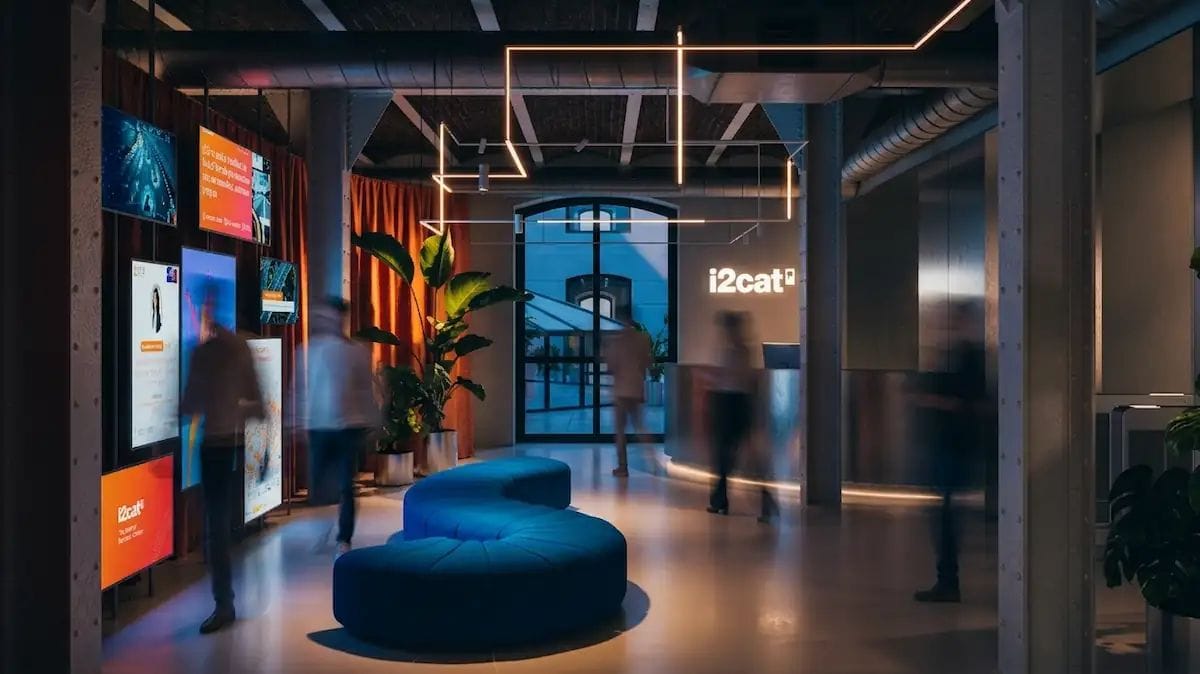
The move marks the end of a period of more than two decades at the Campus Nord of the Universitat Politècnica de Catalunya. The new location is no coincidence: Tech Barcelona brings together start-ups, digital companies, investors and institutions, an environment designed to get research out of the laboratory sooner and turn it into applied projects.
The headquarters will have 15 laboratories and will make it possible to expand research and development capacity to around 80 projects. Its most notable lines include advanced communications, cybersecurity, artificial intelligence, smart mobility, quantum technologies and next-generation connectivity.
One of the key spaces will be 6GStarLab, presented as the first European low-Earth-orbit laboratory dedicated to 6G. The commitment fits into an increasingly strategic technological race: future networks will not only provide faster mobile phones, but also connected vehicles, smart ports, critical public services and industrial systems that need minimal latency and maximum security.
Cybersecurity is also gaining weight. Together with the Govern, i2CAT is preparing initiatives such as an artificial-intelligence-supported “digital shield” and a resilience plan to protect critical public networks. In an increasingly digitalised city, this affects areas as everyday as transport, e-government, healthcare, urban services and emergency management.
The centre also wants to increase its participation in European R&D projects by 50% and create one new technology spin-off each year. That ambition reinforces the idea of Barcelona as a city able to attract talent, European funds and companies linked to advanced innovation.
The arrival at Palau de Mar also opens up new collaborations with strategic sectors. i2CAT already works with the Port de Barcelona on projects related to drones, 5G networks and port management, supported by NextGenerationEU European funds within the UNICO R&D 6G programme.
For Barcelona, this headquarters is not merely a corporate move. Placing cutting-edge research in an environment such as Tech Barcelona brings universities, public administration, start-ups and companies into the same circuit. If it works, the impact will not be seen only in headlines about 6G or artificial intelligence, but in skilled employment, safer urban solutions and an economy less dependent on traditional sectors. That is where innovation stops being a big word and starts touching everyday life in the city.