
News
Illa supports keeping trains to Madrid running during the line renovation
The Barcelona-Madrid corridor carries more than 40,000 passengers a day and its renovation is already planned for 2027. Óscar Puente is proposing a total closure of between 12 and 24 months; Salvador Illa is calling for the works to be compatible with service if safety can be guaranteed.
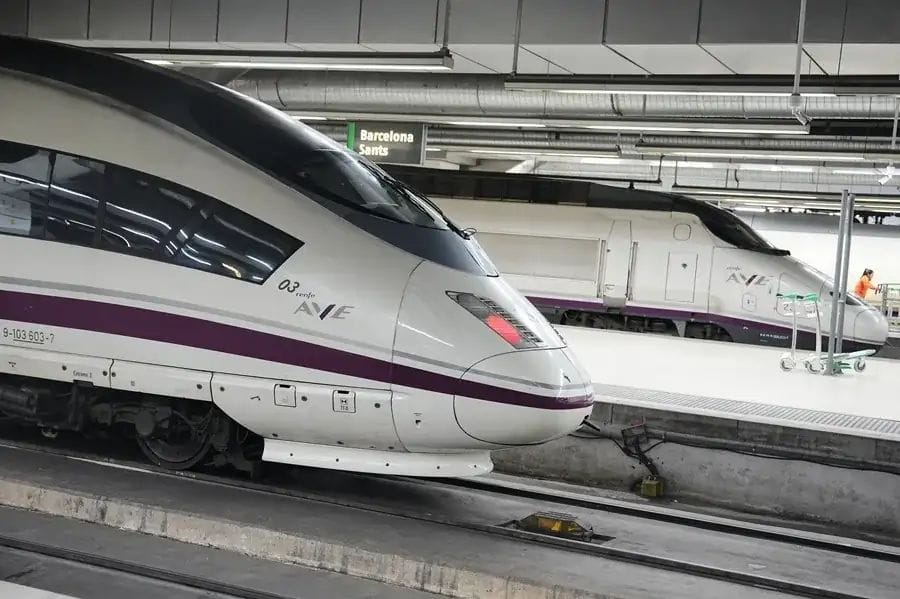
More than 40,000 daily travellers rely on a rail corridor that could be closed during renovation works. The Colegio de Ingenieros de Caminos in Catalonia has also questioned this possibility.
The Minister of Transport, Óscar Puente, has suggested a complete suspension of traffic to speed up the works. The president of the Generalitat, Salvador Illa, argues for keeping the service running as long as safety is prioritised and the works interfere as little as possible with passengers.
A closure that could last up to two years
The intervention on the Barcelona-Madrid line was already planned for 2027. Puente has raised the possibility of changing how it is carried out: stopping traffic along the 600 kilometres of track to prevent train circulation from prolonging the works.
The total closure could last between 12 and 24 months. Puente acknowledges that the decision would provoke opposition, but maintains that it would allow the works to be completed within that timeframe, whereas keeping the service running could extend them to five years.
Illa calls for minimising disruption to passengers
In an interview on Cadena SER, Illa argued that investments can be combined with maintaining the service, as has been done so far. He also recalled that Puente suggested reviewing the approach because other countries work differently.
For the president, renovations should be carried out when necessary, with the highest safety standards and aiming to minimise the impact on the service.
Engineers and businesses call for alternatives
The Colegio de Ingenieros de Caminos considers it appropriate to renew the infrastructure, but calls for avoiding a complete shutdown of a corridor with more than 40,000 daily travellers. Its dean, Pere Calvet, said to the media on Friday that closing the line would allow the works to finish sooner, but questioned whether a total interruption is feasible given the level of use in recent years.
The business association Pimec also calls for the renewal and reliability of the service to be weighed alongside the impact on mobility and business activity. It calls for planning and dialogue with economic stakeholders, as well as alternatives that maintain the connection between Madrid and Barcelona.
The most used high-speed line
The Madrid-Barcelona was the second high-speed line to enter service in Spain, after the one connecting Madrid with Andalusia. The section between the capital and Lleida was inaugurated in 2006.
It is the most used corridor in the network and the one with the highest concentration of trains in operation. Renfe and Iryo compete there with Ouigo.