
News
Line 11 advances beneath Madrid with key new works between Comillas and Madrid Río
The extension of Metro line 11 continues to advance beneath Madrid at a steady pace and is already beginning to alter everyday life in several southern neighbourhoods. Work between Comillas and Madrid Río is entering a decisive phase thanks to the continuous arrival of new tunnel segments manufactured in Toledo, essential pieces that allow the Mayrit tunnel-boring machine to keep excavating without interruption.
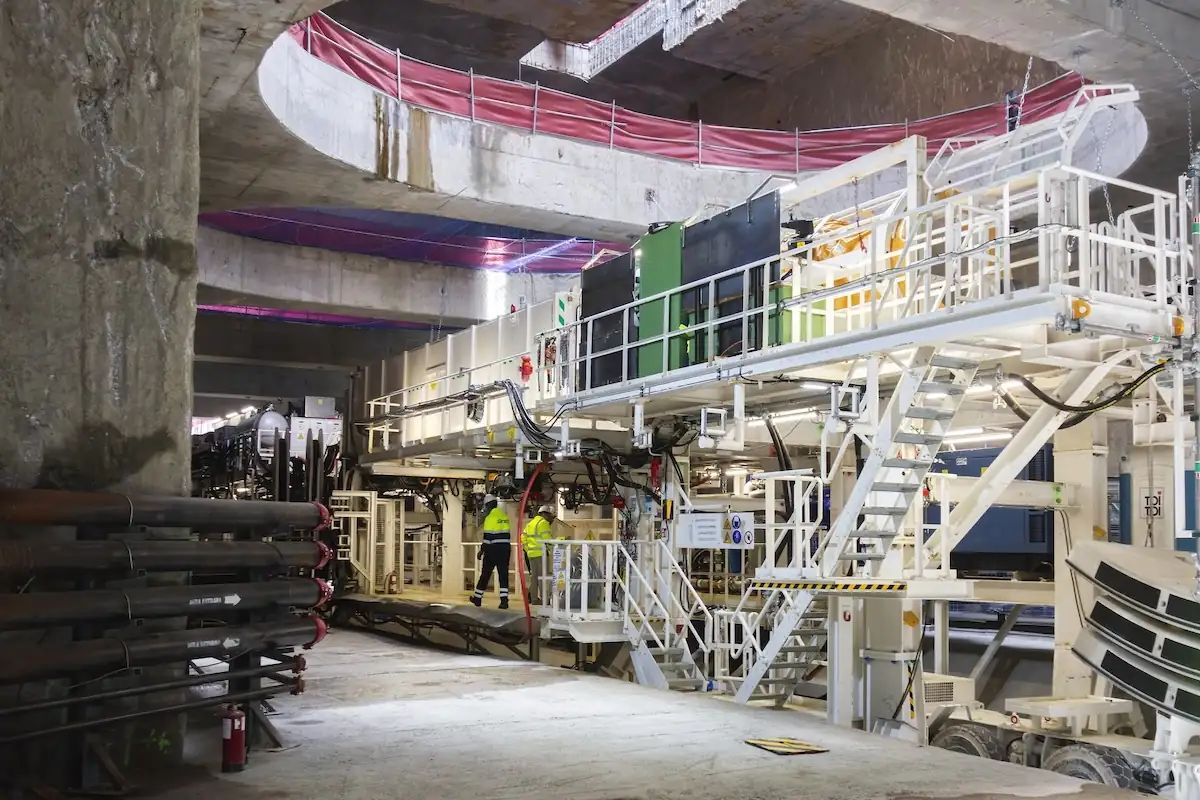
Every day, around ten lorries connect the Noblejas plant with the capital to transport the structures that will line the new tunnel. The operation runs practically 24 hours a day and reflects the logistical scale of one of the most ambitious mobility projects currently facing Madrid.
The segments also incorporate technical improvements that are unusual in this type of infrastructure. Their diamond-shaped design seeks to reduce seepage and improve the tunnel’s watertightness, while fire-resistant materials reinforce the safety of a line intended to become one of the main axes of the Metro madrileño.
The tunnel-boring machine has already completed nearly half of the planned section to Madrid Río and is progressing at around 20 metres a day. In total, some 25,000 segments will be needed to cover the 5.5 kilometres between Comillas and Conde de Casal, a connection that will change how people travel between several points in the south and east of the city.
While the works advance underground, their impact is already noticeable at street level in some neighbourhoods. Noise, construction-vehicle traffic and constant movement around the work areas have for months been part of the everyday landscape for many residents. Comunidad de Madrid insists that the disruption will be temporary and asks for patience until the work is completed.
The extension of Line 11 also seeks to reduce journey times and ease some of the pressure on crowded lines and major interchanges. The future route will make it possible to connect outlying areas without having to cross the centre, something especially important for thousands of people who travel daily between neighbourhoods and municipalities in the metropolitan area.
Madrid has been growing outwards for years, and that has made mobility one of the city’s major urban challenges. The new Line 11 represents precisely that attempt to adapt public transport to an increasingly extensive capital, where saving interchanges and cutting journey times is beginning to directly change daily life in many neighbourhoods.