
News
The L8 extension progresses with the transfer of the tunnel-boring machine
Barcelona experienced in the early hours one of those movements that goes almost unnoticed by many residents, but marks the progress of a major project. The extension of the Ferrocarrils L8 has taken a key step with the transfer of the tunnel-boring machine's cutterhead to Gran Via, where the machine that will excavate the new tunnel will be assembled.
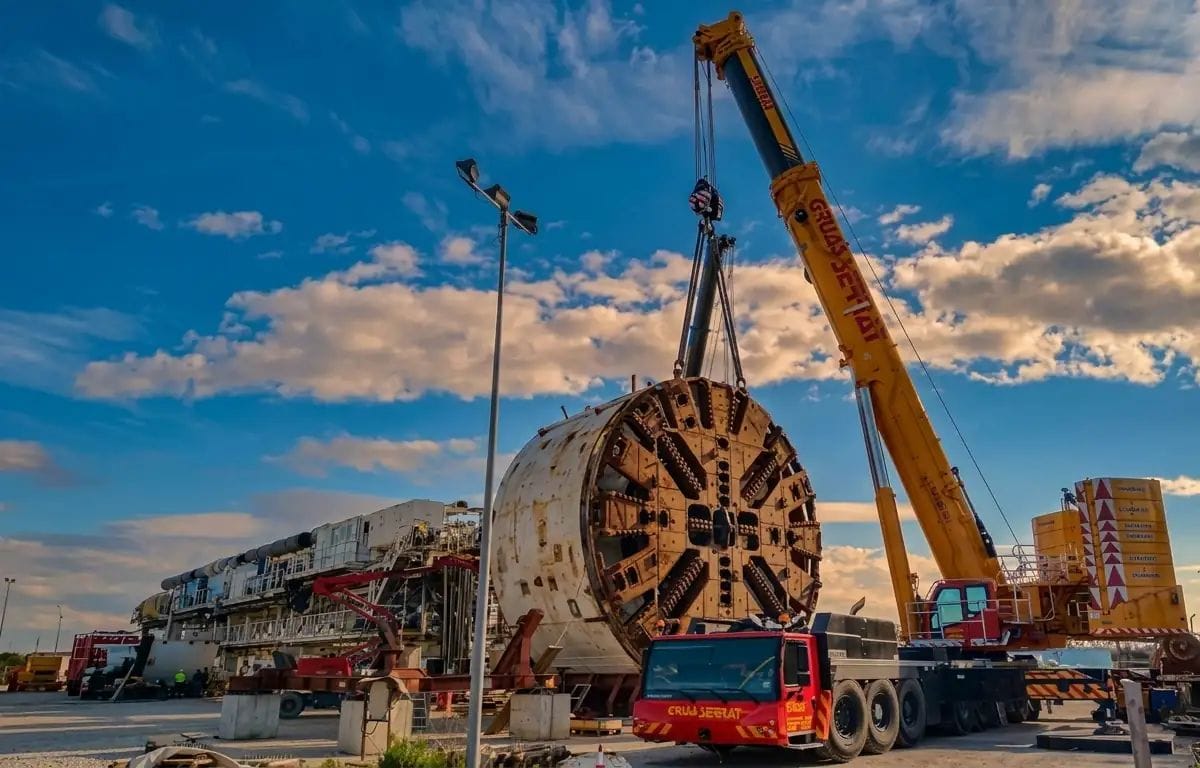
The piece, weighing around 300 tonnes, was transported from the port to the launch shaft on Gran Via. The operation was carried out at night and coordinated with the Guardia Urbana to avoid gridlock, longer closures and disruption in an area particularly sensitive for daily mobility.
At the same time, the tunnel boring machine's drive system arrived from Sant Boi de Llobregat, another essential part needed to complete its assembly. The works are therefore entering a more visible phase, although the main work will take place underground over the coming months.
These special transfers form part of an operation that has been unfolding since the start of the year and will continue until the summer. The aim is to have ready the tunnel boring machine that will excavate the 3.5-kilometre tunnel between Espanya and Gràcia, a connection set to transform many journeys within Barcelona.
The extension of the L8 will add new stops at Hospital Clínic and Francesc Macià, two strategic points for daily mobility. The connection will provide better links between the Llobregat-Anoia area and heavily used parts of the city, and will reduce dependence on other overcrowded interchange stations.
For residents, the works mean disruption now, but also a significant improvement in the medium term. Once completed, the line will make journeys easier between neighbourhoods, health centres, office areas, shops and transport hubs that currently require changes or less direct routes.
The L8 is a key part of FGC and metropolitan mobility. Its extension not only brings Espanya and Gràcia closer together, but reinforces an idea that is increasingly necessary in Barcelona: moving more people underground by public transport, and reducing pressure on streets, buses and private vehicles.
The transfer of the cutterhead offers a striking image of the transformation the city is undergoing. While Barcelona continues to function above ground, a new connection is being prepared beneath its streets that could change the way people cross the city and reach the centre from the Llobregat area.