
News
Casa Batlló as you've never seen it before: hosting an immersive and futuristic exhibition
Beyond the Façade is the new immersive exhibition opening at Casa Batlló Contemporary, the space dedicated to contemporary art located on the second floor of Gaudí's iconic building, offering a new perspective on the venue.
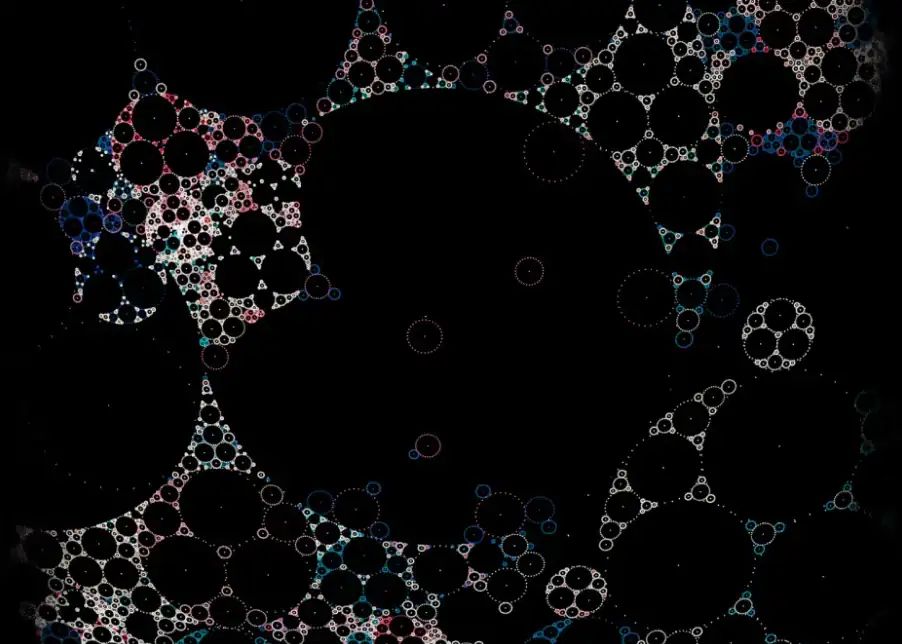
Few façades on Passeig de Gràcia inspire as much fascination as that of Casa Batlló. Its undulating balconies, the colours of its mosaics and the roof that evokes a dragon’s back form part of Barcelona’s collective imagination. More than a century after its remodelling, the building designed by Antoni Gaudí continues to generate new readings and cultural proposals. It is in this context that Beyond the Façade was born, the new immersive exhibition at Casa Batlló Contemporary, the space dedicated to art located on the second floor of the emblematic modernista building.
The initiative does not arise in just any place. Casa Batlló, declared a UNESCO World Heritage Site in 2005 alongside other works by Gaudí, represents one of the foremost exponents of Catalan modernism. As UNESCO itself explains in its official entry on «Works of Antoni Gaudí», these buildings constitute an exceptional contribution to the development of architecture and building technology at the end of the 19th century and the beginning of the 20th. Casa Batlló Contemporary now belongs to that tradition of formal and symbolic innovation, a space committed to dialogue between historical heritage and digital creation, expanding the visitor experience beyond the usual museum route.
Casa Batlló and its new conception in the Any Gaudí
Casa Batlló, a work completed in 1906 by Antoni Gaudí, is much more than a tourist attraction. Conceived as the comprehensive renovation of an earlier building commissioned by the industrialist Josep Batlló, Gaudí’s intervention completely transformed the original structure and aesthetics.
The façade, clad in trencadís and glass, plays with natural light; the interior, arranged around a central courtyard, optimises ventilation and lighting with technical solutions ahead of their time. This year it also takes on greater prominence with the celebration of the Any Gaudí, to mark 100 years since the artist’s death.
The international recognition is no coincidence. UNESCO stresses that Gaudí’s works demonstrate a creative exchange of architectural and artistic values, as well as a singular interpretation of natural forms applied to construction. In the case of Casa Batlló, that fusion of nature, symbolism and technique turns every room into a sensory experience. This almost theatrical dimension of the building explains why it is now an ideal setting for immersive proposals that explore new ways of narrating art.
A space for contemporary art
Casa Batlló Contemporary occupies the second floor of the building and was created with the aim of integrating current artistic languages into a top-tier heritage setting. The commitment responds to a growing trend in European museography: incorporating digital technologies and immersive formats to enrich cultural mediation.
In this context, Beyond the Façade is an experience that invites visitors to look beyond the building’s iconic skin. Through enveloping projections, audiovisual resources and a narrative that dialogues with the architecture, the exhibition proposes a reflection on the visible and the invisible in Gaudí’s work. It is not about replacing direct contemplation of the building, but expanding it, offering layers of interpretation that connect past and present.
Beyond the façade: an immersive experience
The Beyond the Façade route is structured around the idea of crossing the surface. The façade, transformed into a global symbol, serves as the starting point for exploring creative processes, natural references and contemporary readings of modernism. Digital projections envelop the visitor and recreate textures, organic forms and plays of light that evoke the Gaudí universe from a current perspective.
The proposal stands out for its balance between spectacle and content. Rather than being limited to a technological display, the exhibition contextualises the work within its historical and cultural framework, fostering a deeper understanding of the building. Thus, the visitor not only contemplates striking images, but takes part in a narrative linking architecture, art and urban memory.