
News
Solar energy is already changing how businesses and households consume energy in Spain
Spain is experiencing an energy shift that no longer belongs to the future. Solar power is gaining ground, photovoltaic self-consumption is breaking records and more and more companies are looking to smart batteries as the next major tool for cutting costs and relying less on the grid.
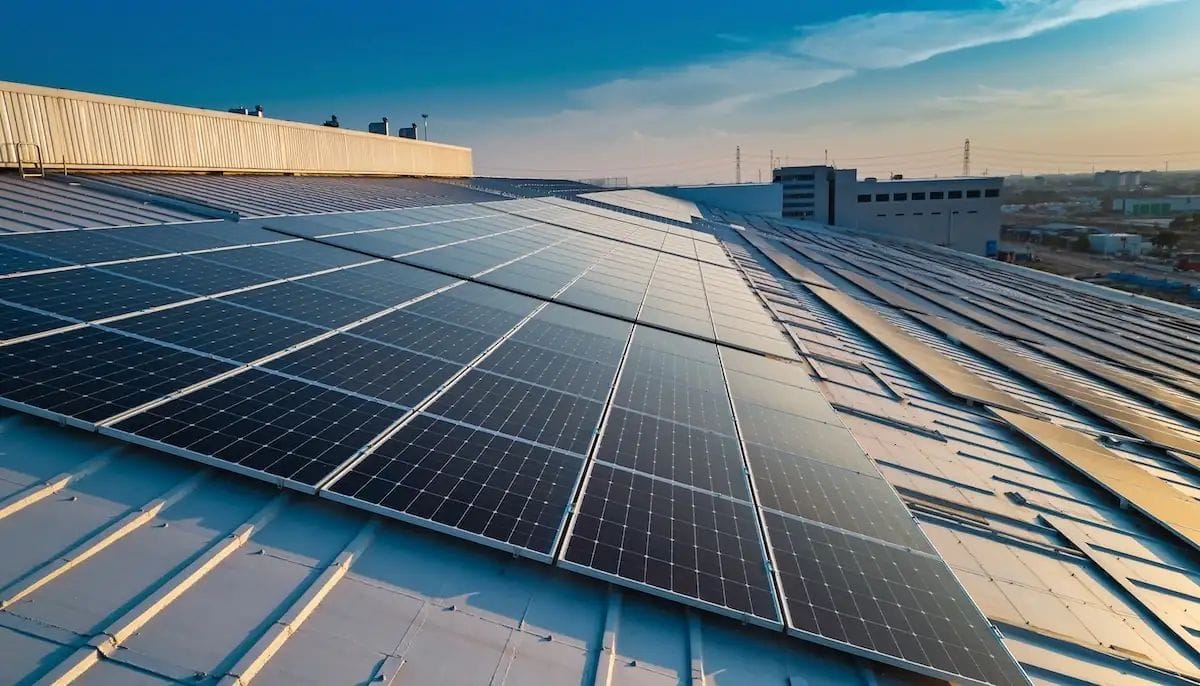
The advance is especially noticeable in cities with strong economic activity, such as Barcelona. Renewable electricity already occupies a central role in the national electricity system, while self-consumption exceeds 9.3 GW installed. For households, businesses and large companies, the question is no longer only how to generate clean energy, but how to make better use of it.
That is where the great challenge of the coming years comes in: storing the solar energy produced in the hours of greatest radiation and using it when it is really needed. Smart batteries make it possible to store surpluses, smooth consumption peaks and protect companies from volatile electricity prices.
Technology is also changing the way buildings are managed. Digital platforms such as Hubgrade make it possible to monitor consumption in real time, anticipate needs and decide when it is best to consume, store or redistribute the energy generated. Sustainability thus ceases to be only a label and becomes part of day-to-day management.
Veolia, with more than two decades of experience in the sector and 256 facilities in Spain, is among the companies driving this leap. Its model combines the design, installation, maintenance and digitalisation of solar plants adapted to each client, especially in large retail spaces and business environments.
One of the most recent examples is in the Valencian Community, where a shopping centre has incorporated a high-capacity battery system integrated with solar energy. The installation makes it possible to cover more than 40% of the building's energy demand through renewable self-consumption and uses artificial intelligence to optimise every decision.
The model is also beginning to scale up in large retail groups. Veolia is working with a multinational on the deployment of 18 solar installations capable of generating 23,000 MWh per year and avoiding the emission of 17,000 tonnes of CO₂. The key lies in combining panels, storage and digital management.
The energy transition is thus entering a new phase. Installing solar panels is no longer enough: the objective is to produce, store and consume better. For companies, this means greater efficiency, greater autonomy and a more solid way to move towards decarbonisation.