
News
Barcelona Metro's least-used station records only 40,000 passengers a year
While Barcelona Metro records historic passenger figures, one station remains entirely outside that pace. It is Casa de l'Aigua, on Line 11, which barely exceeds 40,000 annual validations and remains the least-used stop on the whole network.
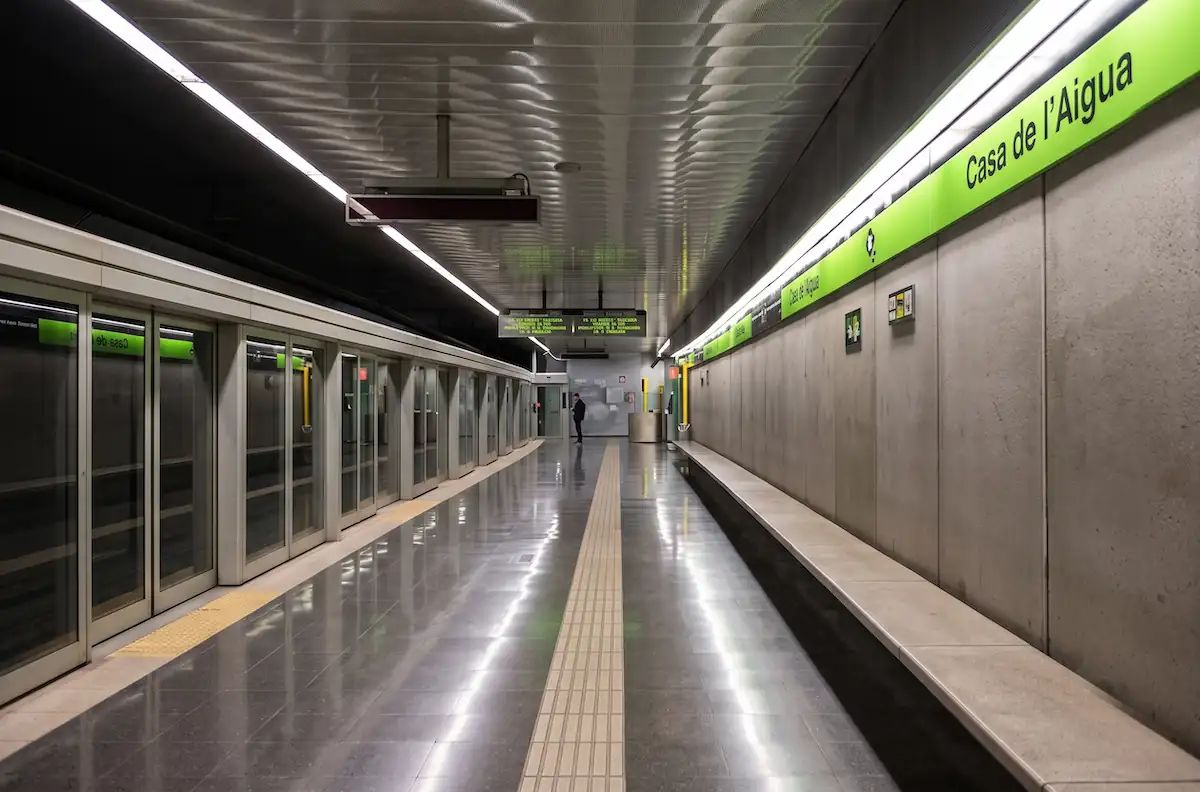
Located in the Trinitat Nova neighbourhood, in the district of Nou Barris, the station opened in 2003 along with the small L11, an automated line just over two kilometres long that connects five stations. Its surroundings, mainly residential and far from the main shopping and tourist areas, largely explain the low number of passengers it records each year.
The difference compared to other stations is striking. While major interchanges like Catalunya, Sants Estació or Diagonal receive millions of travellers every year, Casa de l'Aigua barely reaches a few tens of thousands of validations. Even other stations on the same line have higher demand.
Despite these figures, the station plays an important role for local residents. The L11 makes it easier to connect with the rest of the network via Trinitat Nova and helps improve mobility in an area where public transport is essential for daily journeys.
The contrast is even greater when looking at the evolution of the Metro de Barcelona as a whole. The network continues to break usage records, surpassing month after month the figures from previous years, driven both by the increase in residents using public transport and by the recovery of tourism.
Cases like Casa de l'Aigua show that a single network can respond to very different realities. Some stations function as major metropolitan hubs, while others clearly serve their neighbourhood, providing a local service that is essential for residents, even if it goes unnoticed by most users.