
News
Heat reopens the debate over climate control in Madrid schools
Every summer, many public classrooms in Madrid again become a test of endurance. Thermometers above 30 degrees, playgrounds with hardly any shade and children trying to concentrate when the heat is already oppressive from mid-morning. In winter, the scene changes, but the problem remains: heating that fails, poorly insulated buildings and pupils wearing coats in class.
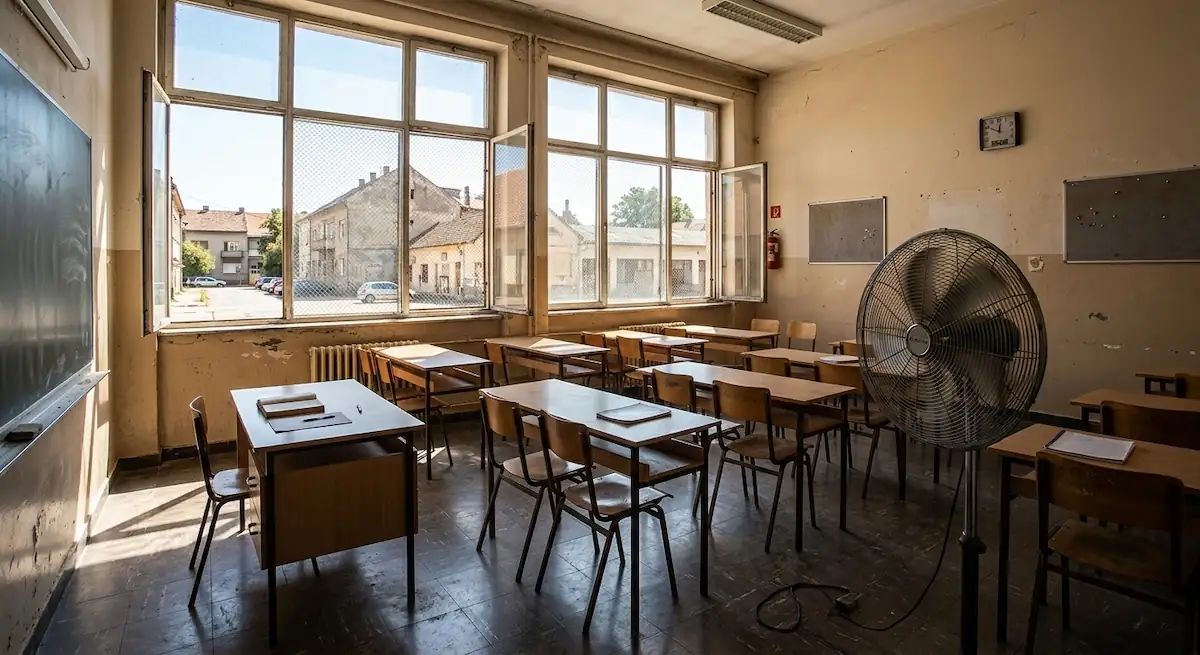
School climate control has ceased to be an isolated complaint and has become a recurring concern for families, teachers and management teams. It is not only about comfort. Extreme heat affects rest, attention, performance and the wellbeing of those who spend a large part of the day at school.
The discomfort is repeated because many solutions arrive late or remain improvised measures. Fans, water bottles, classroom changes, lowered blinds, reorganised classes and playgrounds avoided during the hottest hours. Each school tries to cope as it can, but not all start from the same conditions.
This is where one of the problem's major inequalities appears. Some schools have newer buildings, better-oriented playgrounds or greater capacity to adapt. Others, however, carry decades of underinvestment, inefficient roofs, old windows or outdoor areas designed for another climate and another urban reality.
Families are calling for the response not to depend on pressure from each AMPA or on each headteacher's ability to seek solutions. Teachers also warn that working in poorly equipped classrooms not only complicates teaching, but increases strain in the toughest months of the year.
The solutions exist and are well known: improve insulation, review roofs, install efficient systems, gain shade in playgrounds, replace joinery, make use of less polluting energy and prioritise the most vulnerable schools. The problem lies in turning these measures into a sustained plan, with sufficient timetable and funding.
The debate also makes it necessary to clarify responsibilities. In such a broad education network, any action requires coordination between administrations, councils and the educational community. When that coordination fails, the heat or cold ends up entering the classroom before the solutions do.
Public education was created to equalise opportunities, and that includes learning in safe and liveable spaces. Climate control in schools is neither a luxury nor an aesthetic improvement: it is a basic condition so that studying, teaching and living together do not depend on the luck of the building, the neighbourhood or the season.