
News
36% of Barcelona residents were born abroad: the challenge of being «un sol poble»
Barcelona increasingly resembles less and less the city for which the idea of «un sol poble» was formulated more than half a century ago. At the beginning of 2026, 36.2% of its inhabitants had been born abroad, the highest proportion in the recent series, and residents of 181 nationalities lived side by side on its streets.
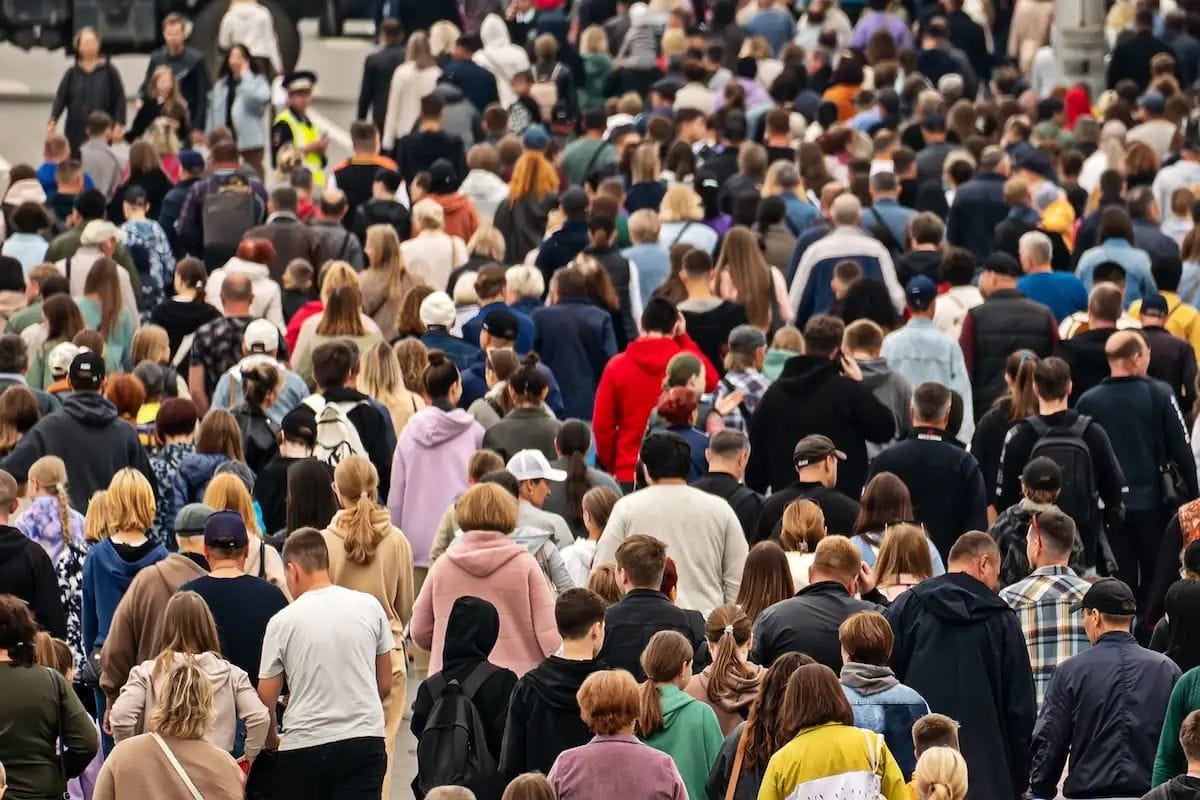
There are 626,924 people born outside Spain in a city of 1.73 million inhabitants. Barely a decade ago, in 2016, they represented 22.5%. At the same time, those born in other Spanish autonomous communities, protagonists of the great migrations of the 20th century towards Catalonia, now make up 12.4% of Barcelona’s population.
The change makes it necessary to update a debate that is not new. The expression “un sol poble” spread in the late 1960s around figures such as Josep Benet and was later embraced by very different political currents. The idea was simple: to prevent origin and language from dividing Catalonia into separate communities and to regard as Catalan anyone who lived and worked in the country.
Today’s immigration has a different composition. Among residents born abroad, more than half come from the American continent; they are followed by Europeans, Asians and Africans. By nationality, the largest groups in Barcelona are currently Italian, Colombian, Pakistani, Chinese, Peruvian and French.
Diversity is also reflected in languages. The latest Survey of Language Uses available for Barcelona indicates that 26.9% of people over 15 use Catalan exclusively as their usual language and 24.8% identify it as their only own language. 77.7% say they can speak Catalan and 91.9% understand it.
These data do not allow the conclusion that Barcelona is divided into two communities. In fact, the reality is much less binary: many residents use more than one language, combine identities and live in households of different nationalities. In 2026, 14.4% of Barcelona households bring together people of Spanish and foreign nationality under the same roof.
What has changed is the political weight of the debate on immigration and identity. In the latest Barcelona Barometer, immigration appeared as a problem for 7.5% of respondents. It is far behind housing and insecurity, which concern 31% and 26%, respectively, but it has gained visibility within the municipal conversation.
Aliança Catalana has also entered the city’s polls. The latest barometer assigns it 3.3% direct voting intention, below the 5% needed to obtain municipal representation and slightly less than in the previous poll, when it recorded 3.9%. At the Catalan level, however, the latest CEO projected far greater growth: between 23 and 25 seats in hypothetical elections to Parliament.
For this reason, it is difficult to claim that the old idea of “un sol poble” has disappeared or that Barcelona is inevitably entering an identity fracture. The data describe something more concrete: a city that has changed its population at enormous speed and must integrate a diversity far greater than that faced by Catalonia during the internal migrations of the last century.
The current challenge no longer consists only of integrating people from Andalusia, Extremadura, Galicia or Castile, as occurred for much of the 20th century. Barcelona now receives residents from virtually all over the world. The question that remains is the same one that gave meaning to “un sol poble”: how to build a shared identity without requiring everyone to have the same origin, language or background.