
News
Fundació Joan Miró opens the historic Jardín de los Cipreses to the public in Montjuïc
The new layout of Fundació Joan Miró incorporates the historic Jardín de los Cipreses into the route, a Montjuïc space that now gains prominence with public access and the outdoor sculpture ‘Mujer’.
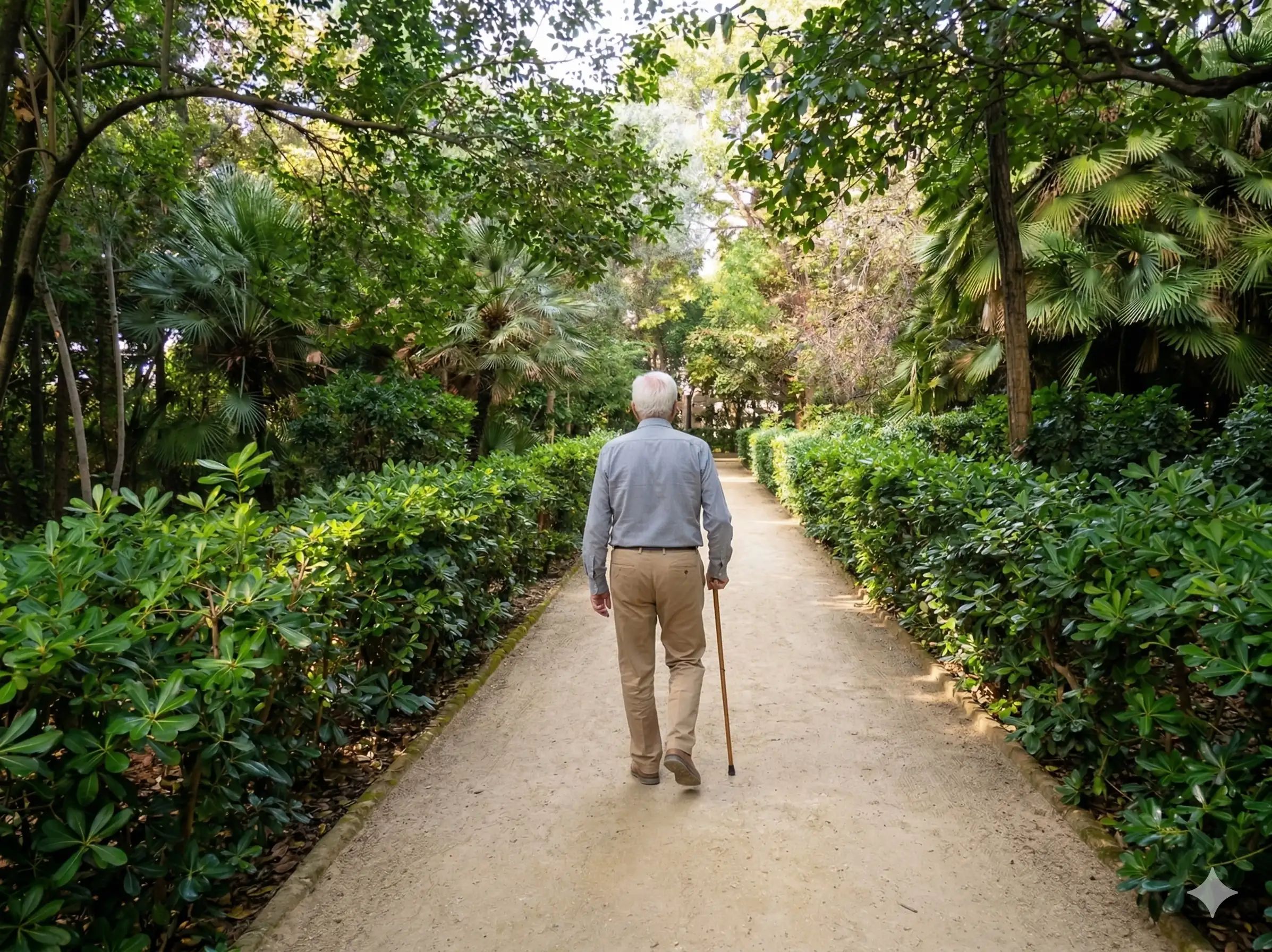
Barcelona has just recovered one of those places that seemed outside the usual route even for people who know Montjuïc well. The Fundació Joan Miró has opened the historic Jardín de los Cipreses to the public as part of the new arrangement of its collection, an opening that allows the visit to extend outdoors and reinforces the dialogue between art, architecture and nature.
The news is compelling because it is not simply a matter of adding another green space to the mountain. What matters is that this garden, located at the western end of the Fundació, with direct access from the street and a connection to the temporary exhibition rooms, has become a visible part of the visitor experience. The institution itself presents it as a space independent of the museum's interior route, with a singular location within the Montjuïc complex.
There is also a clear historical dimension. The Fundació's official information attributes the garden's design to J.C.N. Forestier and stresses its integration into Parc de Montjuïc. It is not a new corner or an ephemeral intervention, but an existing space that is now gaining prominence within the museum's narrative.
The opening is linked to a broader reorganisation. In its official presentation, the Fundació explains that the new reading of the collection proposes a more experiential and democratic experience, based on Joan Miró's working processes. In that context, Jardín de los Cipreses does not operate as a decorative addition, but as an extension of the museum outdoors.
The change also fits with the institution's 50th-anniversary programme. In June 2025, the Fundació had already announced that at this new stage it would reopen Jardín de los Cipreses and present a new arrangement of the collection, with the idea of offering a renewed experience faithful to the original project of Miró and Sert. One of the elements that most strengthens interest in the opening is the presence of Joan Miró's sculpture Mujer (1970).
Joan Miró's sculpture Mujer (1970)
That is where the news becomes stronger for the general reader. The visit is no longer confined solely to the rooms and opens out onto an outdoor space with its own identity. The image is powerful: a Miró sculpture in a historic garden of cypresses, within one of Barcelona's most recognisable cultural buildings, on the slope of Montjuïc. There is no need to exaggerate the discovery to understand its appeal. It is, quite simply, a new way of visiting the Fundació.
The practical data also help place the scope of the site. The garden's official information states that it has an area of 240 m², a capacity of 260 people, with 150 seated, and hours of use from 9:00 to 24:00. These figures show that this is not merely a residual courtyard, but a space substantial enough to take on a real role in the museum's life.
There is also an important nuance: the reopening does not mean that the garden had not existed at all in the Fundació's life, but that it now fully enters the collection's public experience.
That considerably changes the perception of the place. In a city like Barcelona, where much of the cultural space seems already mapped down to the millimetre, the idea of being able to enter a site that until now was not part of the normal visit still has power. Even more so when that site is not on the periphery of the narrative, but in the very heart of the Miró ecosystem, within Montjuïc. This reading is an editorial inference based on the garden's official opening to the public and its incorporation into the new route.
There is symbolic coherence in the gesture too. The new arrangement of the collection insists on moving beyond a purely chronological scheme to get closer to the artist's creative thinking. Opening a historic garden, taking the experience outside and placing a Miró sculpture there does not seem a secondary operation, but a very concrete way of translating that museographic idea into physical space. This is an editorial interpretation supported by the official description of the new curatorial project.
For visitors, the result is easy to understand. Those returning now to the Fundació Joan Miró will find not only an internal rearrangement, but also the possibility of looking out over a garden that until now lay outside the usual map of the visit. At a time of major temporary exhibitions and fleeting novelties, it is no small thing that one of Barcelona's most suggestive cultural openings in March consists precisely of this: finally being able to enter a place that was previously hardly reached.