
News
Catalonia revives the orbital line to connect cities without passing through Barcelona
The Generalitat is once again putting one of Catalonia's most ambitious rail projects on the table: the orbital line. The idea is easy to explain but huge to carry out: connect municipalities in the third and fourth metropolitan rings without always having to pass through Barcelona.
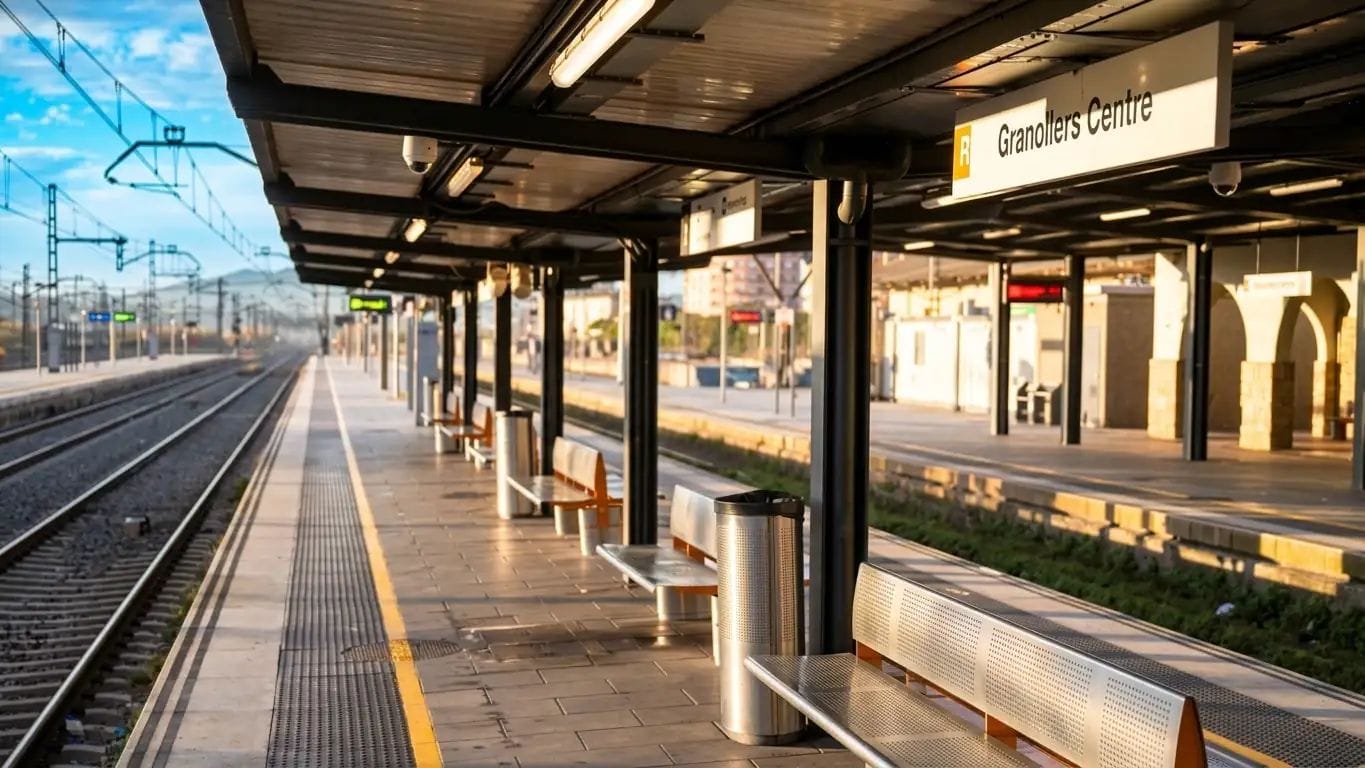
The plan, revived after years of paralysis, envisages around 120 kilometres of track and estimated investment of 5.2 billion euros. Its aim is to change a logic that has shaped Catalan mobility for decades: almost everything ends up entering and leaving the capital, even when the actual journey is between peripheral cities.
That radial structure complicates daily life for many people moving between municipalities such as Mataró, Granollers, Sabadell, Terrassa, Martorell, Vilafranca and Vilanova. In many cases, the train does not offer a competitive direct connection and the car remains the fastest option, even though that fuels traffic jams, emissions and dependence on the major metropolitan roads.
The orbital line is intended precisely to tackle that problem. If the project moves forward, it would make it possible to connect urban and industrial hubs without passing through central Barcelona, easing some pressure on Rodalies and giving greater rail weight to areas that have grown substantially in population and economic activity over recent decades.
The project’s reactivation comes with the new 2025–2050 infrastructure plan and revives an old demand from town halls, mobility organisations and municipalities that feel too dependent on the capital. Manel Nadal, one of the historic promoters of the proposal, once again places this work within the debate on how Catalonia should move over the next twenty years.
The timetable, however, will not be quick. Infrastructure of this scale requires studies, territorial agreements, funding and complex planning through to 2041. There will also be debate about routes, priorities and phases, especially in areas where building new tracks may have urban-planning or environmental impacts.
The orbital line is not just another railway project. It is a different way of understanding the territory: less centred on Barcelona as a compulsory passage and more adapted to a reality in which many people live, work and study in cities connected to one another. For thousands of users, the change could mean shorter journeys, fewer transfers and a metropolitan network much closer to real life.