
News
Line 6 begins testing the automatic trains that will transform the Madrid Metro
Line 6 enters a new phase of its transformation. The first automatic trains that will run on the Circular line have already begun technical tests, a key step before Madrid unveils one of the biggest Metro renewals in decades. For users, the change will be noticeable in something very concrete: more capacity, less waiting and stations adapted for driverless operation.
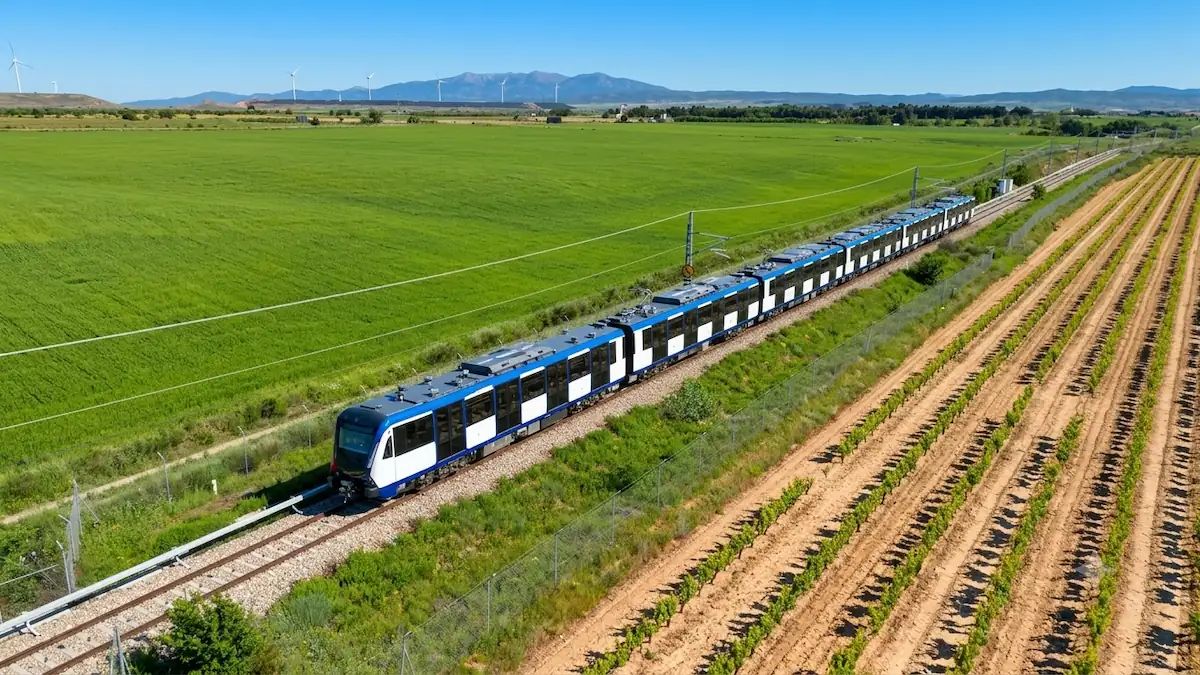
The first of the 48 planned trains is being tested at the centro de CAF in Corella, Navarra, on a closed four-kilometre circuit. There, basic but crucial aspects are checked, such as acceleration, braking, safety system response, and connection with signalling. In June, a second unit will be added.
Starting in July, these trains will arrive in Madrid to continue testing on the actual network, still without passengers. They will first run at night and in manual mode on lines such as 10, 11, and 12. Then comes the most important phase: automatic tests on line 6 itself, once the stations are equipped with platform doors.
If the schedule holds, the new trains will begin carrying passengers in 2027. Each train will have six interconnected carriages with no internal divisions, allowing passengers to walk from end to end and distribute themselves more evenly during rush hour.
The absence of a driver’s cab will also change the travel experience. The ends of the train will feature large panoramic windows, an unusual feature in Madrid and quite striking for those used to a more closed and functional Metro experience.
The trains will be able to carry around 1,385 people, with 165 seats and 17% more space than current models. They will also be more energy efficient thanks to regenerative braking and new traction systems, an important improvement on a line that moves hundreds of thousands of passengers every day.
Safety will be another visible change. Stations will have automatic platform doors that open only when the train is stopped, reducing risks and allowing for better frequency management. During peak hours, Metro plans to reduce intervals to about two minutes, which is key on a line where overcrowding is a daily reality.
Line 6 is not just any line. It circles the centre, connects transport hubs, universities, hospitals, train stations, and very different neighbourhoods. That’s why its automation will not just be a technological upgrade: it will directly affect the way Madrid organises itself every morning, every afternoon, and every time the Circular serves as the city’s great underground shortcut.