
News
Madrid's Audrey Pascual is already a legend: two golds and a silver at Milan-Cortina 2026
Audrey Pascual is already making history at Milan-Cortina 2026 with two golds and a silver in her Paralympic debut.
1. Introduction: the woman from Madrid who has already made history for Spain at the Winter Paralympic Games
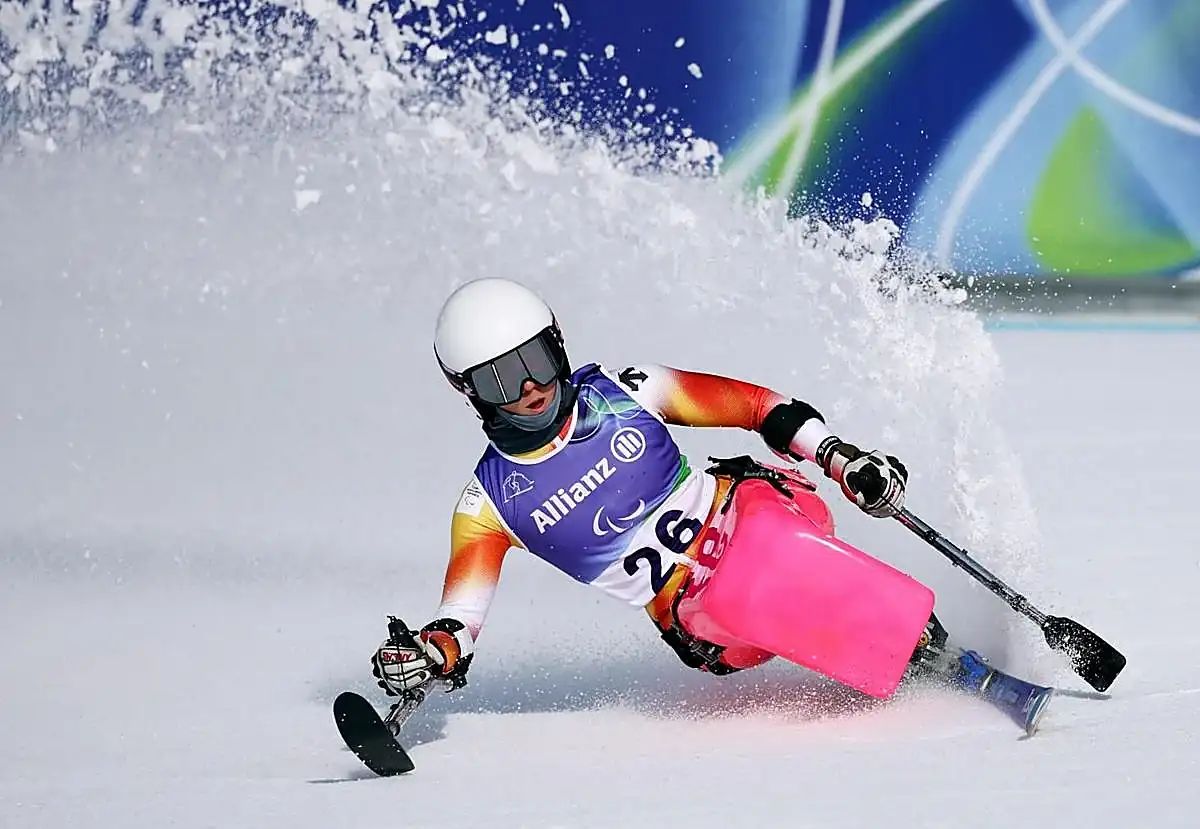
Audrey Pascual Seco has become Spain's leading figure at the Milan-Cortina 2026 Winter Paralympic Games. At only 21 years old, the skier from Madrid has won three Paralympic medals on her debut: two golds and a silver in the sitting alpine skiing category, ending an eight-year drought without Spanish medals on snow.
Beyond the results, her story combines precocious talent, resilience and steady progress in the World Cup, which had already placed her among the main rivals of Germany's Anna-Lena Forster and China's Liu Sitong before the Games.
2. Basic biography: who Audrey Pascual is
Full name: Audrey Pascual Seco.
Date and place of birth: Madrid, 16 October 2004.
Sport: Adapted alpine skiing (LW12-2 class, sitting category).
Club / structure: Member of Fundación También's adapted skiing and snowboarding competition team.
Role at Milan-Cortina 2026: Flag-bearer for the Spanish delegation at the opening ceremony and the team's main hope on snow.
From a very young age, she was connected with snow through adapted sport programmes and quickly began to stand out in youth categories, until reaching the World Cup circuit. In 2024, at only 19, she was already World Cup slalom overall runner-up and finished that season with seven World Cup medals (four silvers and three bronzes).
3. Paralympic record at Milan-Cortina 2026
At Milan-Cortina 2026, Audrey Pascual competes in five alpine skiing disciplines (all in the women's sitting category): downhill, super-G, alpine combined, giant slalom and slalom. In the first three she has already made history:
3.1. Silver in sitting downhill (7 March 2026)
Event: Downhill, women's sitting.
Result: Silver medal.
Time: 1:25.84, only five hundredths behind Germany's Anna-Lena Forster.
Significance: The first Spanish medal on snow at a Paralympic Games in eight years, and the delegation's first medal at Milan-Cortina 2026.
3.2. Gold in super-G (8 March 2026)
Event: Super-G, women's sitting.
Result: Gold medal — Paralympic champion.
Time: 1:17.82.
Podium: Gold — Audrey Pascual (Spain), silver — Momoka Muraoka (Japan), bronze — Liu Sitong (China).
Key detail: Forster, the downhill gold medallist, was disqualified for leaving the course; none of the other participants managed to beat the Spaniard's time.
According to the Spanish general press, this gold is the first Spanish Paralympic gold at the Winter Games since Sochi 2014.
3.3. Gold in alpine combined (9 March 2026)
Event: Alpine combined (super-G run + slalom run), women's sitting.
Result: Gold medal — second gold and third medal at Milan-Cortina 2026.
Time details: First run (super-G): 1:21.88, almost three seconds faster than Forster (1:24.70). Total time after the slalom run: 2:11.22, ahead of Forster (2:11.68) and Liu Sitong (2:14.52).
Notable quote (RTVE): After winning this second gold, Audrey describes herself as “two-time number one”, referring to being number one in super-G and in combined.
With these three medals, her Paralympic record at Milan-Cortina 2026 is as follows:
2 golds: super-G and alpine combined.
1 silver: downhill.
And she still has chances in giant slalom and slalom in the following days.
4. Previous record: World Cups and World Championships
Before Milan-Cortina, Audrey Pascual was already one of the leading figures in women's sitting Paralympic alpine skiing.
4.1. World Championships
Two silver medals at the Alpine Skiing World Championships (2023 and 2025). Reports from Comité Paralímpico Español state that at those world championships she achieved two runner-up finishes, which already placed her among the best in the circuit in her class.
4.2. World Cup (2023–2025)
According to CPE, by 2025 she had already accumulated around thirty podium finishes in World Cup events, including three golds in Steinach (Austria) at the start of the season (two in super-G and one in alpine combined).
In the 2024 season, she finished the campaign with seven World Cup medals: four silvers and three bronzes, and ended as second in the overall slalom standings, behind only Anna-Lena Forster.
At the end of 2025, she was second in the overall ranking of the Paralympic alpine skiing World Cup, with 610 points, compared with Forster's 630 and Liu Sitong's 460.
In summary, before Milan-Cortina 2026, Audrey's international record already included:
2 silvers at World Championships (2023, 2025).
1 crystal globe in super-G.
Around thirty World Cup podium finishes, with multiple golds, silvers and bronzes.
Overall World Cup slalom runner-up in 2023–24.
Second in the overall World Cup ranking at the end of 2025.
5. Sporting profile: style, category and rivalries
Audrey competes in the women's sitting category (LW12-1), with a highly aggressive style in speed events (downhill and super-G) and sufficient technical consistency to be competitive also in technical events such as slalom and giant slalom.
5.1. Category and equipment
She competes with an adapted monoski (sit-ski), in the LW12-1 category, which groups skiers with physical disabilities who compete sitting down.
Her strongest events, according to previous results, are super-G and alpine combined, where she has already achieved golds both in the World Cup and at the Paralympic Games.
5.2. Main rivals
Anna-Lena Forster (Germany): Paralympic and world champion, multiple overall World Cup winner; Audrey's direct rival at Milan-Cortina (ahead of her in downhill, disqualified in super-G, silver behind Audrey in combined).
Liu Sitong (China) and Momoka Muraoka (Japan): the other two leading figures in the circuit, who share podiums with Pascual in downhill, super-G and combined.
Milan-Cortina 2026 confirms that Audrey is already on the same level as these established champions.
6. Biographical features and lesser-known facts
6.1. Origin and age
She was born in Madrid in 2004, which makes her one of the representatives of the new generation of athletes from Madrid who are emerging in snow sports, in a country without a mass tradition in adapted skiing.
6.2. Fundación También and the boost from grassroots sport
She is part of the competition team of Fundación También, an organisation that promotes adapted sport in Spain.
In its communications, this foundation highlights that Audrey is an example of how grassroots structures and support in adolescence can lead to elite results in the World Cup and the Paralympic Games.
6.3. Early progression in the World Cup
At 19, she completed a World Cup season with seven medals and an overall slalom runner-up finish.
At 21, she arrives at Milan-Cortina as second in the overall ranking and the declared favourite of the Spanish team; the press highlights her as the “Spanish delegation's main hope” even before she competes.
6.4. Lesser-known facts
Specialist snow-sport media highlight that one of the races that marked her most was a slalom in Sella Nevea (Italy), where she came very close to gold; she herself says that she will “always remember” that race because of the atmosphere and competitive tension.
According to Comité Paralímpico Español, she has won a crystal globe in super-G, something not usually mentioned in more general reports but which indicates sustained dominance in that discipline across an entire season.
7. Historical significance for Spain
The Spanish general press highlights several milestones:
The first Spanish Paralympic gold at a Winter Games since 2014, when Jon Santacana and other names marked the last great period of success on snow.
With three medals at Milan-Cortina 2026, Audrey Pascual is now among the leading references of Spanish winter Paralympic sport and, according to El País, ranks behind only Magda Amo among the most decorated Spanish female skiers at a Winter Games.
Her double gold comes at a time when Spain was trying to relaunch its winter-sports project, so Audrey's figure also becomes a symbol of that new phase.