
News
Most semi-enclosed terraces in Barcelona breach anti-smoking law
Having a drink on a Barcelona terrace does not always mean breathing clean air. A study by the Barcelona Public Health Agency has detected a high presence of tobacco smoke and environmental nicotine in these spaces, including semi-enclosed terraces where smoking is already prohibited under current regulations.
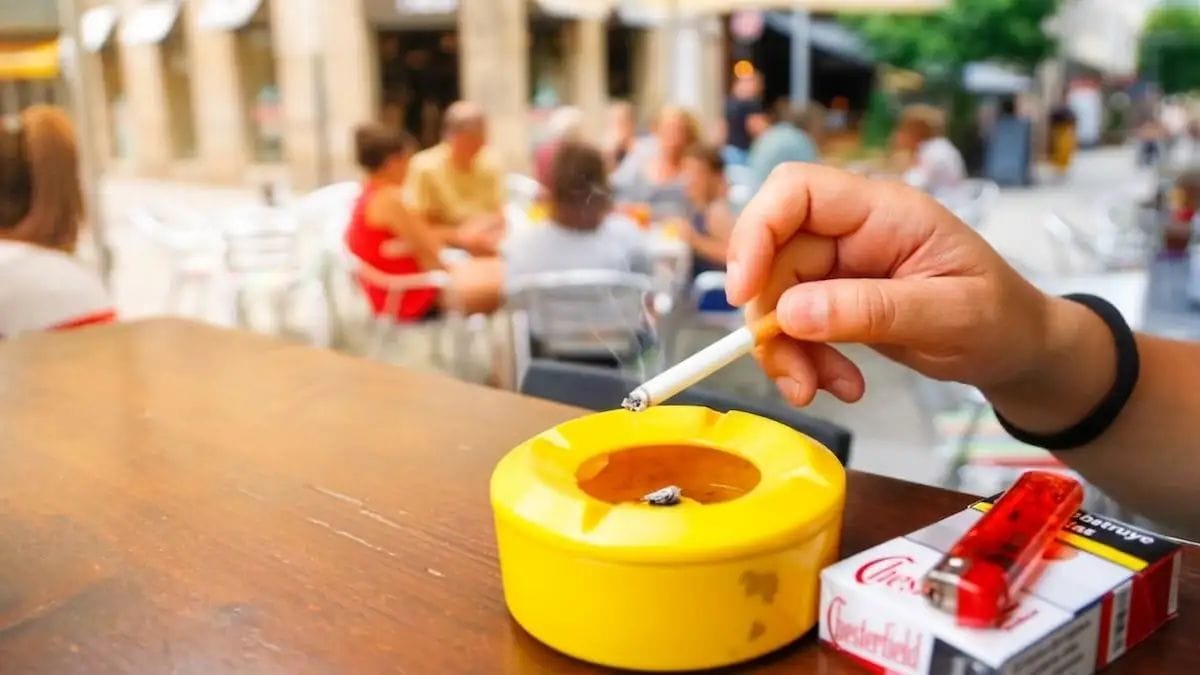
The analysis was carried out on 180 city terraces through environmental measurements, direct observation and interviews with 451 users. The data are clear: people were seen smoking on 93% of the terraces, e-cigarette use was detected on one in four, and the smell of tobacco was perceived on two out of three.
Ambient nicotine was found on 85% of the terraces analysed. In addition, levels were higher in neighbourhoods with lower socioeconomic status, a finding that adds a dimension of urban inequality to the problem. Not all areas breathe the same air, even when it comes to outdoor leisure.
Non-compliance is especially visible on semi-enclosed terraces. According to the study, 90% of these spaces allow smoking even though the law prohibits it when the terrace is covered or enclosed on several sides. In such cases, ventilation is poorer and exposure may be closer to that of an indoor space than an open terrace.
Users' perceptions point in the same direction. Ninety-four per cent of those surveyed said they felt exposed to tobacco smoke on terraces, and 68% to e-cigarette aerosols. More than half were in favour of banning smoking and vaping in these spaces.
The debate comes at a key moment. The Ministry of Health has long been working on reforming the Tobacco Law and on the 2024–2027 Comprehensive Plan for the Prevention and Control of Smoking, which proposes extending smoke-free spaces. The hospitality sector, on the other hand, fears that a total ban will affect sales and change the dynamics of terraces.
For those who work serving tables, the problem is less theoretical. A customer can get up and leave if the smoke bothers them; a waiter may spend an entire shift going in and out of a terrace with tobacco, vapes, cigarette ends and aerosols around them. That repeated exposure is one of the strongest arguments of those calling for clearer regulation.
Barcelona lives much of its life on its terraces, and that is precisely why the debate carries so much weight. It is not only about whether someone can smoke with a coffee, but about who has the right to breathe smoke-free air in a shared space. The city has already discussed noise, public space and an excess of tables; now the question returns by another route: what kind of terraces it wants, and for whom.