
News
More than one hundred works revisit mythology from 1980s Madrid
Sala Alcalá 31 opens a new exhibition dedicated to how Nueva Figuración and the Madrid Movida reinterpreted great myths. “Modern Mythologies: Ouka Leele & Co.” brings together more than one hundred works and can be visited until 18 October in the heart of Madrid.
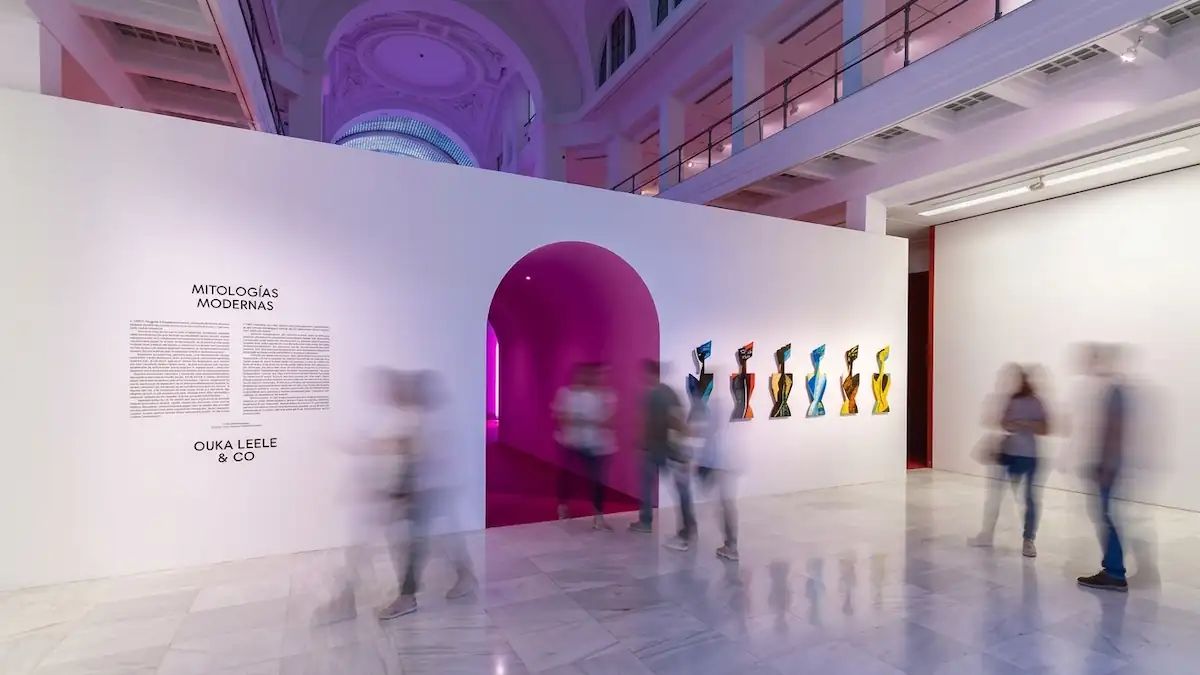
The exhibition offers a journey through a generation that turned gods, heroes and classical narratives into images connected with urban life, creative freedom and the tensions of the 1980s. The result combines painting, photography and visual languages that helped define an era.
Ouka Leele occupies a central place, alongside artists such as El Hortelano, Ceesepe, Carlos Franco, Sigfrido Martín Begué, Guillermo Pérez Villalta, Dis Berlin, Pablo Sycet, Costus and Patricia Gadea. Their works show how tradition could coexist with comics, popular culture, nightlife and the aesthetics of a city undergoing transformation.
The tour, curated by Julio Pérez Manzanares, avoids presenting myths as immovable pieces from the past. Each artist uses them to speak about identity, desire, memory, power or social change from a perspective closely linked to the Madrid of those years.
The exhibition also makes it possible to observe the intersections between Nueva Figuración and the Movida, two distinct scenes connected by their desire to break with earlier codes. That mixture explains part of the visual energy still associated today with the capital of the 1980s.
The location reinforces the connection with the city. Alcalá 31 is just a few minutes from Gran Vía, Cibeles and the Recoletos axis, so a visit fits easily into a cultural afternoon in the centre.
The exhibition may interest both those who lived through that period and a younger public who know its images through books, records or later references. The works show that many of those symbols are still present in today’s visual culture.
The scene leaves classical gods, night-time characters and intense colours sharing space beneath the great hall of Alcalá 31. Madrid thus returns to one of its most creative decades without turning it into nostalgia, but rather into material still open to new readings.