
News
Barcelona wakes to more polluted air after the Sant Joan night
Barcelona woke on 24 June with denser air after the Sant Joan revetlla. The mix of firecrackers, bonfires and Saharan dust has raised levels of airborne particles and left a feeling of mugginess and a hazy sky since early morning.
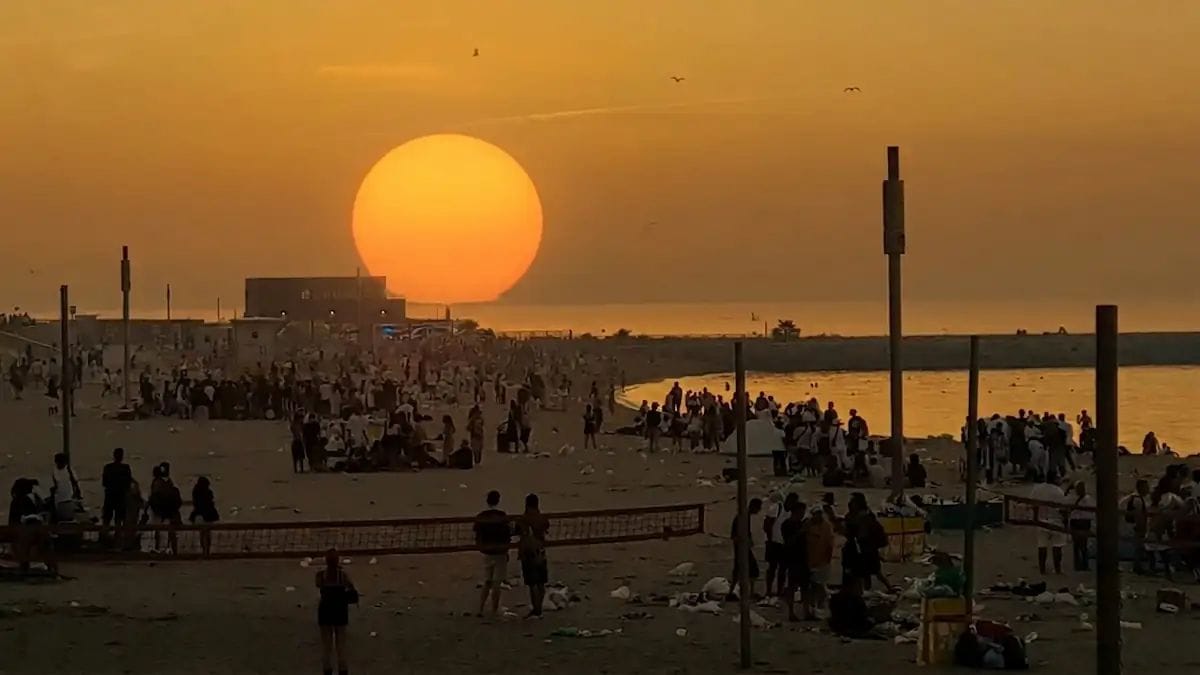
PM10 pollution, the particles that remain suspended in the air, has risen again during one of the most intense nights of the year for the city. Fireworks and smoke from bonfires have combined with a previous episode of haze, further complicating air quality.
The result has been noticeable in the streets: less clarity on the horizon, a heavy atmosphere and that dirty haze known in Barcelona as boirum. It is not only a visual matter. These kinds of episodes can particularly affect people with respiratory problems, older people, children and those who spend many hours outdoors.
High particle values were recorded overnight, although for now the available data mainly reflect cumulative averages from the last 24 hours. That means the strongest individual peaks, common during the early hours of Sant Joan, may be softened in the overall reading.
The Generalitat had already activated a preventive warning on Tuesday for atmospheric pollution in Catalunya because of PM10 levels. The arrival of African dust had triggered the alert even before the festivities, and Sant Joan has added a new layer of smoke and particles to an already delicate situation.
The preventive warning is activated when monitoring stations detect high concentrations of suspended particles. If those levels persist for several days, the situation could develop into a pollution episode, with stricter recommendations for the public and possible additional measures.
The forecast does not point to immediate improvement. If the atmosphere does not help disperse the particles, Barcelona may continue over the coming days with air more laden than usual, especially during the most humid hours and in areas with heavier traffic or less ventilation.
Boirum is part of the city's climate vocabulary, but it is increasingly linked to more uncomfortable episodes. It occurs when humidity and pollution mix, creating an urban fog that does not cool but weighs heavily. After Sant Joan, that feeling becomes more visible and more unpleasant.
The morning after the festivities thus leaves an image familiar to many Barcelona residents: beaches being cleaned, streets with remnants of celebration and a sky that takes time to regain clarity. Sant Joan marks the emotional beginning of summer, but it also reminds us that the celebration has an environmental cost that is breathed in the following day.