
News
Lima square breathes again: traffic returns after the major Bernabéu works
Lima square regains traffic circulation this month. One of the most complex renovations on Paseo de la Castellana comes to an end. Traffic and mobility in the area improve after months of diversions and works.
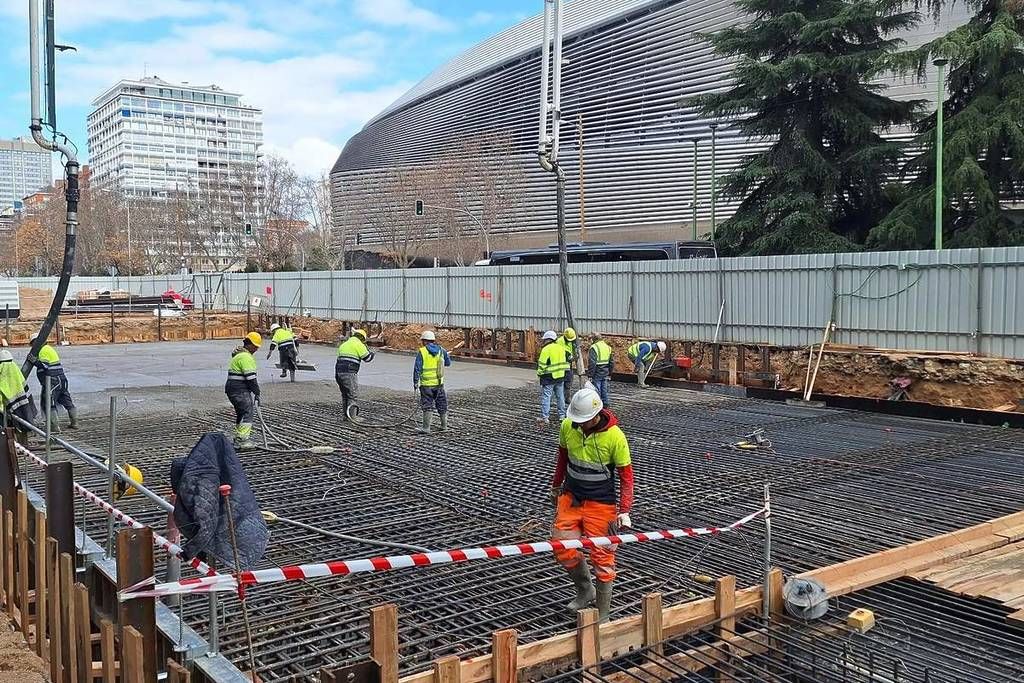
The daily routine of those who cross the Castellana is about to change. After more than a year of fences, detours, and makeshift crossings, Plaza de Lima will return to its usual traffic this month. The reopening comes as a relief for drivers, buses, and pedestrians, who have seen the rhythm of the area disrupted by the works on the new Bernabéu station.
The transformation has been extensive. The square was completely dug up to make way for one of the largest and most modern metro stations in Madrid. The goal: to leave behind narrow corridors and create a spacious central concourse, where travellers can get their bearings at a glance and move more easily between the street and the platforms of line 10. The station’s usable area will triple, from 4,800 to more than 12,400 square metres, with wider platforms and direct routes. The redesign aims to better absorb crowds on match or concert days at the stadium, but also to improve the daily experience for thousands of users.
For months, Plaza de Lima became an open crater, with closed lanes and constant detours. Now, the most visible phase of the work is ending: the main structure and the roof slab are almost ready, allowing north-south traffic to resume and reducing the impact at street level. The works will continue, but most of them will move underground, where the old station will be demolished and integrated into the new space.
This next stage will require line 10 to be closed around Bernabéu for several months. The service will be split into two sections and reinforced with special buses. The schedule foresees these changes between spring and autumn, coinciding with the most delicate technical work underground.
At the end of the process, the station will be fully accessible and connected to the new look of the stadium. Twelve panoramic lifts and twenty-four escalators will make it easier to get from the street to the platform. The concourse will feature state-of-the-art ticket barriers and vending machines, and the decoration will include nods to Real Madrid and its history, turning the journey into a prelude to match days.
Santiago Bernabéu station is much more than a transit point: it is a key hub for mobility in the north of Madrid and a reflection of how the city adapts its infrastructure to major events and everyday life. Its transformation goes hand in hand with the evolution of the stadium and the neighbourhood itself, where the urban pace adjusts to each construction, each reopening, and each match. Madrid is already starting to move in that direction.