
News
The R2 Sud could ease its congestion with a key expansion towards Barcelona
The improvement of Rodalies on the southern approach to Barcelona is starting to move forward with a key element: the Ministry of Transport has awarded studies worth €1.2 million to expand rail capacity between Castelldefels and Sants station, one of the most congested sections of the Catalan network.
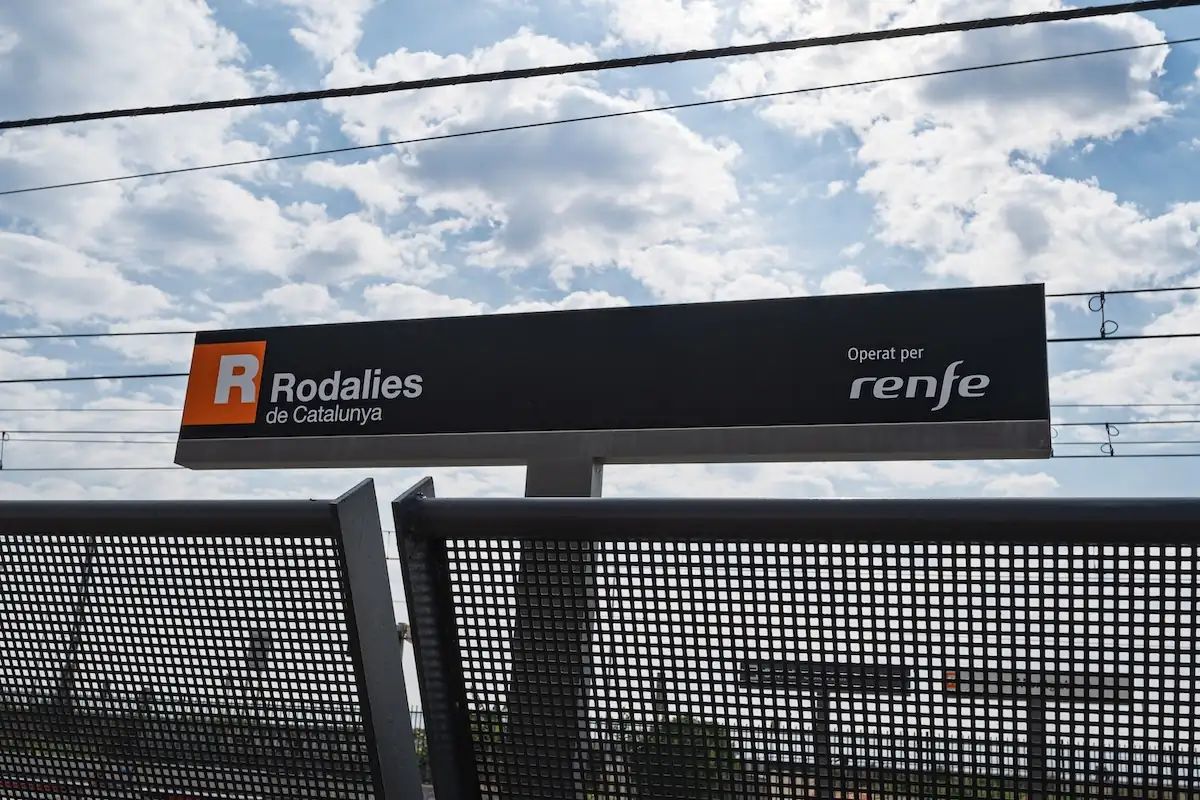
The aim is to analyse how to implement four tracks between Castelldefels and El Prat de Llobregat, a stretch of around 14 kilometres that currently operates with only two tracks. Rodalies trains and regional services run along it, a mix that limits frequencies, complicates recovery after incidents and leaves little room when demand grows.
The action is part of the Plan Transformem Rodalies and seeks to prepare the network for more intensive mobility in the metropolitan area. In 2024, Adif had already begun the process to commission the basic and construction projects for two new tracks between Castelldefels and El Prat, with a tender worth more than 4 million euros.
The southern corridor is especially sensitive because it connects Barcelona with Baix Llobregat, Garraf and Camp de Tarragona. Any problem on this axis is quickly felt on the R2 Sud and regional services, as has recently happened with work in the Garraf tunnels, which forced frequency cuts and strengthened road alternatives.
The expansion does not mean that works will begin immediately. For now, the task is to study solutions, technical fit, territorial impact and the real capacity for integration with the approach to Sants. In such a heavily used infrastructure, every new track entails resolving junctions, stations, access, safety and compatibility with existing services.
In January, the Ministry presented a new Rodalies Plan 2020–2030 with 1,841 million euros in works, intended to adapt the Catalan network to current mobility needs. The expansion of the southern access fits within that logic: not only repairing incidents, but gaining capacity where the system has been operating at the limit for years.
For users, the promise is easy to understand: more tracks should allow more trains, fewer interferences between Rodalies and regional services and a less fragile network when something fails. But the road will be long. Rodalies needs works that are felt in everyday life, and this is one of the most important because it affects a point where thousands of journeys enter and leave Barcelona each week.
If the expansion moves forward, Castelldefels, Gavà, Viladecans, El Prat and Barcelona could gain a more reliable rail connection. It would not be only a technical improvement: in a metropolitan area where the car still weighs too heavily, strengthening this corridor can change the way people travel south, relieve pressure on the C-31 and C-32 and give Rodalies something its users have been asking for for years: sufficient capacity to operate without always living on the brink of collapse.