
News
The Royal Pharmacy at the Royal Palace will reopen this autumn after more than a decade closed in Madrid
Madrid’s Royal Palace is preparing to recover one of its least-known corners. The Royal Pharmacy will reopen to the public during the final quarter of 2026, after being closed since 2013 and following a thorough restoration of its rooms, furniture, instruments and collections.
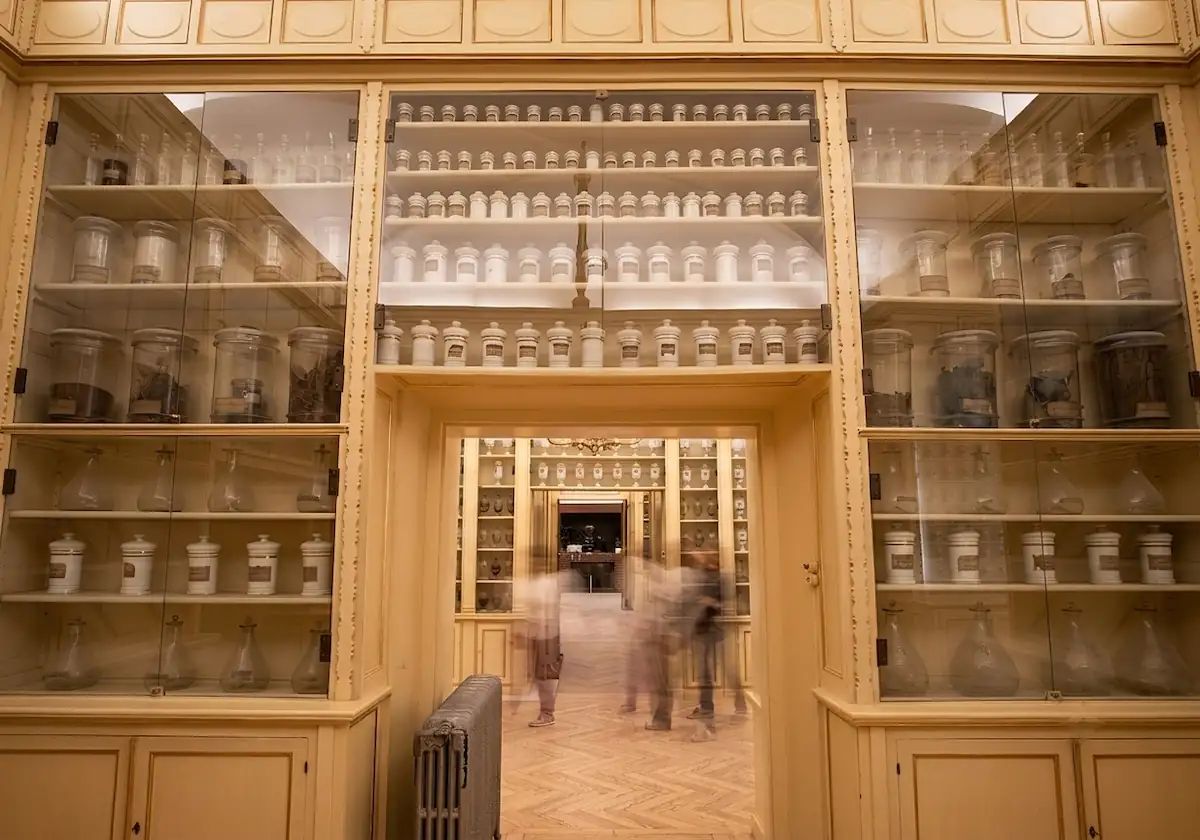
The visit will make it possible to enter a space very different from the palace’s grand ceremonial halls. Here, the leading role will be played by jars, containers, scientific apparatus and furniture used for centuries to prepare and preserve medicines for the Royal Household.
The collection preserves pieces from the Royal Glass Factory of La Granja and the Royal Porcelain Factory of Buen Retiro, as well as Talavera jars from the 17th and 18th centuries, flasks, beakers, stills and numerous utensils used in pharmaceutical work.
One of the most distinctive spaces will be the Art Deco laboratory from the first third of the 20th century, preserved as an almost unique example within Patrimonio Nacional. The tour will also include the room of apparatus and the pharmacist’s office, with a library holding incunabula, pharmacopoeias and old treatises on medicine, physics and chemistry.
The history of the place goes back much further. Philip II created the Royal Pharmacy in 1594, although its premises changed location several times. The current pavilion was built in 1887 in one of the wings of the Royal Palace and for generations operated as a pharmaceutical centre serving the Court.
The restoration affects both the building and the collections. Patrimonio Nacional and the General Council of Official Pharmaceutical Associations are working to recover the historic pharmacy jars, furniture, bibliographic heritage and scientific heritage, so that the space can also be visited from an educational perspective and not only as ornament.
The work forms part of a much broader renovation of the Royal Palace. In recent months, the visitor reception centre, lighting, air conditioning and various interior routes have also changed, alongside interventions on the roof, the Royal Armoury and other historic spaces.
When the Pharmacy reopens, Madrid will gain a visit that tells the story of the palace on a much more everyday scale. Instead of thrones and grand ceremonies, it will show how remedies were prepared, what instruments pharmacists used and how medicine also accompanied the daily lives of those living behind the walls of Bailén.