
News
Ronda de Dalt reopens all three lanes after weeks of works in Vall d’Hebron
From this Tuesday, Ronda de Dalt has reopened all three lanes in each direction between exits 5 and 6, after several weeks of reduced capacity due to the covering works in Vall d’Hebron. The reopening comes just as people return to their routines and should ease congestion at one of the spots most affected by the works during August.
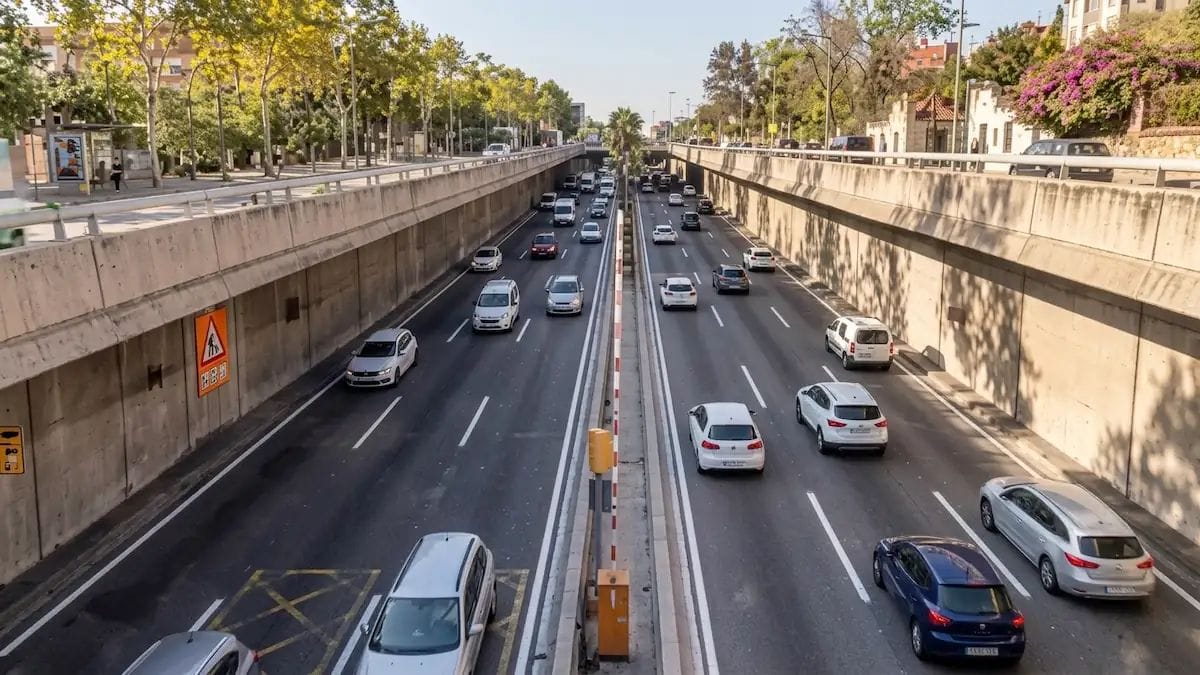
The third lane had remained closed since 3 August to allow intensive work between IES Vall d’Hebron and Vallcarca avenue. During this period, 56 of the 101 pieces that will form the new roof of the Ronda have been installed, and progress has also been made on technical installations linked to the future tunnel.
The work has included cabling, ventilation, lighting and safety systems. Concentrating these tasks over three weeks has made it possible to complete an important part of the project with fewer subsequent night-time interruptions, although work will continue in the coming months.
The main difference for drivers will be that daytime traffic again has all its usual capacity available. A speed limit of 40 kilometres per hour will remain in force on the affected stretch, however, and some occasional night closures may occur as the work progresses.
The covering will extend for around 340 metres and will continue the section already covered between the Mercat de la Vall d’Hebron and the school. Once completed, it will make it possible to gain a new surface above the road infrastructure and reduce the barrier effect that the Ronda maintains between Sant Genís dels Agudells and la Teixonera.
The project began in June 2024 with works such as the central wall and the emergency exits of the future tunnel. Investment linked to the structure is around 12 million euros, in addition to allocations for the covering itself, installations and cabling.
For those who use the Ronda de Dalt every morning, the change will be noticeable before the final result of the project. Recovering one lane in each direction on such a heavily used stretch can reduce the queues that formed during rush hour and make travel between Horta-Guinardó and other parts of the city easier.
The work, however, will remain visible. With all three lanes open but machinery and restrictions still in place, the Ronda is now entering a less uncomfortable phase for traffic while a transformation advances whose ultimate aim is to gain urban space over one of Barcelona’s major arteries.