
News
Gaudí, between admiration and questions: why Sagrada Família continues to make people uncomfortable
Sagrada Família seems to be above any debate, but in Barcelona not everyone looks at it with the same devotion. Architect Maria Buhigas has put it back on the table by speaking about Gaudí without resorting to the usual language of enthusiasm. She avoids calling him a “genius” and prefers to move into more uncomfortable territory: that of questions.
Her favourite Gaudí building is not the temple that dominates the city's postcards, but La Pedrera. The choice is significant. Compared with the endless monumentality of the Sagrada Família, Casa Milà emerges as an urban, inhabited work, integrated into the Eixample and easier to understand through everyday life in Barcelona.
The conversation with Buhigas also has a significant aspect: it takes place at the Güell Pavilions, a space the architect links to her years of training and her first ways of looking at architecture. From there, speaking about Gaudí does not mean repeating a glorious biography, but reconsidering how a myth is built and what is left out when a city turns an architect into a global brand.
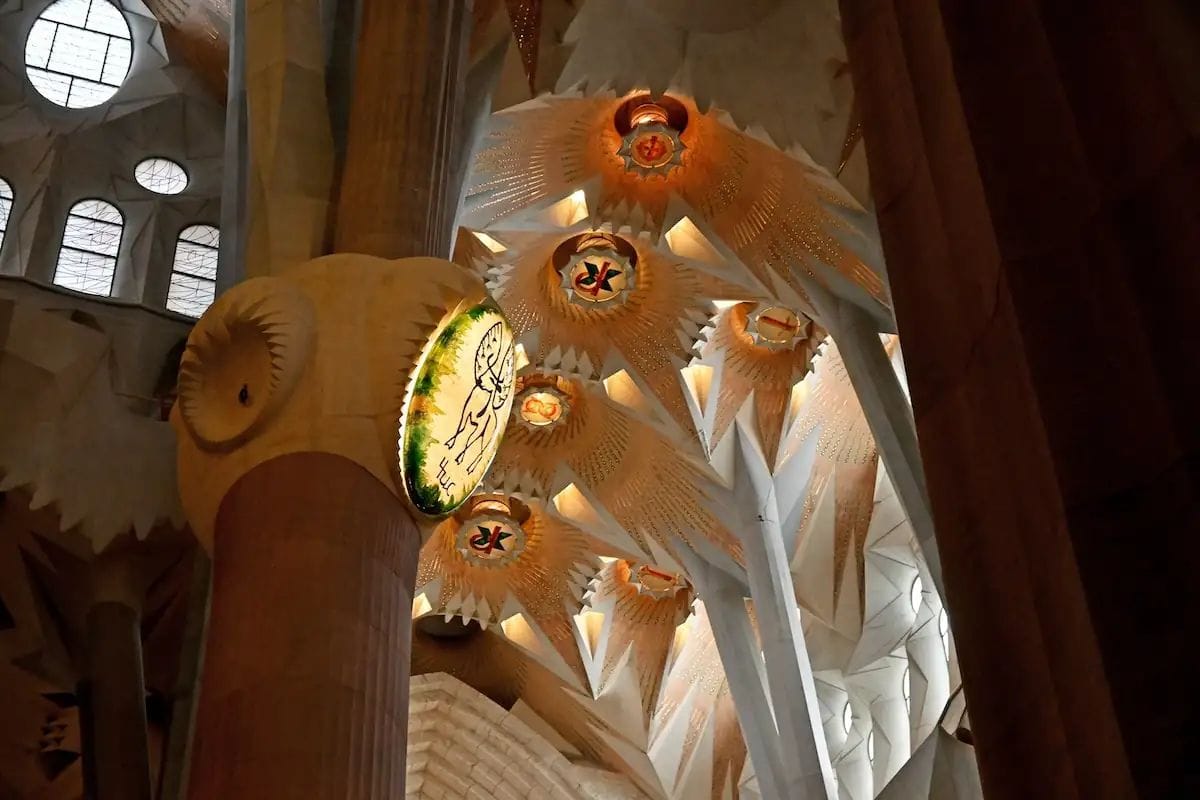
The Sagrada Família concentrates that tension better than any other building. It is a temple, an unfinished work, a tourist symbol, an economic engine, a spiritual project and an urban conflict all at once. For many Barcelonans, it represents pride and beauty; for others, saturation, noise, endless construction works and an increasingly difficult relationship between heritage and neighbourhood life.
The debate is not about denying Gaudí's importance. His influence on Barcelona is unquestionable. The question is whether the city can continue to speak about him only through veneration, or whether it needs to view him with more nuance: which part of his work remains alive, which part has been turned into a tourist product and which part is used to explain Barcelona to the world in an overly simple way.
The Sagrada Família, begun in 1882, has gone through wars, political changes, urban transformations and a tourist boom that Gaudí could never have imagined. Every new tower, every debate about its completion and every intervention in its surroundings reopens the same question: who does this building really belong to: the Church, visitors, architects or the city that bears it every day?
Perhaps that is why it continues to divide opinion. Because it is not merely a masterpiece or merely a tourist attraction. It is a huge piece of Barcelona's identity, but also a mirror of its contradictions: beauty and overcrowding, memory and business, heritage and everyday life. Looking at it with doubts, as Buhigas does, does not diminish it. On the contrary: it reminds us that the most powerful symbols are precisely those that still allow discussion.