
News
The Gòtic’s most controversial terrace is installed in the street again
A scene that many residents of the Gòtic had considered closed has reappeared in the heart of Barcelona. The terrace, considered for years to be one of the city’s most controversial, has returned to Trinitat Street, next to number 10 Avinyó, after being removed by the City Council at the end of 2022.
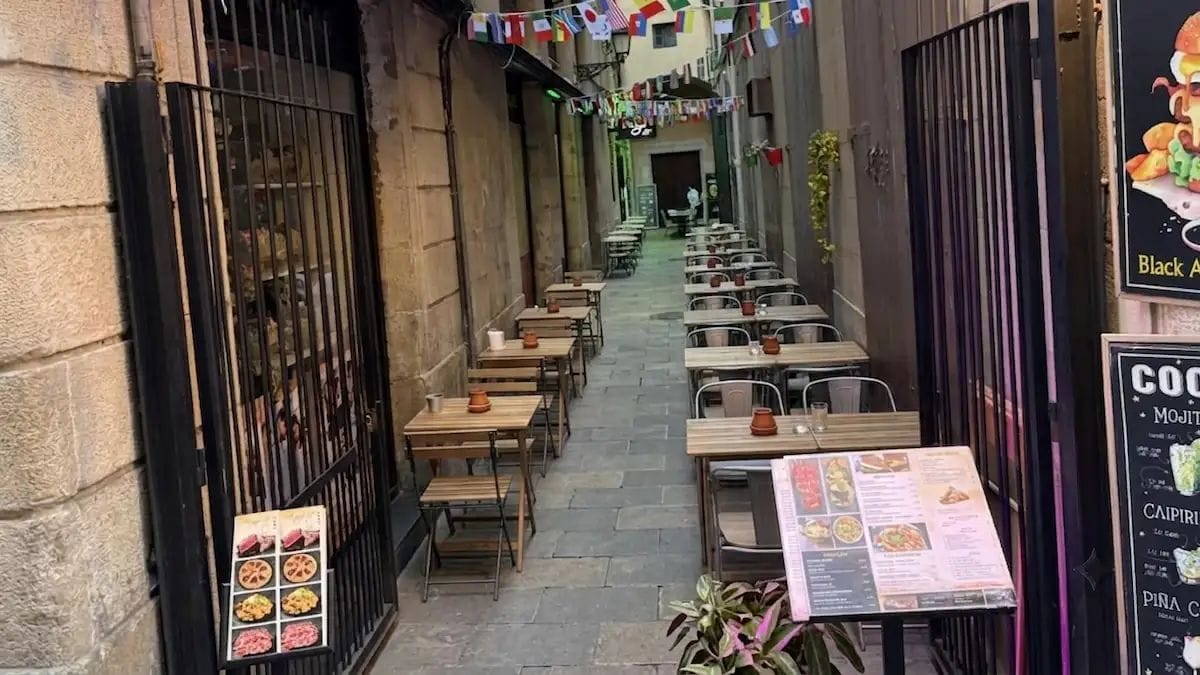
Over the past weekend, around twenty tables once again occupied much of this narrow street in the neighbourhood, with seated customers and constant activity in an area where every metre of passage matters. For those who live or work nearby, the return of the outdoor seating reopens a familiar conflict: how far hospitality activity can go on streets designed for walking.
The terrace had already accumulated years of inspections, penalties and complaints before it was removed. At that time, the Ayuntamiento presented the dismantling as an important action against the irregular occupation of public space, especially in a district under very high tourist pressure.
Now, its reappearance brings the problem back to square one. It is not only a matter of some tables in the street, but also the feeling that rules are difficult to enforce in areas where tourism, restaurants and neighbourhood life collide every day.
The Gòtic is one of the neighbourhoods where that balance is most fragile. Its streets are narrow, the flow of visitors is constant and many everyday journeys depend on pavements and passageways that become congested easily. A terrace placed in the wrong location can turn a short stretch into a bottleneck for residents, delivery workers, families or people with reduced mobility.
The case also comes at a time when Barcelona is once again debating the use of public space. Terraces, outdoor tables, queues, tourist groups and pedestrian movement compete for streets that have not grown but are under ever greater pressure.
The question now is how the Ayuntamiento will respond to a possible repeat offence. Residents and business owners in the area expect oversight not to depend solely on occasional complaints, but on monitoring capable of preventing conflicts from recurring each season.
The return of this terrace leaves a very concrete image of the historic centre's problem: in the Gòtic, one more table is not always just one more table. It can be the difference between a passable street and an occupied street, between a lived-in neighbourhood and a backdrop designed for consumption.