
News
Sants will close its main entrance in September: how the station will change until 2028
The transformation of Barcelona Sants is about to enter one of its most visible phases for travellers. At the end of September, the entrance via Plaça dels Països Catalans is scheduled to close until 2028, while a new entrance opens on the seaward side and work continues to expand the Rodalies and high-speed concourses.
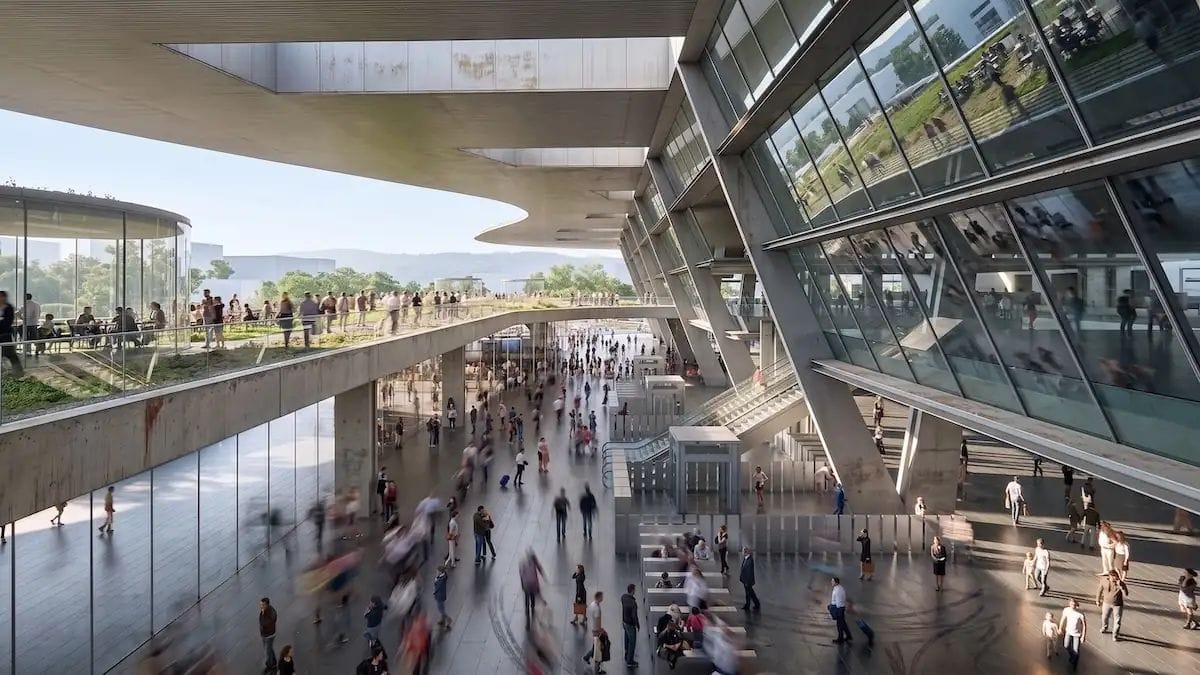
The change will require a reorganisation of how people enter and leave Barcelona’s main railway station. Access from Plaça Joan Peiró, where taxis will remain, will continue to operate, and another entrance will be added at the end of September on the Espanya Industrial side. A fourth entrance, next to Viriat and the bus station, is planned for the end of 2026.
Inside, the aim is to ease areas that have become too small for the current volume of passengers. The area allocated to Rodalies will grow by 85%, to around 4,400 square metres, while high-speed areas will increase by 175%, to more than 10,000. There will also be more space for passenger assistance and a new layout for arrivals and departures.
Plaça dels Països Catalans will also change, although it will retain and restore elements of its original design. The works include new green areas, street furniture and a reorganisation of the space that will permanently remove the lane currently used by private vehicles to drop off or pick up passengers. The part of the square outside the expansion of the concourses should be completed by the end of this year.
At the other end of the city, La Sagrera continues to make progress. Adif is working to complete the railway infrastructure — tracks, catenary, electrification and structure — between the end of 2026 and the beginning of 2027. That does not mean passengers will be able to use the new station immediately: the full opening of the major interchange still has 2032 as its horizon.
The future Sagrera will also be accompanied by a profound urban transformation. A large linear park will be developed over the tracks, and the surrounding area will incorporate housing, facilities and new connections between Sant Andreu and Sant Martí, reclaiming a space that has been fragmented by railway infrastructure for decades.
Neighbourhood stations are also entering this renewal. Renfe has comprehensive works under way at El Clot, while Fabra i Puig is included this year in the A Punto plan, with small works on elements such as concourses, flooring, lighting and accessibility. In parallel, Adif is maintaining more ambitious remodelling projects for both stations, still in the development phase.
The timetable turns the coming months into a period of adaptation for those who regularly pass through Sants. First, the doors through which the station is accessed will change; then new concourses and interior routes will arrive. The works will be noticeable for years, but they seek to solve precisely one of the most obvious problems of the current terminal: too many passengers moving through spaces designed for a much smaller railway Barcelona.