
News
Foundations gain a public voice after more than twenty years of waiting
The Consejo Superior de Fundaciones was established in Madrid on 10 November to coordinate administrations and the sector. The AEF is calling for more streamlined procedures; foundations support around 589,000 jobs and benefit about 40 million people.
A study carried out by Analistas Financieros Internacionales (AFI) and presented in 2024 put the number of active foundations in Spain at 10,511. It estimated their economic contribution at around 27 billion euros, nearly 2.4% of gross domestic product (PIB).
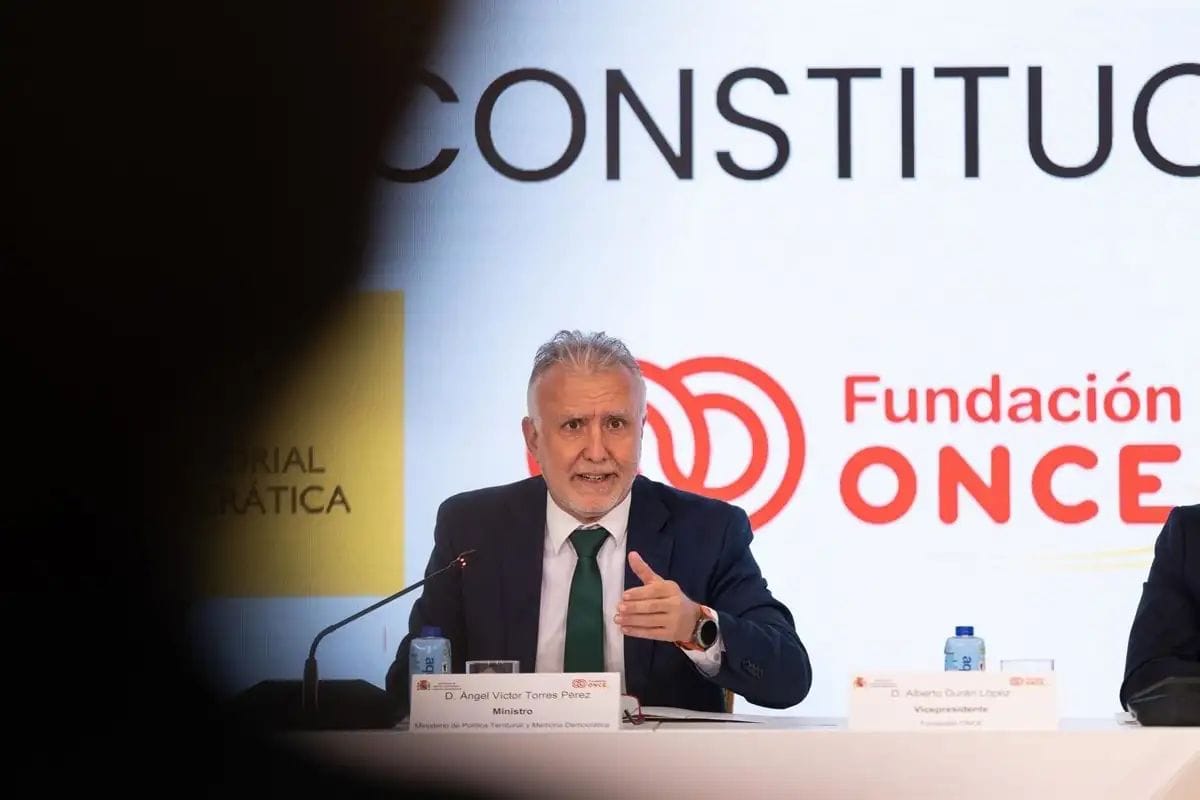
The Consejo Superior de Fundaciones was established on Tuesday, 10 November at the headquarters of Fundación ONCE in Madrid. The session was chaired by the Minister of Política Territorial y Memoria Democrática, Ángel Víctor Torres; Pilar García Ceballos-Zúñiga, president of the Asociación Española de Fundaciones (AEF), also spoke. The association thanked Fundación ONCE and its executive vice-president, Alberto Durán, for their collaboration.
The body is consultative and has ten representatives for each of its three groups. The Administración General del Estado has ten seats, the autonomous communities have another ten, and the foundation sector holds the remaining ten.
The AEF is calling for more streamlined administrative procedures and consistent criteria between registers and protectorates. The need to apply administrative requirements also appears in the protection of Campo Real, which allows olives that meet the established specifications to be marketed in Spain.
The association points out that regulatory fragmentation, delays, and differences in criteria complicate the daily work of foundations. Within the Council, a Comisión de Cooperación e Información Registral is planned to address registrations and registry procedures. García Ceballos-Zúñiga has also called for stable dialogue with ministries and autonomous communities, greater efficiency in the Protectorado de fundaciones of state competence, and closer dialogue with the Ministerio de Hacienda regarding the tax regime for foundations and sponsorship.
The launch fulfils a provision of Law 50/2002, of 26 December, on Foundations. The sector had been calling for more than twenty years for a stable space to communicate its needs and participate in decisions affecting its activity. Regulatory development came with Real Decreto 125/2026, of 18 February, which amended the Reglamento de Fundaciones of state competence. The AEF submitted comments and contributions during public consultations and the public hearing and information procedures.
Autonomous community representation includes País Vasco, Cataluña, Galicia, Andalucía, Asturias, Cantabria, La Rioja, Región de Murcia, Comunitat Valenciana y Aragón. The presidency is held by Ángel Víctor Torres and the secretary of the Plenary is Icíar Pérez-Baroja Verde, deputy director general of Cooperación Autonómica at the same ministry. The sector's statement includes Pilar García Ceballos-Zúñiga, Alberto Durán, Vicente José Montes, Luis González, Antonio Pulido, Eugènia Bieto, Alejandro Sarmiento, Alejandro Echevarría e Ignacio Tremiño.
AFI's analysis estimates that the activity of foundations supports around 589,000 direct, indirect, and induced jobs and benefits about 40 million people.
Foundations carry out projects in education, research, culture, and health. They also work in social care and heritage protection. Labour inclusion is among their areas of activity. The AEF defends their contribution to the public interest and their role in institutional cooperation.