
News
Madrid’s mobile offices will now be cardioprotected spaces
Completing an administrative procedure in many municipalities in Madrid will be a little easier and also safer. From this week, the Comunidad de Madrid is adding a fifth Mobile Citizen Service Office, extending the service to localities of up to 65,000 inhabitants and raising total coverage to 160 municipalities.
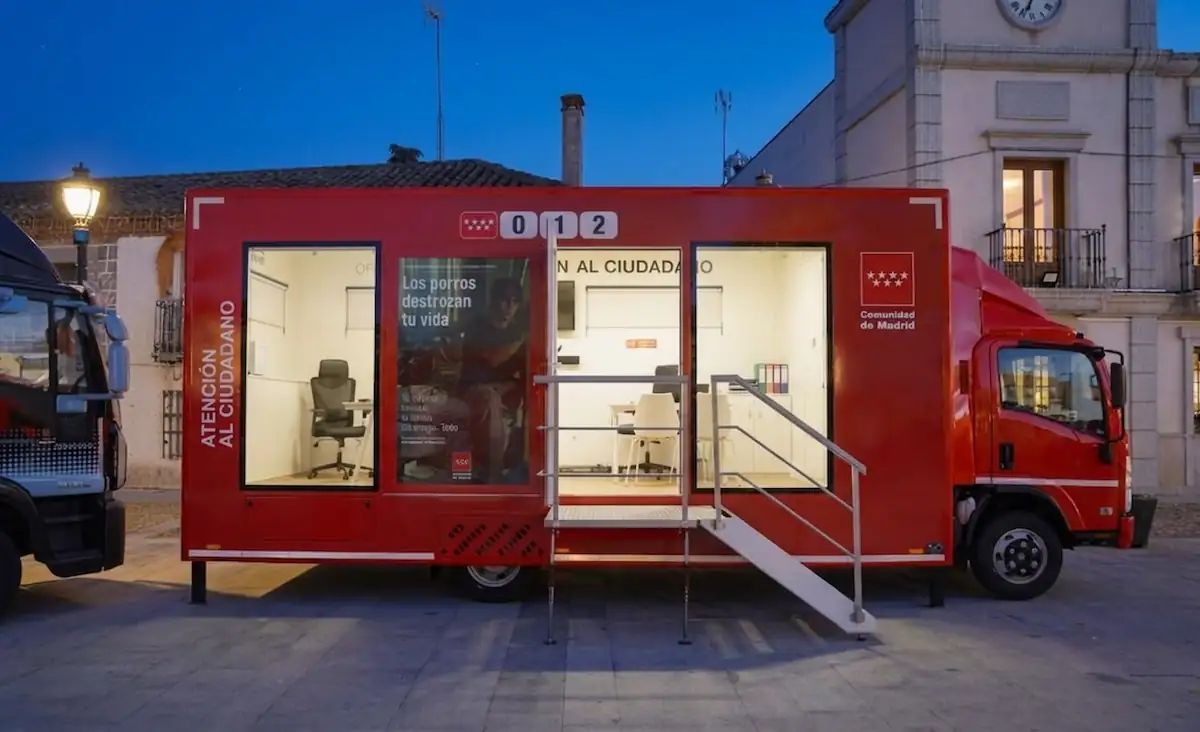
The new development is not only the increase in routes. All the vehicles in this network now have state-of-the-art semi-automatic external defibrillators, making them cardioprotected spaces. More than 40 staff members have received training to use these devices quickly and appropriately in an emergency.
The fifth unit will make it possible to reach 16 new municipalities: Algete, Aranjuez, Arganda del Rey, Arroyomolinos, Ciempozuelos, Colmenar Viejo, Galapagar, Mejorada del Campo, Navalcarnero, Paracuellos de Jarama, Pinto, San Fernando de Henares, Torrelodones, Tres Cantos, Villanueva de la Cañada and Villaviciosa de Odón.
Each locality will have a weekly service, with attention lasting around three hours per visit, except in Aranjuez, where the time will be longer because of its population size. The aim is to avoid unnecessary journeys to fixed offices, especially for older people, residents without a car or those who live far from the main administrative centres.
At these offices, people can carry out routine procedures with the regional Administration, receive information, register documents, make an appointment or process services such as the Tarjeta Sanitaria Virtual. The service operates with or without an appointment, depending on availability, and publishes its timetables by municipality.
The vehicles have also improved their equipment. They include accessibility ramps, new air-conditioning systems and more screens to streamline the service. These details matter in a service designed precisely to reach municipalities where administrative offices are not always nearby.
The measure has a very practical significance. A mobile office does not replace a health centre or an ambulance, but having a defibrillator and trained staff can gain decisive minutes in the event of a cardiac arrest. In towns and medium-sized municipalities, where every journey matters, bringing administrative procedures and a basic emergency response in the same vehicle is no minor gesture: it brings public services closer to places where distance still weighs heavily.