
News
24-hour shops disrupt neighbourhood life in Madrid
Food shops open all night have become a new source of neighbourhood conflict in Madrid. Their presence is growing in central and outlying neighbourhoods, and more and more residents report noise, dirt, street drinking and problems of coexistence during the early hours.
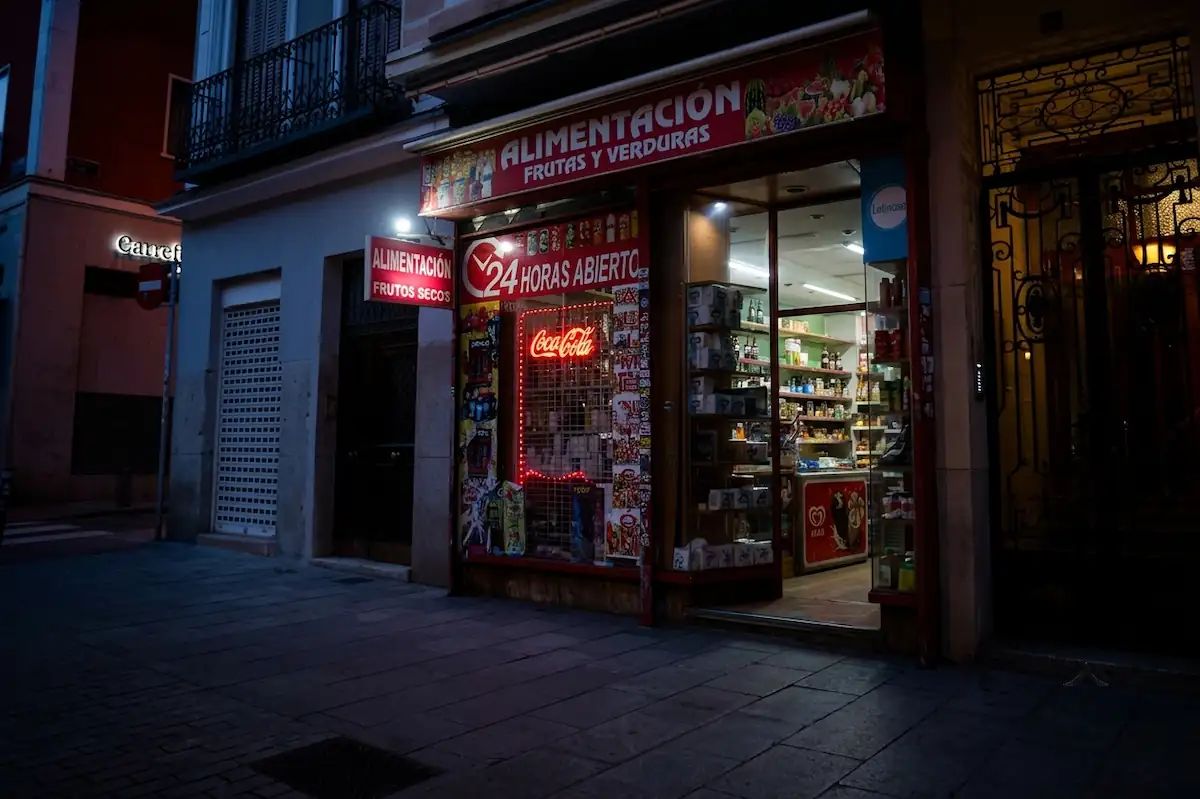
The phenomenon is particularly noticeable at weekends. In areas such as Malasaña, Universidad and Puente de Vallecas, these shops serve as stopping points for young people, tourists and groups extending their night outside bars and clubs. For those living above or next door, the problem is not just the business itself, but what happens at the entrance.
The main draw is usually cheap alcohol. Residents' associations complain that many establishments sell drinks outside the permitted hours, even though the regulations restrict sales between 22:00 and 08:00, with only very specific exceptions. In practice, residents say that penalties do not always succeed in curbing the activity.
In the Universidad neighbourhood, the transformation is visible in ground-floor commercial premises, shop windows and signs aimed at passing customers. Many residents feel that these shops do not meet the neighbourhood's needs, but instead serve a night-time economy that leaves noise and waste, yet little community life.
The situation is also causing concern in Puente de Vallecas, where the proliferation of night-time off-licences adds to other problems of living together. Associations warn of fights, impromptu street drinking gatherings, a sense of insecurity and a build-up of dirt in streets where traditional businesses are still holding on.
Residents are not the only ones unhappy. Part of the hospitality sector sees unequal competition: while bars and restaurants have to comply with opening hours, licences and inspections, some shops sell cheaper alcohol for consumption in the street. The result is less spending in venues and more pressure on public space.
The debate has already entered Madrid's political agenda. Associations are calling for more inspections, effective penalties and changes to the regulations that would allow the expansion of these businesses to be limited in saturated areas. They also ask for cities such as Barcelona to be considered, where measures have been taken to curb new openings in certain areas.
The conflict encapsulates an increasingly common tension in Madrid: a city with more nightlife, more tourism and more quick consumption, but also with neighbourhoods where people need to sleep, care for their streets and maintain shops that are useful in everyday life. The question is no longer whether these shops should exist, but where, how and within what limits, so as not to undermine harmonious neighbourhood life.