
News
L’Hospitalet prepares a biomedical hub to transform its economy
L’Hospitalet de Llobregat aims to make an economic and urban leap by focusing on one of the most promising sectors in the metropolitan area: health. The Ayuntamiento is working to turn the area around Granvia y Bellvitge into a major biomedical hub capable of attracting companies, research, talent, and new jobs.
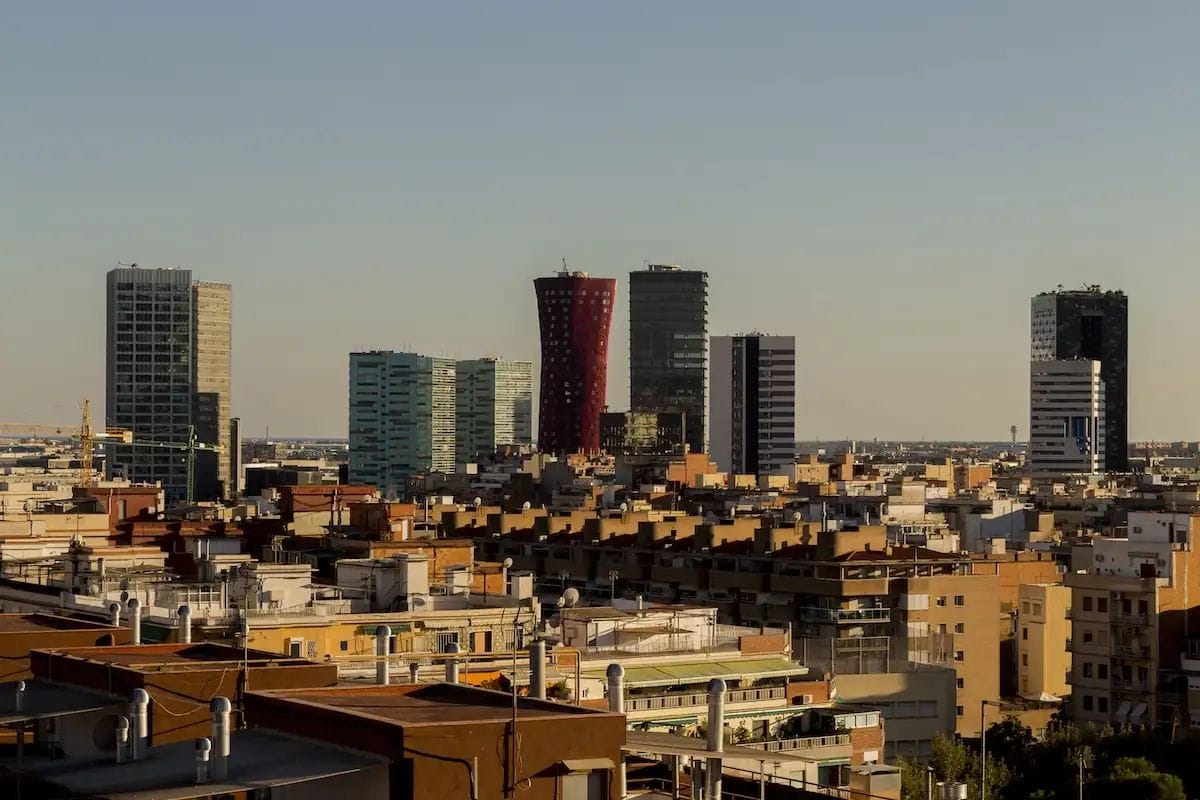
The commitment does not start from scratch. This area already brings together top-level elements such as Hospital Universitari de Bellvitge, Institut Català d’Oncologia, IDIBELL and the Universitat de Barcelona. The municipal ambition is to organise that potential and connect it with new business activity linked to biomedicine, advanced services, innovation and wellbeing.
The mayor, David Quirós, defended this strategy at a meeting with private-sector representatives at the Hotel Porta Fira Santos. His message was clear: L’Hospitalet has a position that is difficult to replicate, next to Barcelona, the Fira, Zona Franca, the airport and some of Catalonia's major health and research centres.
That location is one of the project's central arguments. Proximity to El Prat airport and the main metropolitan corridors makes it possible to envisage a city more connected to the production, distribution and development of health solutions. For the City Council, this logistical advantage may be key to attracting investment.
The major urban-development move will come with the undergrounding of the Granvia between Rambla Marina and the Llobregat river. The works are planned for early 2027 and, including the urbanisation works, should be completed in 2031. It will be a decisive intervention to stitch together an area that for decades has functioned as an urban barrier.
The Granvia renovation will not only change mobility. It must also open up new spaces, improve connections between neighbourhoods, create green areas and make the surroundings more attractive for companies linked to health and research. The city wants the axis to cease being a border and become an economic gateway.
The project forms part of the Biopol-Granvia corridor, a metropolitan component where L’Hospitalet seeks to position itself alongside other health and university hubs. The future arrival of the new Hospital Clínic on the Diagonal reinforces this vision of a major area of medical knowledge connected between Barcelona and its immediate surroundings.
The transformation, however, is not measured only in buildings or companies. The City Council wants the biomedical hub to generate job opportunities for residents, especially young people. In the north of the city, nearly 8,000 young people are neither studying nor working, a figure that makes vocational training and job placement an urgent challenge.
This is where technical profiles that the sector is already beginning to demand come in: laboratory work, maintenance, health logistics, specialised administration, health-related technologies or research support. The key will be to ensure that the cluster's growth does not become disconnected from the neighbourhoods around it.
Collaboration between government and business will be decisive. The council insists that public investment must serve to activate private investment, but also to ensure that the new economy does not drive out those who live in L’Hospitalet or turn the city into a mere office space.
The precedent of Plaça Europa is very much in mind. Twenty-five years ago, that transformation changed L’Hospitalet's economic profile and multiplied employment in an area that today concentrates hotels, offices, trade fairs and business activity. Now the challenge is for the biomedical axis to have a similar or greater impact.
The difference is that this time the project is based on health, research and knowledge, sectors capable of generating skilled employment and attracting international talent. If it works, L’Hospitalet could cease to be seen only as a metropolitan residential city and strengthen its role as an economic hub in its own right.
For Bellvitge, Granvia and nearby neighbourhoods, the change will be profound. There will be works, new mobility flows, more business activity and urban pressure that will have to be managed carefully. The promise is more employment, more connections and more public space; the test will be whether that promise is also felt in residents' daily lives.
L’Hospitalet is therefore staking more than an economic project. It is staking what kind of city it wants to be in the coming decades: a territory that merely accompanies Barcelona's growth or a metropolitan component capable of leading innovation, health and its own employment opportunities.