
News
Reservoirs fall below 70% in Spain while Madrid maintains better reserves
Spain’s water reserves continue to fall in the middle of August and now stand at 68% of capacity. Reservoirs hold 38,103 cubic hectometres after losing 912 hm³ in just one week, a drop of 1.6 percentage points.
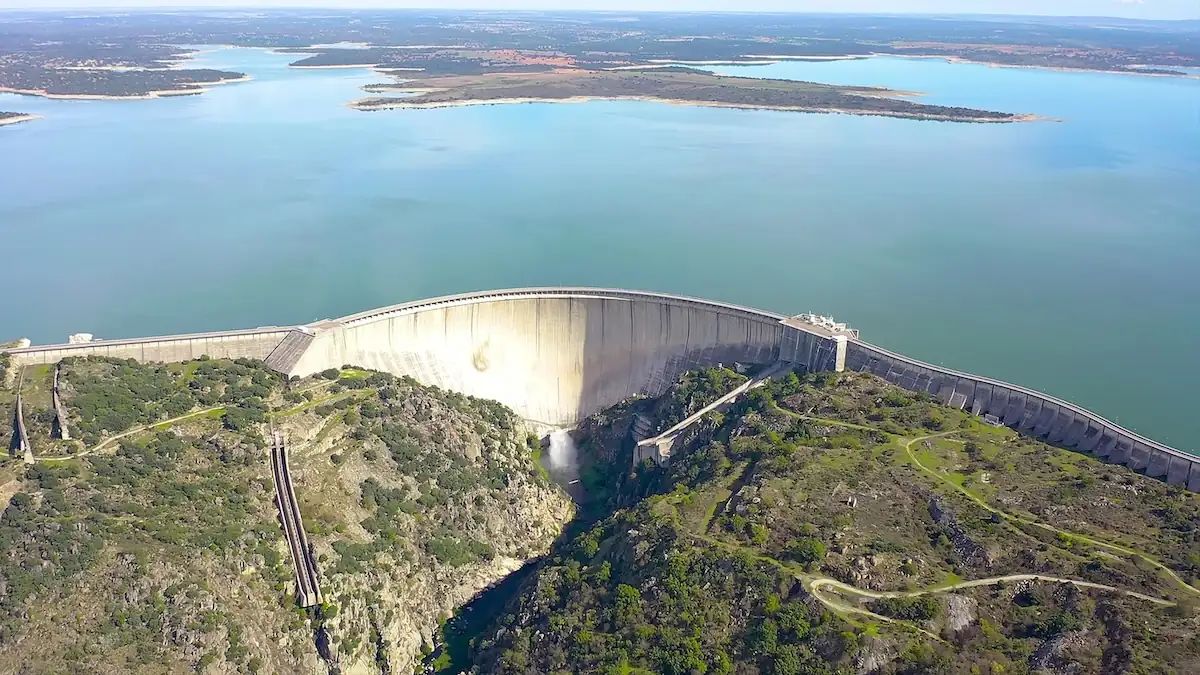
None of the major river basins managed to increase their reserves in recent days. The sharpest declines were recorded in the internal basins of the País Vasco, down 4.7%, followed by the Ebro, down 3%, the Duero, down 2.7%, and the Tajo, down 1.7%.
The internal basins of Catalunya also lost water, with a decline of 1.3%. Júcar and Guadalquivir fell by 1.2%, while Miño-Sil lost one percentage point in a week marked by high temperatures and heavy summer consumption.
Rainfall recorded in recent days mainly affected the Mediterranean slope, although it was not enough to change the overall trend. The highest accumulation was in Teruel, with 20.8 litres per square metre, while much of the country continues to experience days of intense heat and high evaporation.
Despite the decline, the situation remains better than last summer. Spanish reservoirs currently hold 2,314 cubic hectometres more than on the same dates in 2025 and remain clearly above the average recorded over the last decade.
Madrid is also losing reserves as summer progresses, although it remains in a more favourable position. At the beginning of August, the 13 dams managed by Canal de Isabel II were at 72.2% of their capacity, with 681 cubic hectometres stored, virtually in line with the historical average for this time of year.
July brought very little rainfall to Madrid's reservoirs and reduced water inflows compared with usual levels. Even so, reserves remain within the levels considered normal and supply is guaranteed, although during the hottest weeks of the year it once again becomes important to moderate consumption and avoid unnecessary uses of water.