
News
Madrid gains vertical green spaces on streets and buildings
Madrid is starting to look upwards to find new green spaces. Vertical gardens have become part of the urban landscape as a different way to bring nature into the city, moving away from the traditional format of parks and landscaped areas.
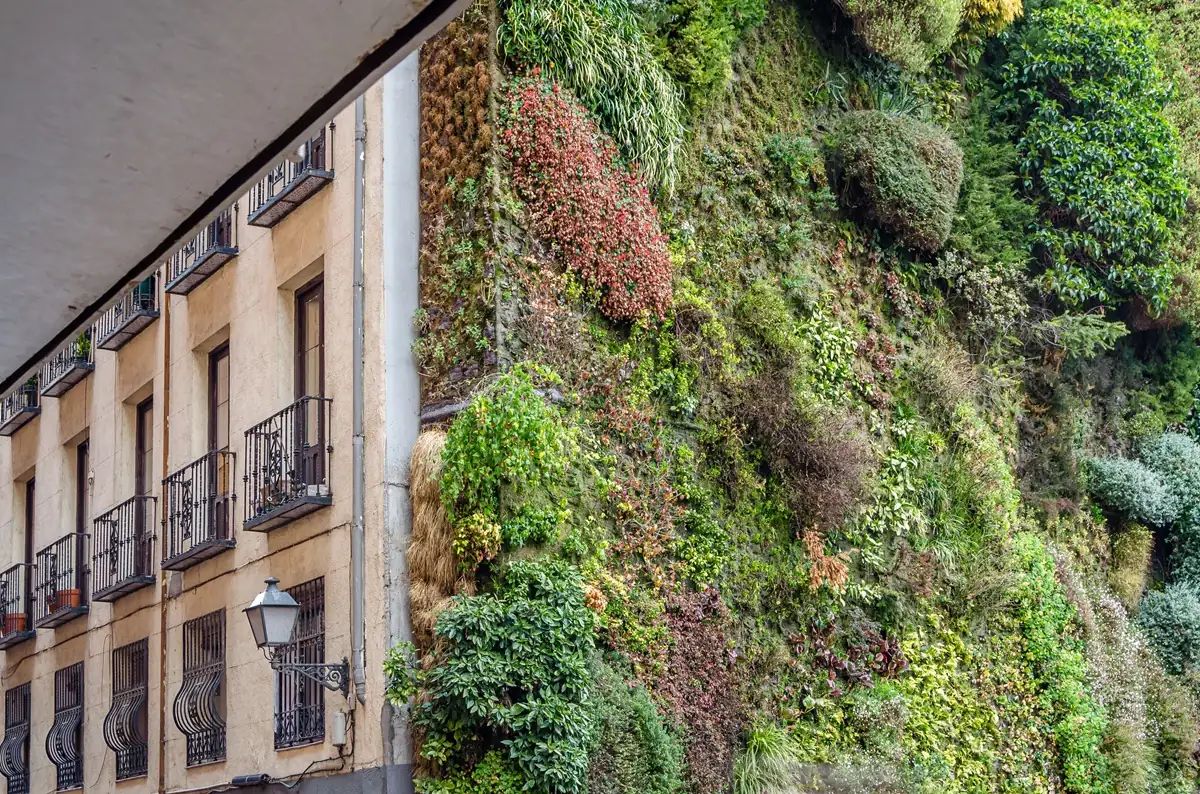
One of the most recognisable examples is CaixaForum Madrid, where the living wall designed by Patrick Blanc has become an icon next to Paseo del Prado. Its presence breaks with the surroundings of stone and traffic, offering an unexpected image in the very centre.
Beyond this spot, green walls have begun to appear in other spaces. They are installed on buildings, hotels and thoroughfares, as well as on urban stretches such as the M-30. Their aim is not to attract large crowds, but to become part of the daily routine as another element of the landscape.
Their value lies in the visual aspect and the experience. These gardens are not walked through or inhabited like a park, but they offer a pause amid constant movement. They function as small green interruptions that change the perception of the city for a few seconds.
In addition, their presence responds to a broader trend of integrating nature into dense urban environments. They provide benefits such as improved air or temperature regulation, but also a different way of relating to the surroundings.
New green points appear without taking up surface space, integrated into streets and buildings. They are small interventions, but increasingly visible in everyday life.