
News
Asymptomatic Madrid residents exposed to hantavirus will be able to complete quarantine at home
The hantavirus quarantine is entering a slightly less severe phase for those who remain symptom-free and have a negative PCR test. Contacts under monitoring will be able to complete the final 14 days of isolation at home, provided strict safety conditions are met and Public Health maintains daily oversight. The measure is part of the new protocol approved by the Technical Committee of the Early Warning and Rapid Response System.
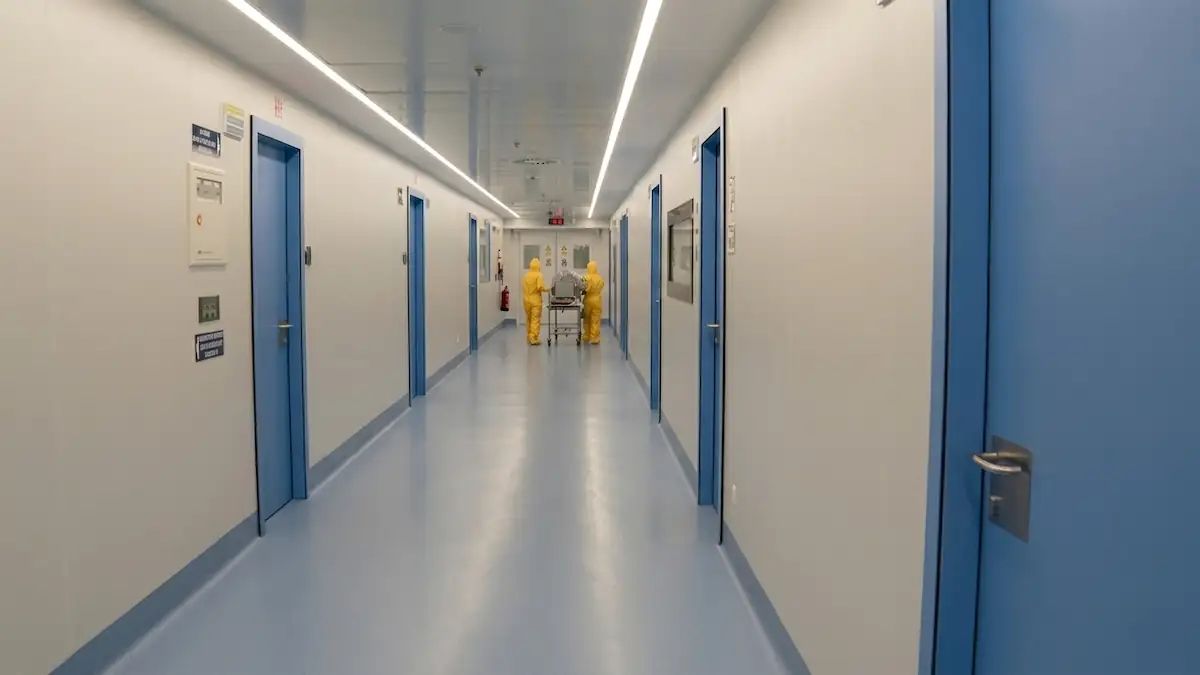
The change affects people who must complete 42 days of quarantine after having been exposed to the virus. In the case of Spaniards linked to the Hondius ship outbreak, that final home phase could begin from 7 June if they remain asymptomatic and test negative.
It will not be a normal home quarantine. The home must have a well-ventilated individual room and, preferably, a private bathroom. It will also be compulsory to maintain permanent communication with the health authorities by telephone or internet, so that Public Health teams can carry out daily follow-up.
Transfer from the hospital or isolation centre may not be made by public transport or in an unsupervised private vehicle either. The protocol requires conventional medical transport, an FFP2 mask for the person being monitored and for the driver, separation during the journey, and hand hygiene before and after travel.
The decision seeks to balance two needs: maintaining surveillance of an uncommon infection and reducing the personal burden of a very long isolation. Forty-two days confined in a health centre weigh heavily not only in medical terms; they also affect families, work, rest and mental health.
The authorities nevertheless insist that caution remains key. Any symptom or positive PCR test would change the situation and require stricter measures to be activated. The Spanish patient who tested positive remains under health supervision, while contacts who have continued to test negative may move towards a less hospital-based quarantine if they meet the requirements.
The outbreak linked to the Hondius has required surveillance to be coordinated in several countries and hundreds of contacts to be followed. In Spain, Gómez Ulla has been the reference centre for those isolated after arriving from the ship, with periodic checks and biosecurity measures since their arrival.
The change does not mean that the alert is over, but rather that the protocol is adapting to a more manageable reality: people without symptoms, negative tests and a need to regain some normality without breaking isolation. For the affected families, being able to spend the final days at home does not erase uncertainty, but it does considerably change the way of coping with it.