
News
Doctors to go on indefinite strike from 28 October, including in Catalonia
Doctors and medical staff are called to an indefinite strike starting next Wednesday, 28 October, across Spain, including Catalonia. Metges de Catalunya is among the organisations that have agreed to the call, which involves full and ongoing walkouts in protest against the proposed reform of the Estatuto Marco for healthcare staff.
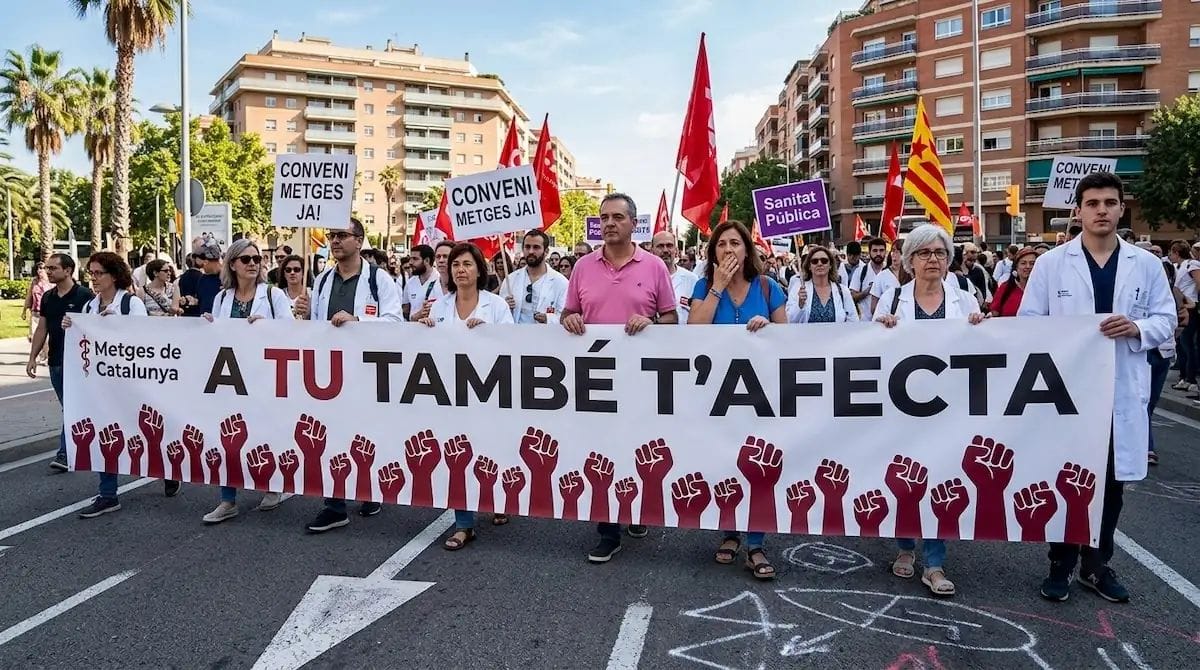
The date was set this Friday, 11 September, after medical unions decided to coordinate the various protests they had been preparing for this autumn. In Catalonia, Metges de Catalunya had already announced two days earlier its intention to call an indefinite strike to coincide in timing and form with the national protest, although the start date had not yet been fixed at that point.
The mobilisation comes after the Consejo de Ministros approved the draft law for the new Estatuto Marco for statutory staff of the health services on 1 September and sent it to the Cortes Generales. Therefore, the reform has not yet been definitively approved: it now begins its parliamentary process.
Medical unions reject the text and are demanding a specific regulatory framework for doctors and medical staff that, they argue, takes into account their training, responsibilities, and professional practice. The dispute is mainly directed at the Ministerio de Sanidad, although Metges de Catalunya is also calling on the Departament de Salut to negotiate on issues that fall under the Catalan administration.
The strike call could affect both hospital and primary care in Catalonia, as well as other services where doctors and medical staff work. However, it is still too early to determine how many consultations, tests, or procedures may be affected: the real impact will depend on how widely the strike is observed and on the minimum services established to guarantee essential care.
The 28 October strike also marks a shift in scale compared to the protests held in recent months. Medical organisations had previously staged periodic walkouts against the reform of the Estatuto Marco, but are now planning full days of uninterrupted strike action with no set end date.
Metges de Catalunya announced on 9 September that it was entering this new phase of mobilisation together with medical unions from other regions. The Catalan organisation argues that the draft maintains conditions it considers discriminatory for medical staff and is calling for a dedicated statute for the profession.
The Government's new proposal, meanwhile, introduces changes such as a general maximum of 45 working hours per week, limits on the length of on-call shifts, new rest periods, and measures against excessive workloads. The Ministry maintains that the reform improves conditions for staff in the Sistema Nacional de Salud and notes that issues such as salaries, staffing, and some aspects of work organisation are also the responsibility of the autonomous communities.
Therefore, until 28 October, there remains a window for negotiation and for the parliamentary processing of the Estatuto Marco itself. For users of Catalonia's public health system, the key practical information will come when the minimum service levels and the planned operation of hospitals and primary care centres during the strike are set out.