
News
The Nativity Scene: art and culture
The nativity scene is not only an artistic representation; it is a symbol of faith, hope and love. Every figure and every detail tells a story of humility and devotion.
The birth of a tradition: the origins of the nativity scene
The nativity scene, also known as a belén or nacimiento, is an artistic and religious representation of the birth of Jesus of Nazareth. This tradition dates back to the 13th century, when Saint Francis of Assisi, inspired by his visit to the Holy Land, decided to recreate the scene of Jesus's birth in a cave in Greccio, Italy. The idea was to offer the faithful a more tangible and emotional experience of the biblical story. Since then, nativity scenes have become an integral part of Christmas celebrations all over the world, especially in Christian cultures.
As Saint Francis of Assisi said, «Preach the Gospel at all times and, if necessary, use words». The nativity scene is a visual way of preaching the Gospel, reminding us of the true meaning of Christmas. In a world full of distractions and materialism, the nativity scene invites us to reflect on what is essential: the love and peace brought by Jesus's birth.
In Catalonia, making nativity scenes is an established historical tradition, with numerous associations, such as the Barcelona Nativity Scene Makers' Association, which year after year help maintain and preserve this cultural and festive legacy.
The magic of the characters: the protagonists of the nativity scene
Photo by pexels.com
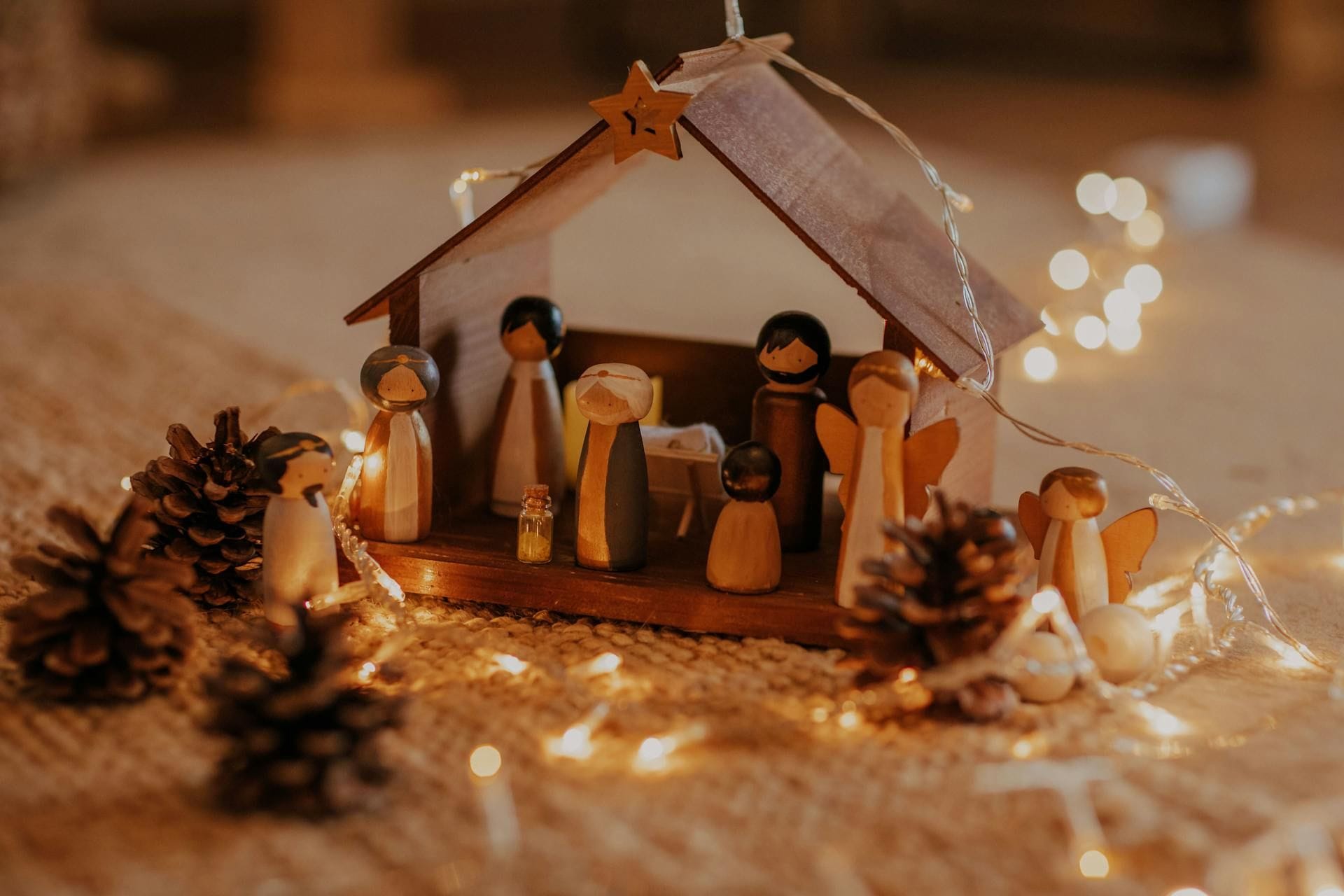
The main characters of the nativity scene are iconic figures that have been revered for centuries. At the centre of the scene is the Baby Jesus, newly born and lying in a manger, accompanied by his parents, Mary and Joseph.
The Three Wise Men, Melchior, Gaspar and Balthazar, arrive with gifts of gold, frankincense and myrrh, symbolising adoration and recognition of the new king. The shepherds and their flocks also play a crucial role, representing the humble and simple people who were the first to receive the news of Jesus's birth. In addition, the angel who announces the good news to the shepherds and the stable animals complete the scene, adding a touch of realism and tenderness.
The evolution of the nativity scene
Over the centuries, nativity scenes have evolved and adapted to different cultures and artistic styles. In Italy, for example, nativity scenes are known for their elaborate craftsmanship and intricate details.
Photo by pexels.com
In Spain, belenes are a deeply rooted tradition, with clay figures and detailed scenes that include landscapes and buildings. In Latin America, nacimientos often reflect the region's cultural and ethnic diversity, with indigenous and colonial elements. This diversity enriches the nativity scene tradition, making each representation unique and special.
You can find all Barcelona Christmas nativity scenes in our list.
Learn more about Christmas traditions and Barcelona's most interesting events in our special project.