
News
The first driverless trains on Line 6 are already running before arriving in Madrid
Madrid Metro’s Line 6 is already beginning to look like the future. The first driverless trains that will run on the Circular have begun their trials outside the capital, and images of the new trains anticipate one of the biggest changes seen in the network in decades. For those who use L6 every day, the transformation will not only be aesthetic: it will change how they travel, service frequency and even safety in stations and tunnels.
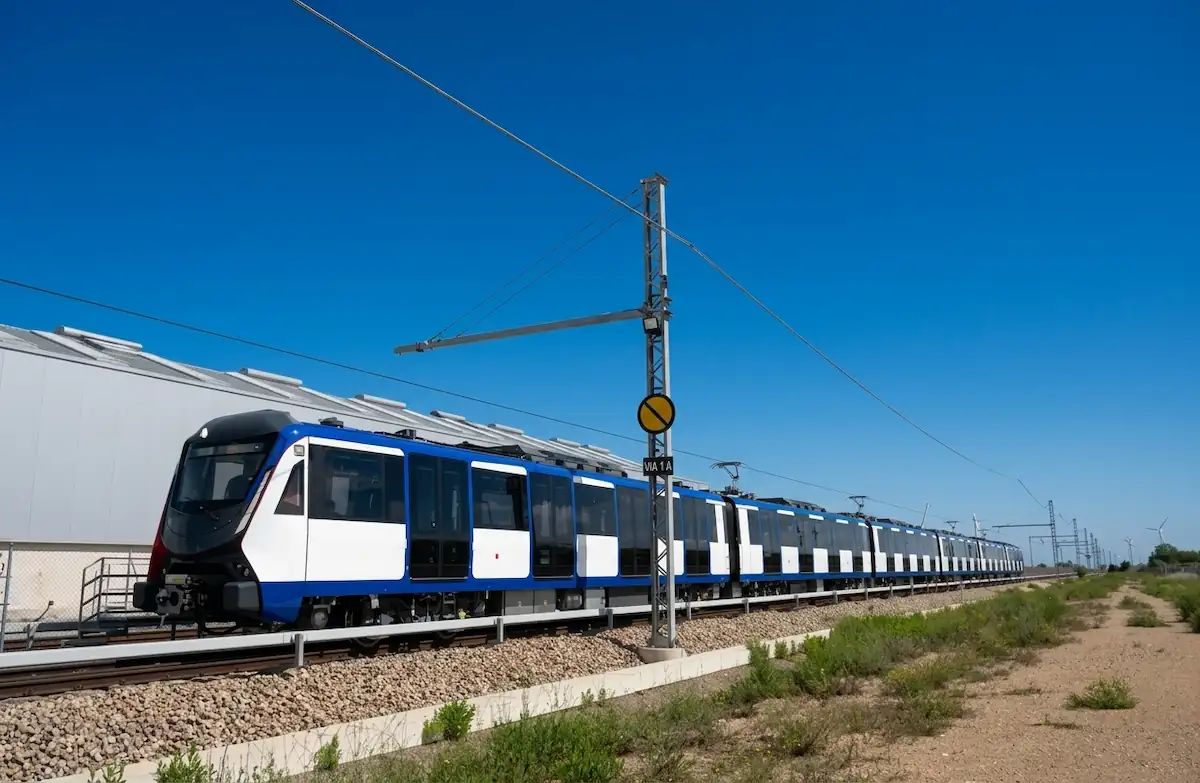
The first of the new trains manufactured by CAF is already running on the company’s test circuit in Navarre. A second train will arrive in the coming days and both will then travel to Madrid to begin night-time tests on several metro lines. The plan is for testing to begin this summer and for the automated line to become fully operational during 2027.
The new trains are part of a contract worth more than 531 million euros to completely renew the fleet on Metro’s busiest line. L6, used by hundreds of thousands of people every day, will thus become the first automated line in the entire Madrid network.
The transformation also requires stations to be adapted. Metro has been installing automatic platform doors for months, strengthening infrastructure and renewing electrical and control systems. In addition, the line will have more than 400 cameras and infrared systems to monitor tunnels, stations and restricted areas, a kind of technological “bubble” designed to operate without drivers.
Those who use the Circular have already lived for months with partial closures, replacement buses and night works. The ultimate aim is to increase the line’s capacity and reduce waiting times on a key piece of infrastructure for connecting neighbourhoods and linking with almost the entire Metro network.
Line 6 is not just any line. With its 28 stations and more than 23 kilometres of route, it serves as Madrid’s great underground artery and connects some of the city’s main transport interchanges. Its automation places Madrid in the same direction as other major European and Asian capitals that have operated driverless lines for years.
UPD: Automation is also advancing beyond the platforms. Metro has begun modernising the Laguna depot, key to adapting maintenance and internal circulation for the future driverless trains on Line 6. The project, with planned investment of 20.8 million euros, will renew signalling and communications systems, connect the site to the Central Control Centre and make it possible to carry out the tests needed before final operation in 2027.