
News
Madrid's news kiosks reinvent themselves to survive in neighbourhoods
News kiosks no longer occupy the same place in Madrid's routine. In barely a decade, their number has been halved, and many of those that remain open have had to change so as not to disappear. Some now sell speciality coffee, vinyl records, costume jewellery, design magazines or artisan sweets alongside the usual newspapers.
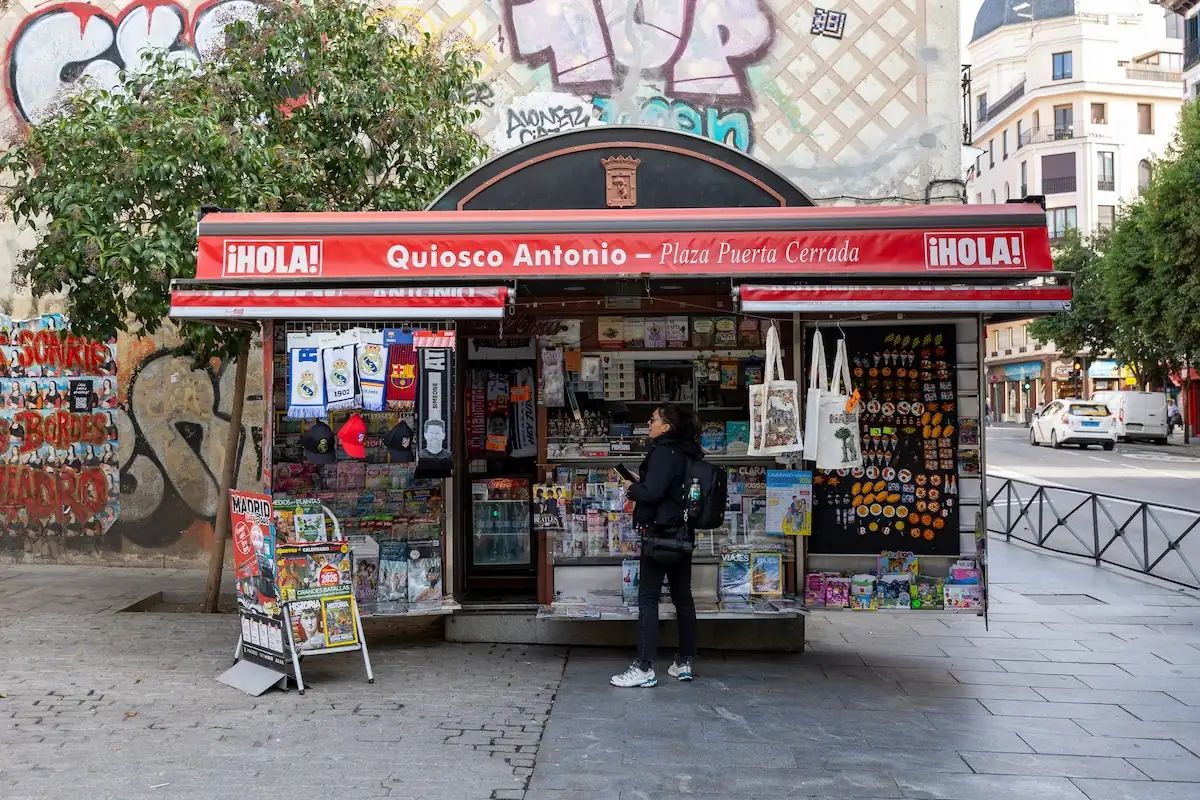
The change is noticeable in neighbourhoods such as Malasaña, Lavapiés, Chamberí and Salamanca, where new entrepreneurs have found an opportunity in these small spaces to try out different formats. The classic image of the kiosk as a quick stop to buy the press now coexists with meeting points, cultural shop windows and miniature neighbourhood businesses.
One example is the Morrison kiosk on Calle Alcalá. Fausto Palmieri reopened it after arriving in Madrid in 2020 and chose to mix the daily press with vinyl records, coffee, illustrations and T-shirts. The result is a small space with its own identity, intended for music lovers, curious people and residents who still stop at a street-level shop window.
At Conde de Peñalver, Épico has taken the transformation towards the coffee-shop format. Sergio Alonso and his partner invested €41,000 to turn the kiosk into a point for takeaway coffee, brownies and selected magazines. The venture also works as a neighbourhood landmark: a quick, visible place that is easy to incorporate into a daily walk.
Reinvention takes many forms. On Calle Luchana, Pídeme un deseo has found its niche in costume jewellery, leaving behind products such as tobacco. In Lavapiés, Extra opens at weekends with design magazines, illustrated books, vintage stationery and self-publishing, taking advantage of the bustle of the Rastro and the neighbourhood's creative energy.
But the change does not convince the entire sector. The Asociación de Vendedores Profesionales de Prensa de Madrid argues that diversification may be necessary, although it fears that kiosks will lose their original function. Its representatives propose new activities, such as book signings or lockers, without giving up the central role of the press.
The transformation reflects a broader change in the city's habits. Fewer print newspapers are bought, more takeaway coffee is consumed, interest in independent products is growing, and many residents seek small businesses with character. Because of its size and location, the kiosk can adapt to this mix better than other formats.
The question is which kinds of kiosks should be preserved. If they survive only as a memory, they will end up disappearing from many pavements. If they find new uses without losing the press entirely, they can continue to be something quintessentially Madrid: a brief, familiar and recognisable stop amid the city's daily movement.